

Christmas in South Africa is a sun-soaked, outdoor celebration, far removed from the snow-laden imagery of the Northern Hemisphere. Yet the desire to honour festive colour themes remains strong, and plants play an important decorative and symbolic role in this.
Many of the plants we associate with the festive season – fir trees, holly, mistletoe, and poinsettias – are native to cooler climates or require highly controlled growing conditions to thrive. There are, however, locally available and indigenous alternatives that are beautiful, sustainable, authentically South African, and provide the same type of festive colour we associate with Christmas.
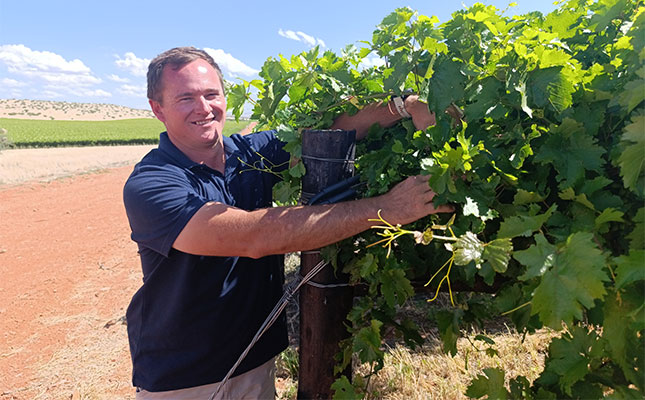
Andy de Wet, founder of The Aloe Farm, De Wet Plant Breeders, and CND Nursery, has a master’s degree in botany and a career dating back to 1973. He has spent more than five decades breeding, developing, and cultivating plants for South African gardens and the international market.
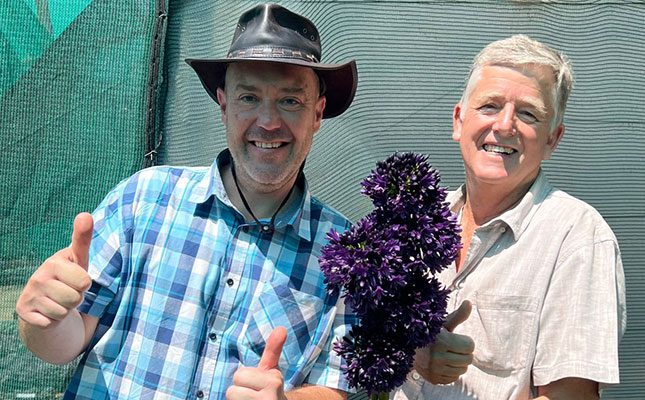
He and his partner Quinton Bean also earned international acclaim by taking the title of at the 2023 Chelsea Flower Show for their Agapanthus Blackjack.
“I love showing people that Christmas can be celebrated beautifully with plants that are suited to our climate and environment,” says De Wet.
A short background on traditional Christmas plants
Poinsettias (Euphorbia pulcherrima) are prized for their vibrant red and green foliage and blooms. They are grown locally under highly managed conditions, with growers extending periods of darkness to mimic Northern Hemisphere winters, ensuring they flower in time for the South African festive season.
De Wet says numerous reputable growers prepare and stock poinsettias for the Christmas season, and these are widely available at nurseries, garden centres, and even retail outlets and supermarkets.
Holly (Ilex aquifolium), with its distinctive red berries, can grow in South Africa but rarely performs as robustly as it does in cooler climates.
Mistletoe, often confused with holly, is a white-berried, epiphytic plant, which means it grows on other plants and trees.
“People often think mistletoe has a red berry, but that is actually holly. Mistletoe has a small white berry and is traditionally hung over a doorway,” explains De Wet.
Although there are a few indigenous epiphytic plants in South Africa with a similar feel to mistletoe, these are seldom commercially available.
De Wet says those who absolutely have to have mistletoe or holly could purchase imported decorations, but his advice is to rather opt for an artificial decoration that can be reused annually.
He recommends the following locally available alternatives:
- Mistletoe cactus (Rhipsalis baccifera): an indigenous epiphytic succulent resembling mistletoe.
- Natal plum (Carissa macrocarpa): a hardy evergreen with glossy foliage and bright-red fruit that mirrors the look of holly.
Celebrating in the South African climate
For those wanting to celebrate Christmas with plants that are beautiful and practical, De Wet recommends considering a broader mix of indigenous South African species and locally available ornamentals. These can be used as gifts, table decorations, floral arrangements, or summer garden features.
He points out that although traditional European plants are beloved, there is a whole world of indigenous and climate-appropriate options that fit the season and South African identity. Succulents and aloes, in particular, offer festive tones and easy maintenance.
“You can still have colour, shape, and tradition, but in a way that’s sustainable and locally inspired,” he adds.
Options include:
- Echeverias (Echeveria): succulent rosettes in shades of blue, pink, purple, or green. Ideal for tabletop arrangements or small gifts.
- Mangave (Agave x Manfreda hybrids): their striking, patterned foliage adds a modern, structural aesthetic to indoor or outdoor festive décor. They can be lightly sprayed with non-toxic festive foam for colour. The result is a Christmas aesthetic that blends tradition with climate-savvy creativity.
- Hydrangeas (Hydrangea): often referred to locally as ‘Christmas roses’, they bloom in summer, adding lush floral displays for tables, bouquets, or garden borders.
For gardeners seeking a truly South African Christmas, several indigenous species offer vibrant colour, resilience, and long-lasting beauty:
- Agapanthus (Agapanthus): iconic South African flowers with globular blooms in blue, purple, or white, perfect for garden beds or cut flower arrangements.
- Blue Daisy (Felicia amelloides): cheerful blue flowers with yellow centres. They work well in potted displays or outdoor borders.
- Wild Irises (Dietes grandiflora and bicolor): elegant leaves and delicate white and yellow blooms, respectively. They’re hardy and water-wise.
- Fynbos favourites (Protea and Leucadendron): bold shapes, textures, and colours make them excellent for large arrangements, wreaths, and dramatic table centrepieces.
- Plumbago (Plumbago capensis): clusters of soft blue flowers complement reds and greens, ideal for table or garden displays.
“Celebrating with local plants is beautiful, sustainable, and celebrates [South Africa’s] biodiversity,” says De Wet.
Uncoventional Christmas centrepieces
One of De Wet’s most charming suggestions is using bonsai as a festive focal point. For example, classic evergreens like pine, cypress, or spruce grown in the formal or informal upright style can be tastefully decorated as live trees.
South Africa offers its own unique bonsai possibilities, though, and De Wet has spent years developing one of our most iconic plants, the spekboom (Portulacaria afra), into a truly South African Christmas tree.
Spekboom is an indigenous, drought-tolerant succulent valued for its ability to sequester carbon, ecological benefits, and resilience. It is also prized for its long lifespan, low maintenance, versatility in pots or the garden, and contribution to biodiversity.
It takes De Wet about five years to shape a spekboom into a Christmas tree, pruning it carefully throughout. He grows them to roughly 1,2m tall and sells the potted trees for around R950.
“Once [the spekboom] has been trained to this shape, you can keep it in the pot and just prune it back and decorate it again next Christmas,” he adds.
De Wet describes a spekboom Christmas tree as a living, long-lasting symbol of local pride, environmental care, and festive creativity.
“A spekboom Christmas tree can be decorated year after year, and then planted in your garden to grow for decades.”
He is also doing similar work with the wild fig (), which he says makes for a striking, sculpted bonsai.
Celebrate Christmas your way
The festive season in South Africa celebrates heritage, climate, and creativity. Traditional European Christmas plants remain popular but often come at a cost, need importing, or require specialised care.
For those who want to stick to tradition while thinking locally, indigenous alternatives such as succulents, proteas and fynbos, aloes, bonsais, and especially spekboom offer beauty, sustainability, and a true connection to the land.
Celebrate Christmas your way, whether it’s traditional, adapted, or proudly South African, using plants that bring joy, meaning, and life to your festive season.
“Experiment. Mix styles. Celebrate Christmas in a way that’s meaningful, beautiful, and sustainable. You don’t need snow to create magic; just plants that make you smile,” says De Wet.
Phone Andy de Wet on 071 162 6790 (The Aloe Farm) or 010 035 5212 (CND Nursery), or email him at [email protected]