When André Brink accepted both Western Cape and South Africa’s Farmer of the Year 2024 awards – arguably the industry’s most prestigious titles – he could reflect on a journey that began with near disaster 20 years earlier.
The 2004 Turning Point
In 2004, the Brinks faced a crisis that would define their future. Grape commodity prices had plummeted so low that it was no longer viable to sell their harvest. For a family that had farmed Groot Phesantekraal for five generations, this moment demanded a radical decision: make their own wine or abandon their viticultural heritage.
That decision and every other decision that André Brink and his family take are all about adding value to the farm, explaining the family philosophy that has driven their transformation from grape growers to award-winning winemakers.
Set on one of the oldest farms in Durbanville, Groot Phesantekraal has always been a place where bold choices are made. Its first owner in 1698, the Swede Olof Bergh, made headlines by marrying Anna de Koning, daughter of a freed slave – a union that was revolutionary for its time.
Building a Wine Legacy
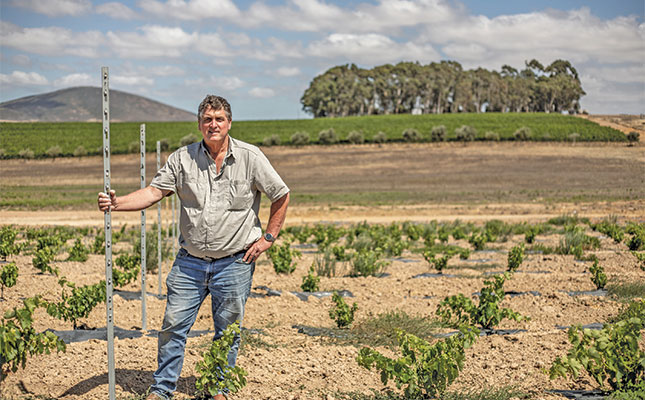
The Louw family had lived on the property for several generations before Arend Brink bought it in 1897, but it was André who would oversee the most dramatic expansion in the farm’s history. During his tenure, operations grew from 350ha to 4 650ha by purchasing neighbouring Durbanville farms and land elsewhere.
Fourth-generation André and his wife Ronelle have been growing wine grapes at Groot Phesantekraal since the late 1990s, supported by their children who each bring expertise to the operation. Son Arend Daniel Jacobus (Rennie), who has a degree in accounting from Stellenbosch University, handles the business side, while Jean André (Jeandré), with his agricultural degree, manages the cattle, sheep and game. Sister Marizanne works as an industrial engineer.
The wine venture began with the Brinks partnering with long-time family friends, the Louws, from nearby Diemersdal Wine Estate. The first Groot Phesantekraal vintages were made at Diemersdal before their own cellar was built, a collaboration that would prove pivotal in another way.
The Winemaker’s Arrival
In November 2020, Richard Schroeder joined as winemaker, bringing both expertise and deep personal connections. The 31-year-old Durbanville native had been lifelong friends with the family – he, Rennie and Jeandré matriculated from Paarl Boys’ High School and continued together to Stellenbosch University.
While making Groot Phesantekraal’s wine at Diemersdal, Schroeder met Diemersdal’s winemaker, Janeke Beck. The two married in November 2024.
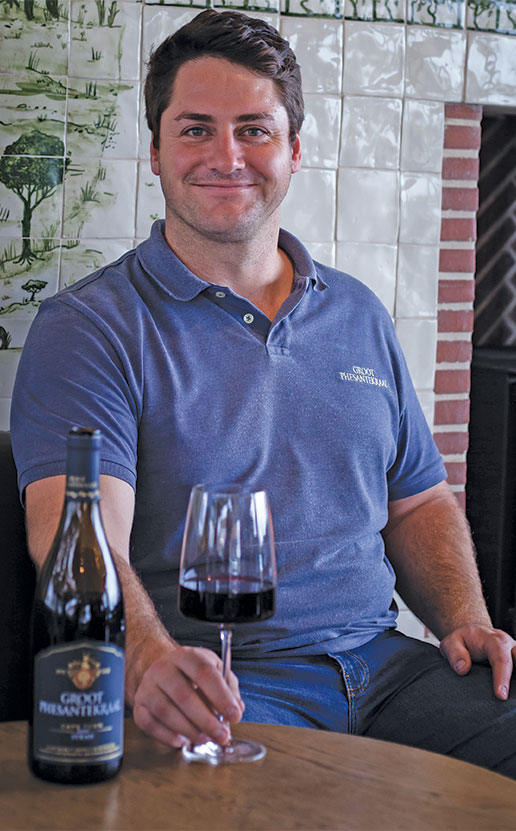
Schroeder’s impact was immediate and dramatic. His 2021 Syrah – his debut vintage made from the oldest vineyards on the farm – earned him a nomination for the Diners Club Young Winemaker of the Year Award in 2022. The recognition continued in 2023 with another nomination for his Marizanne Reserve Sauvignon Blanc 2022 (named after the Brinks’ daughter).
Chenin Blanc Gamble
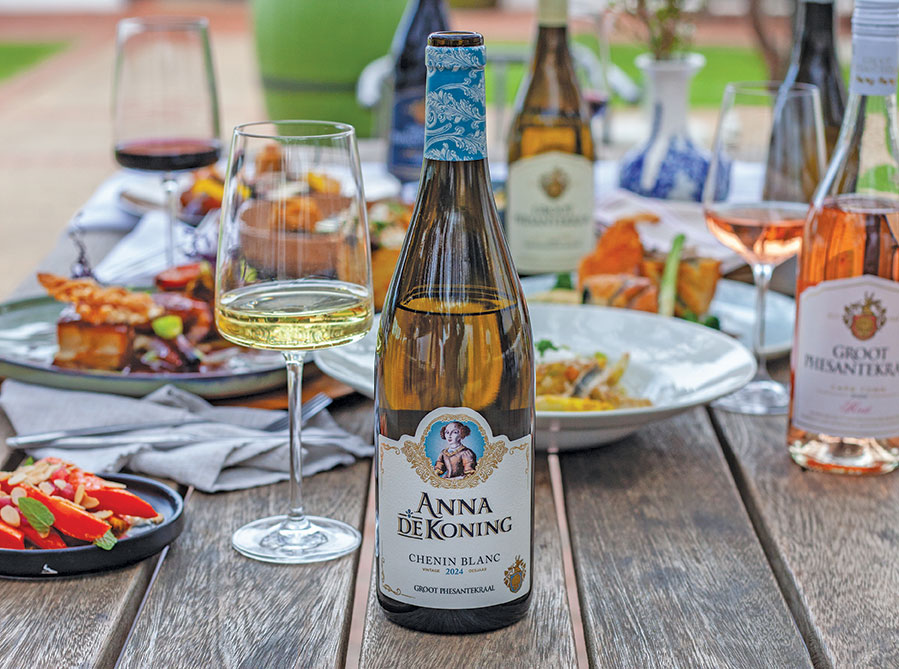
Schroeder’s boldest move was championing Chenin Blanc in a region famous for Sauvignon Blanc. His gamble paid off spectacularly when the Anna de Koning Chenin Blanc 2023 earned the Chenin Blanc trophy at the 2023 Michelangelo International Wine & Spirits Awards.
While the Durbanville wine region is already famous for producing some of the land’s best Sauvignon Blanc, Schroeder doubled down on Chenin, expanding production from
1 800 bottles in 2021 to 6 000 bottles within three years. Currently, 6ha are planted to Chenin, with three more planned for 2026.
The choice makes strategic sense. South Africa leads the world in Chenin Blanc production, accounting for more than 50% of global output, though the grape’s position as a premium wine is relatively recent despite its long South African history since 1655.
Crafting Award-Winners
Schroeder achieves his award-winning profiles through innovative techniques.
The flagship Anna De Koning Reserve Chenin Blanc 2023 offers concentrated, elegant sweet melon fruit with honeyed almond, nougat, candied nut and citrus notes following through on the palate.
This refined complexity comes from fermenting in 500ℓ amphora clay pots (in the traditional Georgian style) and mostly older French oak barrels, with the wine kept on the lees an additional nine months before bottling.
The Chenin Blanc 2024, made from block seven located close to the restaurant, benefits from an unusual terroir advantage.
The block is split into two smaller sections where row directions are perpendicular to one another, creating complexity in the final product. The combination of Malmesbury shale and deeper clay soils provides good water-holding capacity. Later ripening allowed longer vineyard time and a higher flavour concentration.
Other successes followed: Schroeder’s Berliet Pinotage 2021 (named after André Brink’s father’s bright orange vintage car) earned one of the best Pinotage scores, with 97 points at the 2023 Trophy Wine Show.
Groot Phesantekraal Marizanne Reserve Sauvignon Blanc 2023 was awarded five stars in the Platter’s 2025 South African Wine Guide and featured as Wine of the Week by influential critic Michael Fridjhon.
Beyond Wine: The Complete Vision
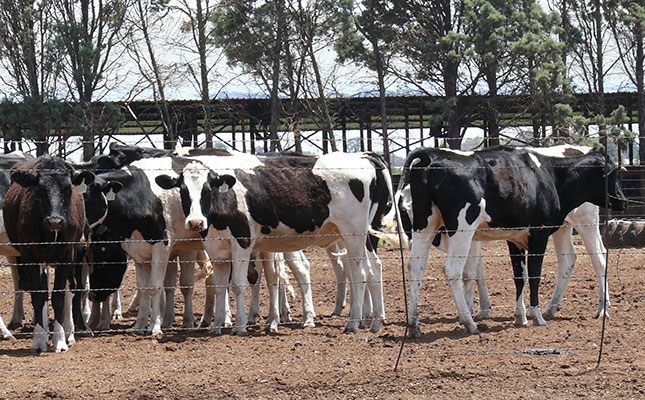
The transformation extends beyond winemaking. Today, the diversified operation supports 3 500 Dohne Merino ewes, 400 Hereford cattle and 180ha of wine grapes, with 3 000ha dedicated to wheat and other crops while grazing lands are rotated.
Currently, Groot Phesantekraal uses about 25% of its grape production, selling the remaining 75%, but as their own vintages expand, this percentage will change. As Rennie puts it, they aspire to be “price makers not price takers”– a wish shared by everyone in agriculture.
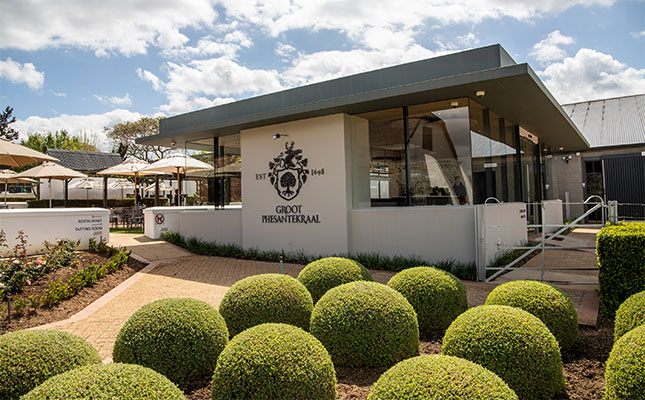
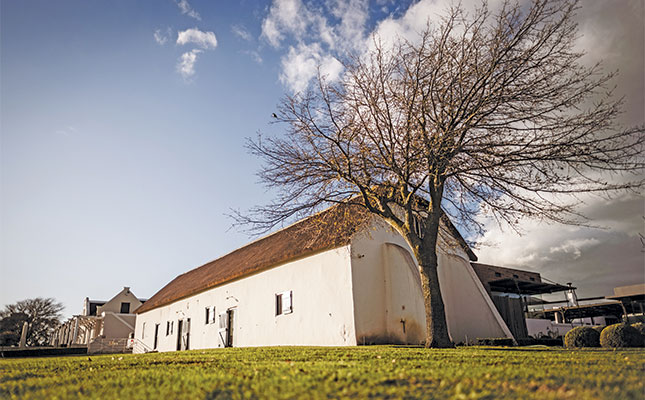
The new restaurant, helmed by Germaine Esau in a beautifully converted 1767 stable and shearing shed, embodies their farm-to-table philosophy. Wherever possible, meat, vegetables and grains are produced on the farm. Venison comes from the family’s regular hunting trips, and they even make their own pellet food so they know exactly what goes into feed for their cattle and sheep.
During Farmer’s Weekly’s interview with Schroeder and Rennie inside the new restaurant, the writer considered what the space was like 250 years previously. Some of the stone floors remain, as do some troughs. It would have smelled quite different then compared to the delicious steak scents emanating from the kitchen. The thick-set walls tell of their age, but the blue and white ceramic tiles, quite traditional for the 1700s, are all newly made by acclaimed ceramicist Michael Chandler.
Land to Legacy
“Our new restaurant highlights our deep-rooted connection to this land in our food, in our wine, in good company, in community, in spirit and in soul. That’s what we’re about,” Brink explains.
Groot Phesantekraal’s motto – Land to Legacy – reflects their philosophy as custodians for future generations.
This includes chosen family like Schroeder, Germaine and other key staff members. Soon a sixth generation will join as Rennie’s son eventually enters the operation.
They use the Afrikaans word gesellige often in their promotional material, and it perfectly captures the essence: Groot Phesantekraal is a place you want to share and socialise with friends and family, to linger long after the meal and wines have ended.
From a 2004 crisis to 2024 triumph, the Brinks have proven that sometimes the biggest risks yield the greatest rewards.
For more information visit grootphesantekraal.co.za.