At the heart of the Anna Foundation’s work is the 3 Rs Programme (Reading, Running, Right-ing), which provides children with literacy, fitness, and life skills support in safe after-school spaces, while training and employing local women as facilitators, empowering them to become anchors in their communities.
Children in South Africa’s rural communities often grow up facing obstacles that make learning difficult: overcrowded classrooms, little individual support, and home environments where parents work long hours and resources are stretched. For many, these barriers shape their futures long before they reach high school.
In many communities, the foundation’s centres have quietly become the heartbeat of farm life – a place where children are encouraged to learn and grow, where local women build confidence and earn an income, and where families know they’re not facing challenges on their own.
Making a difference
The initiative began with its founder, Anna Brom, who grew up in a Boland farming community and became aware, from a young age, of the inequalities surrounding her.
“I always knew I wanted to help children who didn’t have the opportunities I had,” she says.
“When I was young, farmworkers’ children would come and play near our home. At 5pm, I would be called in for a warm bath and supper, but they were never called in. As I grew older, I started to realise that many had no bath waiting for them, no meal, and often no parent at home.”
Brom’s vision took shape years later during her teaching practical at a farm school in Mpumalanga while completing her post-graduate diploma in education through UNISA.
Every day, she saw the challenges rural children were up against: crowded classes, almost no resources, and lessons taught in English to mostly isiZulu-speaking learners. Without individual attention, many of these children simply slipped through the cracks.
To help, Brom created a small remedial reading group, using books she collected from friends and family in what she called a ‘library in a box’. A 13-year-old boy became her first student, and with time and encouragement, he learnt to read.
The library soon grew, thanks in part to books donated by Exclusive Books. Brom then started a running group, and the same 13-year-old boy became her most dedicated runner. As more children joined, she introduced a rule: if they wanted to be part of the running group, they had to read two books from the library box.
The 3 R s take shape
What began informally eventually developed into the foundation’s structured 3 Rs Programme.
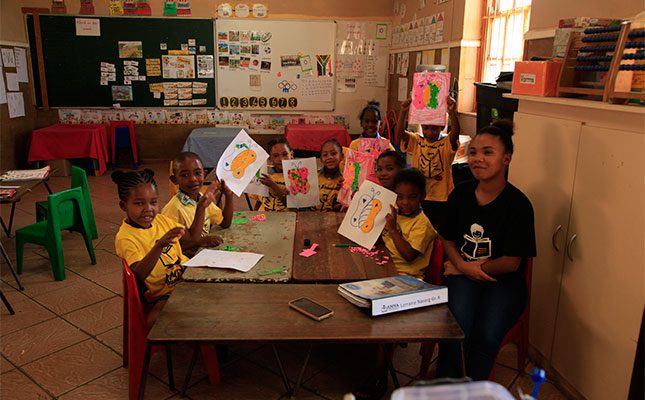
Reading focuses on literacy, reading for understanding, numeracy, and homework support. Lessons are guided by grade-specific worksheets designed by teachers, but play remains a central part of the programme.
“Children learn through card games, reading games, and hands-on activities stored in maths and reading boxes,” explains Brom.
Running forms the sports pillar, which was developed by a human movement specialist. Every term highlights a different activity – from soccer and rugby to volleyball and dance – and many centres also have bicycles for learning cycling skills.
Weekend fun runs help build fitness and connect children to the wider community.
Right-ing, short for ‘right living’, is the life skills component. Created by drama therapists and play specialists, it helps children build confidence, team spirit, and emotional intelligence. Through drama, games, and guided activities, they learn communication, problem-solving, empathy, and creativity.
Growing reach
Brom registered the Anna Foundation as a non-profit organisation in 2005, and what started as one small after-school programme has since expanded into a model now used at 21 after-school centres across parts of the Western Cape, including Elgin, Langeberg, the Boland, and Rawsonville.
In total, 821 learners take part, and the foundation hopes to expand further in these regions in the coming year.
“The centres are established where there is a clear need and where a safe, dedicated space is available,” says Brom.
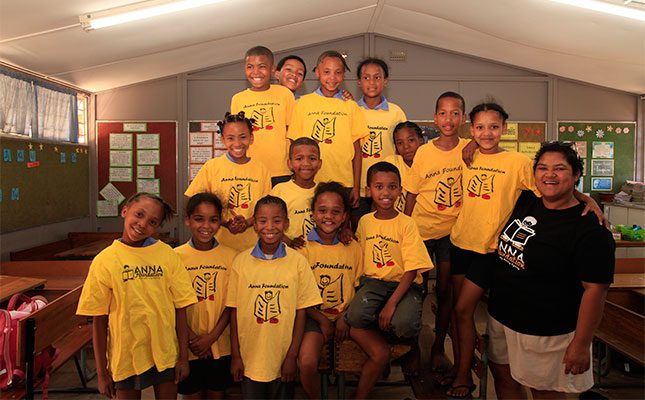
The facilitators are all women from the surrounding communities. Most don’t have formal training when they start, but they receive ongoing support from the foundation. Workshops take place twice a month, and project managers visit weekly to help facilitators implement the programme confidently and consistently.
“Over time, these women become trusted figures in their communities; role models who help create stability for local children,” adds Brom.
Challenges behind the scenes
As with most non-profit work, funding remains a constant challenge. Roughly one-third of the foundation’s income comes from the farms where the centres operate. The rest is raised through major events such as the Absa Cape Epic, Wines2Whales, and the Two Oceans Marathon, as well as private fundraising efforts and donations from individuals and companies.
In-kind support also plays a big role, from food boxes supplied by the Lunchbox Fund to books from Book Dash and clothing from annual drives.
Most of the foundation’s expenses go towards paying facilitators, followed by resources, sports equipment, food, and venue costs.
To make the programme accessible, the foundation offers different partnership models. Some farms opt for a smaller support-based model, which costs around R3 000/month, while full after-school centres serving 50 to 100 children can cost up to R30 000/month. Larger sites require more facilitators, equipment, and management.
Behavioural and emotional challenges also come with the territory, as any children come from difficult circumstances and need extra guidance.
“We support facilitators with continuous training, site visits, and help with classroom management. The goal is to create a structured, positive atmosphere where children can settle, feel safe, and learn,” says Brom.
More than academics
She emphasises that after-school programmes have benefits far beyond schoolwork.
“Farmworkers are parents first, and every parent wants to know their child is safe, cared for, and growing each day. When families have peace of mind, they are happier and more productive at work,” she explains.
The foundation also plays a meaningful role in tackling South Africa’s literacy crisis. National results show that about 80% of Grade 4 learners cannot read for meaning.
“The targeted support offered by the programme has led to measurable improvements in our children’s reading and numeracy skills, while sport and life skills help to broaden their horizons and build resilience,” Brom explains.
However, the foundation aims to do more than improve academic outcomes.
“We follow a holistic approach aimed at giving the children confidence and skills to see a wider world, whether that means opportunities beyond the farm or becoming a new generation of skilled, empowered individuals within their communities,” she adds.
For more information email the Anna Foundation at [email protected], phone 021 885 1922, or visit annafoundation.com.