
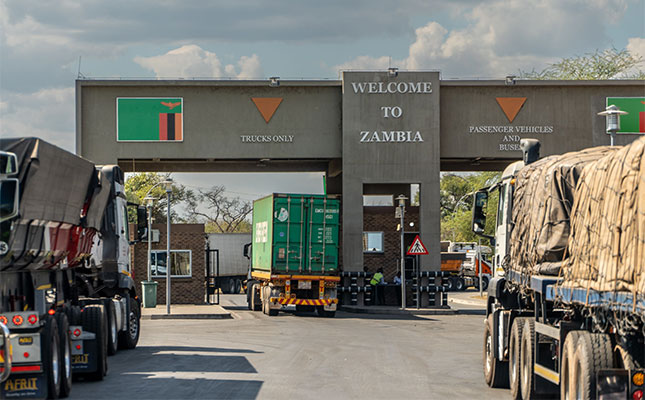
On 14 February, Benny Munyama, spokesperson for Zambia’s Ministry of Fisheries and Livestock, confirmed that all import permits from South Africa had been revoked.
The suspension covers live cloven-hoofed animals, livestock feed, trophies, skins, hides, and hooves. Permits for cloven-hoofed animal products, including meat and dairy, are also halted unless strict mitigation measures in line with the World Organisation for Animal Health code are applied. Transit permits for live animals moving through Zambia are also suspended.
The move follows President Cyril Ramaphosa’s declaration of FMD as a national disaster during his State of the Nation Address, describing it as ‘among the worst outbreaks’ South Africa has experienced. Cases have now been reported in all nine provinces.
Wandile Sihlobo, chief economist at Agbiz, said Zambia’s action is understandable given the regional risk posed by FMD.
“Whenever there is an FMD outbreak of this scale, neighbouring countries will act swiftly to protect their own industries,” he told Farmer’s Weekly.
“While this is a precautionary step by Zambia, it does add to the mounting trade pressures facing South Africa’s livestock industry. The key issue now is speed and coordination in the vaccination campaign. The quicker South Africa can demonstrate credible [FMD] containment and progress, the sooner we can begin restoring confidence in our export markets,” Sihlobo emphasised.
Both Dawie Maree, head of agriculture information and marketing at FNB, and Moses Rannditsheni, director of media and external communication at the Department of Agriculture, described the suspension as “not significant” in volume terms.
“South Africa only exports genetic material to Zambia in the form of live animals, which means it’s not a big concern, except for breeders of genetics, normally Boran breeders. But it can be expected given the FMD outbreak,” Maree said.
However, Francois Rossouw, CEO of the Southern African Agri Initiative, cautioned that the greater risk lies in disrupted transit routes.
“Zambia is a critical road corridor into markets further north, including the Democratic Republic of the Congo and parts of East Africa. When transit permits are suspended, it disrupts an entire regional supply chain. The effect is multiplied beyond one bilateral relationship,” he explained.
The South African government has announced plans to vaccinate 14 million cattle over 12 months as part of its containment strategy. In the statement, Munyama said Zambia’s measures are precautionary and will be reviewed depending on how the outbreak progresses in South Africa.