
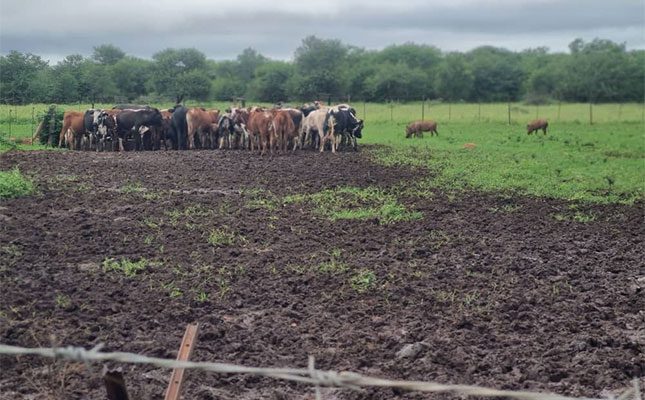
Speaking to Farmer’s Weekly, Dr Thembi Ndlangamandla, regional veterinary officer for Hhohho in Eswatini and national head of the FMD communication team, said the first laboratory-confirmed case of FMD in the country last year was identified at the Sikhwebezi dip tank in the Mkhwakhweni area of the Hluthi subregion, Shiselweni Region.
FMD strain traced back to South Africa
Ndlangamandla said blood and tissue samples collected from the affected animals revealed that the circulating strain is the SAT2 serotype, the same one responsible for the November 2024 FMD outbreak in Godlwayo, KwaZulu-Natal (KZN), South Africa.
“The virus typing, coupled with the fact that the cordon line was broken around Mkhwakhweni, indicated that the disease could have come from KZN when [South African] cattle strayed into Eswatini, or vice versa,” she added.
“The outbreak slowly spread from the Shiselweni Region to parts of the Lubombo and Manzini regions. As of January 2026, only the Hhohho Region of Eswatini remains FMD-free.
“When FMD began in the country, only cattle were affected. No cattle died from FMD, but around 14 died of starvation due to mouth lesions preventing grazing. As the disease spread, pigs in a few piggeries became infected, and in one piggery, 14 piglets died from the disease,” Ndlangamandla explained.
A report published by the World Organisation for Animal Health on January 26, based on information from the Eswatini government, stated that FMD cases are increasing due to contact with infected animals at grazing and watering points.
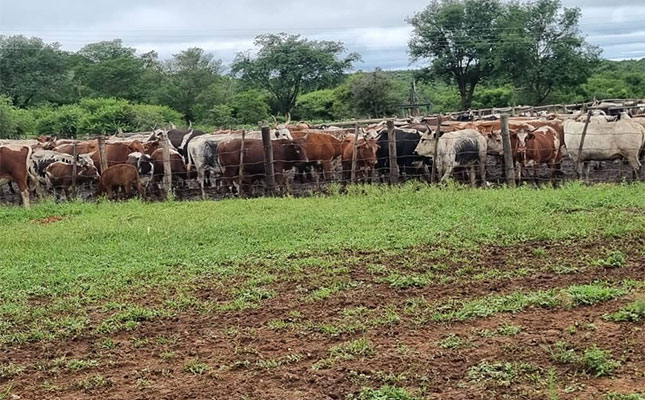
It also showed that the latest cases were reported at Sikhwebezi, which has 672 cattle, 226 goats, 21 sheep, and 71 pigs.
“The animals have different owners but share grazing lands and watering sources,” the report read.
Foot-and-mouth disease (FMD) control measures, including livestock movement restrictions and a ban on trade, have been implemented.
As part of the country’s FMD control measures, Ndlangamandla said the following steps were taken:
- Livestock movement control restrictions were imposed in the FMD-affected area.
- The cordon fence was repaired, and 60 guards were employed to patrol and maintain its integrity. In addition to patrolling, they ensure that cattle from neighbouring countries do not mix with Eswatini herds.
- Twenty-four-hour FMD control check points have been strategically set up to help contain the disease. They ensure that no cloven-hoofed animals or their products leave infected areas for disease-free parts of the country.
- Patrol teams have been deployed to prevent contact between infected and disease-free herds.
- Targeted emergency mass vaccination was carried out in affected herds.
- Public awareness campaigns were launched through media skits, newspaper articles, radio programmes, and in-person meetings with industry stakeholders, farmers, butchery and abattoir owners, feedlot operators, veterinary staff, media personnel, piggery owners, and government ministries.
Outbreak takes toll on economy
Ndlangamandla said the outbreak has had a significant negative effect on Eswatini’s economy and, according to her, it has left red meat shelves in most local supermarkets empty.
“Because of the outbreak, local and international trade in cloven-hoofed animals and their products stopped completely,” she explained.
Eswatini’s recent FMD outbreak has prompted the EU to temporarily suspend the country’s fresh beef and game meat exports, removing Eswatini from the list of countries meeting animal health requirements. The move affects the entire country and reduces revenue for the livestock industry.
Tammy Dlamini, CEO of the Eswatini National Agricultural Union, told Farmer’s Weekly that the halt in trading has hit farmers’ pockets hard.
“The impact on farmers has been significant, as most of the meat trade, especially goats and cattle, is done in the informal market. Thus, trade was halted while the government worked to contain the spread. Pig farmers mainly supply the formal market, but these sales were also halted, leaving farmers with animals that were ready for slaughter but could not be taken to market,” he explained.
Dlamini said farmers want to be actively involved in fighting the disease by helping the government plan how production can continue alongside vaccination initiatives, balancing animal health with economic realities and protecting livelihoods.
Farmer Maqhawe Mavuso, who breeds cattle, goats, and pigs, said he had lost 10 cattle to FMD.
“[Farmers] are in debt because of FMD. Livestock farmers rely on selling animals to make their income, but now we can’t sell.
“The government should declare [FMD] a national disaster. Our government, especially the Prime Minister [Russell Dlamini], needs to intervene in this matter,” he said.