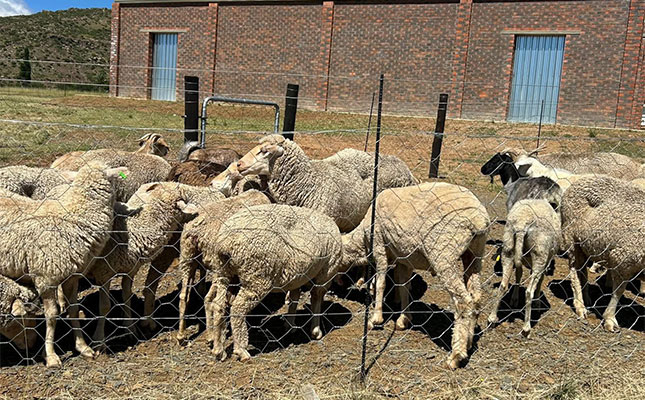

For livestock producers, the biggest expectation centres on animal health funding, especially in light of the country’s ongoing foot-and-mouth disease (FMD) crisis.
Speaking to Farmer’s Weekly, Red Meat Industry Services (RMIS) CEO Dewald Olivier said the red meat industry wants the budget to treat animal health as a national economic risk rather than an agricultural issue.
“We want to see stable and predictable multiyear funding for FMD prevention and response, because emergency funding makes long-term planning extremely difficult,” he said.
Olivier explained that current funding and policy support are insufficient to manage FMD risk across the red meat value chain in a sustainable way.
“State veterinary services remain under-resourced. Funding is often fragmented and reactive, which forces both government and industry into crisis management instead of proper prevention.
“In the end, the cost of underinvestment is far higher than the cost of prevention, especially when producers’ livelihoods are at risk.”
He added that confidence in the sector would improve if the budget clearly increased spending on animal health and biosecurity, with measurable outcomes.
“Dedicated funding for traceability and surveillance would show long-term commitment. A well-funded and consistent national approach would give the entire value chain more certainty.”
From a risk-management perspective, RMIS believes practical, on-the-ground investments are most urgent, Olivier said.
These, he explained, include improved early detection and surveillance, access to vaccines matched to local strains, clear communication with farmers during outbreaks, and stronger public-private partnerships to reduce economic disruption to trade, prices, and rural stability.
Sugar cane farmers call for relief from sugar tax
In the sugar industry, which is currently struggling on several fronts, the South African Canegrowers Association (SA Canegrowers) is calling for relief from policy measures which it says continue to weaken an already strained industry.
SA Canegrowers CEO Dr Thomas Funke told Farmer’s Weekly that the Health Promotion Levy (HPL), commonly known as sugar tax, remains a major concern ahead of the budget.
“The Health Promotion Levy continues to dampen domestic demand from beverage manufacturers for locally produced sugar at a time when the industry is least able to withstand additional strain,” he said.
Eight years after the HPL’s introduction, Funke said it had failed to demonstrate measurable public health benefits.
“According to findings presented at [National Economic Development and Labour Council], the first year of implementation was linked to an estimated 16 000 job losses and approximately R2 billion in lost revenue.
“Moreover, no real-world studies have conclusively shown positive health outcomes, such as reduced obesity levels or declines in diabetes prevalence.”
SA Canegrowers is calling on government to scrap the tax. “The levy only causes harm,” Funke said, adding that growers were also looking for stronger protection against cheap sugar imports to safeguard local production and rural jobs.
Beer industry calls for fair excise taxes
Concerns around tax policy extend beyond sugar, with the Beer Association of South Africa (BASA) warning that continued above-inflation excise increases are placing mounting pressure on beer producers and agriculture-linked value chains.
In a press statement, BASA CEO Charlene Louw said the industry is not seeking tax relief but rather a fair and predictable excise framework.
“Above-inflation increases place further pressure on already thin margins, stall investment, and undermine long-term planning across the beer value chain.
“What we are calling for is fairness, reasonableness, and predictability; a CPI-linked excise framework that gives producers certainty, protects jobs and enables investment,” she explained.
In the May 2025 Budget, excise tax on alcoholic beverages rose by 6,75%, more than double the 3% CPI inflation target set out in the Medium-Term Budget Policy Statement.
She also said such increases are fuelling illicit alcohol trade, a risk National Treasury has also acknowledged.
According to Louw, input costs have also consistently outpaced inflation, and between 2000 and 2024, brewers’ total cost inflation reached 38,2%, compared with a CPI of 25,1%, compressing margins and placing small brewers under strain.
“Beer companies already carry a double tax burden through corporate income tax and excise duty.
“Continued price increases on legal beer do not curb consumption; they simply shift demand to cheaper, unregulated and unsafe alternatives.”
In 2023, the beer industry supported an estimated 210 000 jobs and contributed R98 billion (1,4%) to the GDP, with strong downstream linkages to agriculture, packaging, logistics, and hospitality, she added.
Louw said National Treasury had an opportunity in this year’s budget to stabilise the industry by maintaining CPI as the benchmark for excise adjustments and adopting a predictable, multiyear framework.
“Certainty allows companies to plan, invest and continue supporting employment across the value chain,” she said.
Broader fiscal context
Meanwhile, broader budget expectations are being shaped by the overall fiscal outlook.
According to PwC’s predictions, the budget is expected to focus on revenue stability, administrative efficiency, and targeted economic stimulus, while factoring in geopolitical risks such as global trade tensions and uncertainty around the African Growth and Opportunity Act.
PwC South Africa chief economist Lullu Krugel said the country’s real GDP growth for 2026 is forecast at 1,2%, rising gradually over the medium term.
“While the economy is expected to expand steadily, a significant portion of overall growth continues to reflect pressures rather than a sharp increase in real output,” she said.
PwC expects government to maintain its commitment to fiscal consolidation, with infrastructure investment remaining a priority, despite expenditure pressures. Tax policy changes are expected to be limited, with revenue gains likely to come from improved compliance rather than higher rates.
Political expectations
From a political perspective, the DA has warned against any further tax increases.
DA spokesperson on finance Dr Mark Burke said in a statement that South Africans are “deeply overtaxed”, calling for tax brackets and rebates to be adjusted for inflation. He also urged stronger action against wasteful spending, state-owned enterprise debt, and the illicit economy.
Meanwhile, the ANC said the country is approaching the budget from a position of improving economic momentum, with agriculture and mining contributing strongly to output and exports.
It added that infrastructure investment, water security, logistics reform, and support for the social wage should remain central, while fiscal consolidation should not undermine service delivery.