
The application follows the collapse of the approved rescue plan after sale agreements with the Vision Consortium lapsed on 7 February 2026.
According to the BRPs, the adopted business rescue plan is “no longer implementable”, leaving no reasonable prospect of saving Tongaat as a going concern.
From rescue to liquidation
Tongaat Hulett entered voluntary business rescue in October 2022 after historic accounting irregularities and governance failures under former management wiped out an estimated R12 billion in shareholder value.
In January 2024, creditors approved a Vision-led rescue plan. The proposal was initially structured around a debt-to-equity swap and, failing that, an asset sale. Implementation depended on three critical conditions:
- Refinancing of the R2,3 billion post-commencement funding facility provided by the Industrial Development Corporation (IDC);
- Funding of a R517 million escrow account for the South African Sugar Association, pending litigation over statutory levies; and
- Provision of R75 million for concurrent creditors.
Although the BRPs sought leave to appeal a December 2025 Supreme Court of Appeal ruling that Tongaat Hulett could not suspend statutory sugar industry levies during business rescue, they maintained that litigation would not derail the Vision Consortium transaction.
However, negotiations between Vision and the IDC failed to result in binding agreements. The BRPs stated that Vision introduced new material conditions not contemplated in the adopted rescue plan, which they argued would expose Tongaat to significant commercial risk and possible breaches of existing obligations.
With no extension agreed on acceptable terms, the sale agreements lapsed. Matters escalated further when Tongaat Hulettreceived a letter of demand from Vision for approximately R11,7 billion, stated to be immediately due and payable, a development with serious implications for the company’s solvency.
Severe implications for cane growers
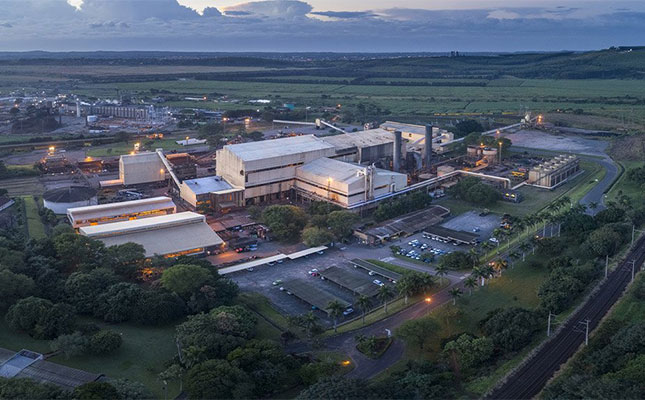
The potential liquidation of Tongaat, which operates three of South Africa’s 12 remaining sugar mills, has sent shockwaves through the cane-growing regions of KwaZulu-Natal.
Industry body SA Canegrowers warned that an unfunded liquidation poses a profound risk to the entire sugar value chain. Sugar cane must be milled shortly after harvesting; any interruption in milling could leave growers unpaid and crops deteriorating in the fields.
SA Canegrowers represents approximately 27 000 small-scale and 1 100 large-scale growers. The loss of three mills could destabilise growers, mill workers, transporters and downstream industries, threatening hundreds of thousands of livelihoods.
In an interview with Farmers Weekly, Dr Thomas Funke, CEO of SA Canegrowers, said there was currently no contingency plan in place.
“There’s no contingency, and that’s how serious it is,” Funke said.
“The liquidation of Tongaat Hulett has to be done in a controlled and funded manner so that the mills remain open and continue to crush cane. If not, growers will lose their businesses, farmworkers won’t get paid, and thousands of small-scale farmers will be affected.”
Funke added that all remaining mills were already operating at full crushing capacity. “If one mill closes, the others cannot absorb all that cane. There may be small volumes that can move elsewhere, but in general the system is full. If Tongaat does not open, roughly four million tons of cane would be at risk of not being crushed.”
He also confirmed that there were no immediate financial relief mechanisms available to small-scale growers outside of normal cane deliveries.
“All income is linked to delivering sugar cane. If you don’t deliver, you don’t get paid. Even the industry’s transformation fund is linked to deliveries. Any reduction in cane supply reduces that income.”
What happens next?
The provisional liquidation application relates only to Tongaat Hulett’s South African operations. The group’s operations in Zimbabwe, Mozambique and Botswana continue to trade.
While provisional liquidation marks a serious escalation, it does not automatically mean mills will close immediately. In some cases, funding solutions or asset sales can still be concluded during provisional liquidation proceedings.
Whether such a lifeline materialises will likely depend on the willingness of key stakeholders, including Vision, the IDC, industry bodies and government, to re-engage under revised terms.
For now, growers across KwaZulu-Natal face a period of deep uncertainty as the future of one of the country’s largest sugar processors hangs in the balance.