The call was made recently during a FairPlay-hosted webinar on VAT-free chicken, featuring Izaak Breitenbach, CEO of the South African Poultry Association’s Broiler Organisation, and Charles de Wet, an executive in ENSafrica’s tax practice, who helped compile the economic case submitted to National Treasury.
FairPlay founder and Executive Director Francois Baird said the organisation has been campaigning for VAT-free chicken since 2017, after it emerged that nearly 28% of South African children under the age of five years were stunted, largely due to inadequate protein intake in utero and during early childhood.
“This means we are literally starving our future,” he said, adding that zero-rating chicken will immediately reduce prices by 15%, helping to address malnutrition and hunger in poor households.
FairPlay also opposes predatory trade practices such as dumping, which Baird said had historically undermined local poultry producers and ultimately driven up food prices. He cited Ghana as a cautionary example, where liberalised imports displaced domestic producers and left consumers paying more for chicken than beef within a decade.
The proposal
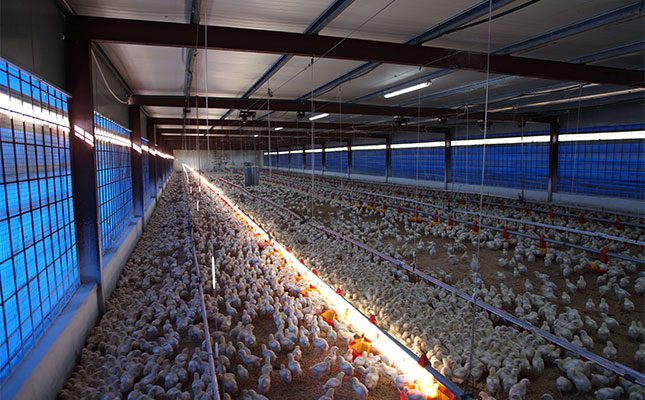
The proposal focuses specifically on frozen bone-in chicken portions and chicken offal. Breitenbach said these products are predominantly consumed by lower-income households, while higher-income consumers tend to buy fresh and further-processed chicken products, which are excluded from the proposal.
He added that the poultry industry is highly competitive and that any VAT reduction will be passed on to consumers rather than absorbed by producers, resulting in increased consumption.
“We want chicken and offal on the plates of people who currently don’t have access to it,” he said.
The financial impact
De Wet explained that removing VAT from these products will have a limited impact on the fiscus. Based on ENSafrica’s calculations, zero-rating frozen bone-in chicken pieces would cost about R5 billion a year, rising to roughly R6 billion if fresh bone-in portions were included, with chicken offal adding an estimated R1 billion.
“That’s less than 1% of the [roughly] R1,86 billion of revenue collected in 2024/25, when VAT amounted to about R457,8 billion,” he said. “From a fiscal perspective, it is affordable.”
He added that zero-rating the specified products could save poor households about R91 a month – a meaningful saving at household level.
De Wet acknowledged National Treasury’s concerns that expanding the zero-rating list could complicate administration or benefit higher-income consumers, but said the narrow product definition addressed many of these risks.
The proposal applies to locally produced and imported chicken, as required under World Trade Organization rules.
Any change to the VAT zero-rating list would need to be announced in the National Budget Speech on 25 February.
De Wet added that the legislative amendment would be technically simple, with the main hurdle being a political decision.
FairPlay said it will continue lobbying political parties and government to support the proposal, describing VAT-free chicken as a critical short-term intervention to address hunger and malnutrition.