
South Africans ranked the cost of living as their biggest worry for 2026 in PwC’s Voice of the Consumer 2025 survey, followed by economic instability, health risks, climate change, and social inequality.
PwC expands on these trends in its newly released South African Economic Outlook, which paints a sobering picture of household financial stress and declining living standards.
Food affordability
While headline inflation has eased, living costs remain unaffordable for many. The mismatch between incomes and essential expenses explains this. Between 2022 and 2024, disposable income grew by an average of 6,4% per year, yet food costs climbed by about 8,3% annually over the same period.
This erosion of purchasing power is putting households under growing financial strain, with the pressure increasingly spilling over into wider social challenges, including crime and gender-based violence.
The scale of this pressure becomes clear when considering what a minimum wage worker takes home each month. PwC estimates that a full-time minimum wage worker earned about R5 300 in October, based on 23 days of work.
After daily taxi transport costs, their disposable income would drop to around R3 450, and prepaid electricity for a household of four reduces this to below R2 300. The family is then left about R1 400 short of affording a basic nutritious diet.
Food insecurity data confirms this strain. Statistics South Africa’s General Household Survey 2024 found that 22,2% of households – roughly 14 million people – considered their access to food to be inadequate or severely inadequate.
Meanwhile, data from the Food and Agriculture Organization of the United Nations show that one in five South Africans was moderately or severely food insecure in 2023.
PwC stresses that the crisis is driven largely by affordability rather than availability: South Africa ranks 52nd for food availability in the Global Food Security Index but only 70th for affordability.
Given the growing squeeze on household budgets, the firm argues that companies need to rethink their approach to employee support, starting with a better understanding of regional living-wage realities.
One of the biggest pressure points is housing – the second-largest expense after food – yet many employers underuse tax-efficient tools that could boost take-home pay.
PwC further notes that geographic pay differentiation may deserve renewed attention, given how dramatically living costs differ between certain areas, such as Polokwane and Sandton.
Healthcare and climate change
Access to healthcare is another growing concern. Health insurance contributions rose by an average of 10,6% this year, while disruptions to HIV and TB treatment occurred early in 2025 when US President Donald Trump halted funding support to South Africa and other countries.
Speculation about the removal of medical tax credits has added further uncertainty. PwC estimates that close to 20 million South Africans lack universal health coverage and increasingly expect employers to step in through preventative care, mental health support, and wellness programmes.
Climate risks further compound these pressures. According to the report, workers are increasingly worried about extreme weather reducing their ability to earn an income.
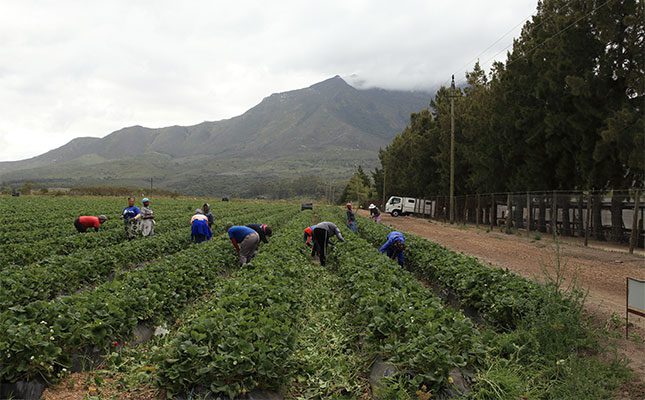
Drought-related water shortages pose a serious threat to agriculture and mining, while heat stress makes outdoor labour dangerous and less productive. Events such as the Western Cape drought (2015–2018), Eastern Cape drought (2018–2021), and KwaZulu-Natal floods (2022) highlighted just how quickly jobs and livelihoods can be disrupted by extreme weather.
PwC encourages companies to use location-based climate-risk analysis to determine how heat, water scarcity, and flooding may affect their staff and operations.
By understanding these local risks, businesses can plan better, protect employees, and maintain continuity even under extreme weather.
Agriculture sector
Speaking to Farmer’s Weekly, Christie Viljoen, senior manager and lead economist for macro analysis at Strategy&, part of PwC, said resolving these challenges is easier said than done, especially in agriculture.
“It is challenging to move from a minimum wage to a living wage in any single year, but even more so in a weak economic environment like the one South Africa has experienced in recent years, where inflation, rising input costs, and economic uncertainty put extra strain on businesses.
“Farmers, in particular, face a double squeeze: they must contend with volatile commodity prices, high input costs, and limited control over the prices they can charge, making it especially hard to increase wages for farmworkers without compromising the viability of the farm,” he explained.
He said the goal of the reports is to raise awareness and, at the very least, encourage people to think about practical solutions.
“We want business owners and leaders to start thinking about practical ways to ease the pressures their employees face. This support doesn’t always have to come in the form of higher wages. Many South African farmers are already providing practical assistance, such as transport to and from work, on-farm crèches, and basic health services, which is making a difference.”
Viljoen added that, as price-takers, farmers have limited influence over food affordability. However, reducing wastage along the entire value chain, from farm to fork, can help to make food more affordable by spreading costs over more products.
Farmers can also donate surplus produce to community feeding schemes through churches, NGOs, and schools to ease the pressure on vulnerable households.
On climate risks, he noted that many farmers are already shifting work hours to early mornings and late afternoons to shield workers from heat stress.
“This is not only humane but also improves efficiencies, as workers are far less productive when they’re suffering from heat stress.”
Viljoen concluded that businesses cannot separate growth from worker well-being, and that stable, healthy, and climate-resilient employees will be essential for economic performance in the decade ahead.