
This momentum is reflected in record airport figures from the Western Cape. According to a press release from Wesgro, Cape Town International Airport recorded 1,12 million two-way passengers in December 2025, an 8% year-on-year (y/y) increase on its December 2024 record.
International passenger numbers grew by 10% y/y to just under 364 000, while domestic two-way passengers increased by 7% to 754 000.
For the full year, the airport handled a record 11,1 million two-way passengers in 2025, including 3,3 million international passengers, a 7% increase compared with 2024.
Wesgro CEO Wrenelle Stander said in the statement that the figures showed the Western Cape was firmly on course to meet its target of doubling tourism by 2035.
‘Strong year’ for Kwazulu-Natal
The 2025/26 festive season was also one of eThekwini’s (Durban) strongest in many years, Mayor Cyril Xaba said at a recent Mayoral Tourism Editors’ Engagement Luncheon.
In his speech, he said preliminary figures indicated that eThekwini welcomed close to 1,2 million visitors over the period, up 19% from the 998 000 recorded the previous year. Accommodation occupancy increased to 77%, up from 72% in 2024, while direct tourism spend rose by 24% to R2,7 billion.
The sector’s contribution to GDP grew from R5,5 billion to R9,6 billion, creating more than 14 000 job opportunities. Beaches and public amenities were heavily used, with more than 6,8 million beach visits recorded between 1 December 2025 and 12 January 2026.
According to Airports Company South Africa, King Shaka International Airport recorded about 32 700 international two-way passengers in December, down by about 4% y/y, while domestic two-way passengers increased by almost 12% y/y to 521 763, the highest level since 2019/20.
Agritourism
While these figures point to a robust tourism sector, industry-specific data for agritourism remains difficult to quantify.
Jacqui Taylor, CEO and founder of AgriTourism Africa, told Farmer’s Weekly that visitor numbers for farm-based tourism were not captured in a single reporting system, making comprehensive analysis challenging.
She added, however, that everyone involved in agritourism she had spoken to in KwaZulu-Natal and the Western Cape reported strong visitor numbers over the festive season.
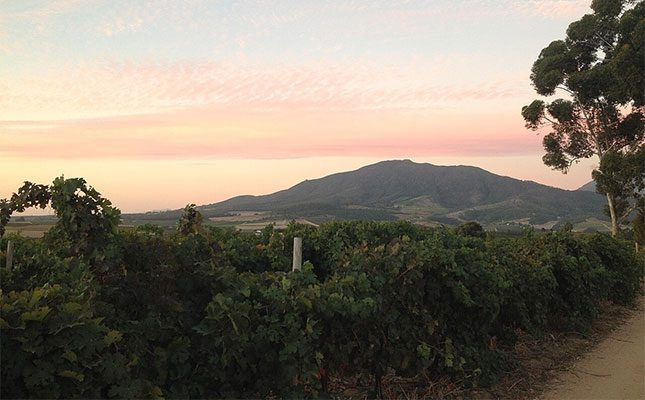
Taylor noted that agritourism was largely localised, with most visitors being domestic travellers. By contrast, international visitors tended to favour the Western Cape during the festive season, with wine farms a major drawcard.
She attributed the boom in domestic travel to COVID-19-related restrictions that curtailed overseas travel, as well as the high cost of trips to Europe.
Taylor added that strong domestic performance in urban centres such as eThekwini was increasingly filtering through to rural areas, where farm stays, food tourism, wine farms, and on-farm experiences are attracting South Africans seeking affordable, close-to-home holidays.
Her advice to farmers who want to venture into agritourism is not to rush in blindly: “Agritourism should be seen as a business extension and deserves a proper business and implementation plan if it is to be economically sustainable.”
Taylor explained that farmers should start by evaluating what assets already exist on their farms, such as accommodation, natural scenery, heritage, food offerings, and farming activities that could be turned into visitor experiences without requiring major capital investment.
Equally important is to understand who your target market is – day visitors, families, school groups, or higher-end travellers – and to design experiences accordingly.
She cautioned that agritourism also brings additional responsibilities, including compliance with health and safety regulations, insurance requirements, staffing, marketing, and customer service, all of which need to be factored into the business model.
“It works best when agritourism complements the core farming operation rather than disrupting it,” Taylor said.
She added that realistic pricing, clear operating systems, and partnerships with other local tourism operators are key to long-term success.