The Land, Enterprise and Agricultural Futures Initiative (LEAF), based at the University of the Free State (UFS), has launched an expert-led information campaign aimed at helping producers limit further spread of foot-and-mouth disease (FMD) through immediate, farm-level biosecurity measures.
Central to this effort is a monthly webinar series hosted by LEAF. The first webinar, held on 29 January, brought together veterinary scientists and animal health specialists to unpack how the virus spreads, why the current outbreak has escalated so rapidly, and what farmers should and should not do during this critical phase.
Dr Lindie von Maltitz, senior lecturer in agricultural economics at UFS and manager of LEAF, said South Africa has never before experienced an FMD outbreak of this scale.
“This is new territory for the entire livestock industry. That is why it is essential that science, research, and practical experience are brought together to support farmers with credible, actionable information,” she said.
Joining her as speakers were veterinary scientist and Free State farmer Dr Marike Badenhorst, and animal scientist Dr Jacques van Rooyen, a rangeland ecologist with a PhD in veterinary science and extensive FMD experience in Southern Africa.
Understanding why this outbreak is different
“What makes the current situation so serious is that most livestock in South Africa’s previously declared [FMD-free] zones are immunologically naïve. Once the virus enters these populations, it spreads extremely fast, often before farmers even realise they are dealing with FMD,” Van Rooyen explained.
Badenhorst emphasised that, until vaccines are widely available, biosecurity remains the most powerful tool farmers have. She urged producers to halt all non-essential animal movement, strictly control access to farms, disinfect vehicles, equipment and footwear, and keep detailed visitor logbooks.
“Farmers must assume the virus can [travel] on people, vehicles, and equipment. Even well-intended visits can cause devastating consequences if basic biosecurity is ignored,” she said.
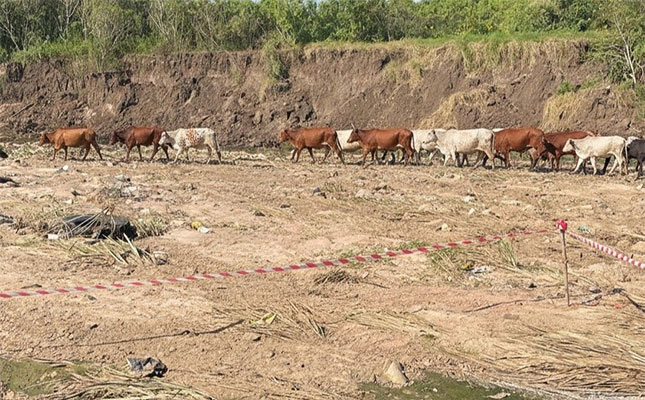
The webinar also highlighted the particular vulnerability of communal farming areas, where free-roaming livestock and limited infrastructure make disease control more difficult.
Van Rooyen stressed the importance of community cooperation, early reporting of symptoms, and close engagement with state veterinary services and extension officers.
“If illegal or panic-driven animal movement continues, the outbreak will remain out of control. Education and collective responsibility are absolutely critical,” he warned.
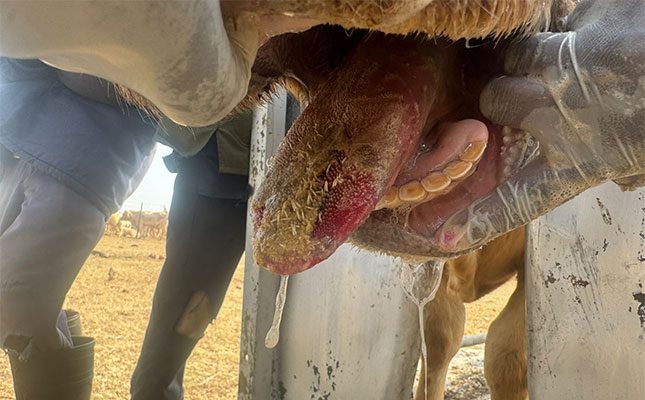
Farmers were also advised on what to do when symptoms appear, including immediate isolation of affected animals, notifying a veterinarian, and complying fully with state-imposed quarantine measures.
Badenhorst cautioned against the misuse of antibiotics, noting that they are ineffective against viral infections and should only be used for secondary bacterial complications.
“Biosecurity is not a once-off intervention; it is an ongoing commitment. Through science, collaboration, and shared knowledge, we can still limit the damage [from FMD] and protect the future of South Africa’s livestock industry,” Von Maltitz added.