

Interest in industrial hemp is growing in South Africa, but experts say farmers considering the crop must carefully weigh several key factors, including market access, seed availability, processing infrastructure and reliable production data.
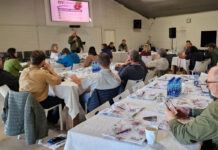
These issues were highlighted at a recent Localisation Support Fund (LSF) roundtable on commercialisation pathways for the industrial hemp sector, where researchers and industry stakeholders discussed what it will take to move hemp from experimental plots to commercial farms.
A study presented by Zageta Solutions examined the economic feasibility of hemp production and identified the main requirements for farmers who may want to include the crop in their operations. While hemp is widely viewed as a promising diversification opportunity, researchers emphasised that successful production depends on more than simply planting the crop.
Start with the market
According to M. Ayanda Bam, executive director of Zageta Solutions, the most important consideration for farmers is whether a reliable market exists.
“Farmers need markets. If there is no off-take agreement or buyer, there is no incentive to grow the crop,” he said during the presentation.
Hemp can be used in a wide range of industries, including food production, textiles, construction materials and personal care products. Researchers often group these markets into the so-called ‘five Fs’: food, feed, fibre, fuel and fractions (chemical derivatives). However, farmers usually grow hemp for a specific purpose, such as a grain, fibre or flower, depending on what buyers require. Without established processors or manufacturers nearby, farmers may struggle to sell their harvest.
Processing capacity is critical
One of the biggest obstacles facing hemp growers in South Africa is the lack of midstream processing infrastructure. Hemp fibre, for example, must be processed using specialised equipment called decorticators, which separate the fibre from the woody core of the stalk. Currently, South Africa has very limited industrial-scale capacity for this type of processing. This means that even if farmers successfully produce hemp, they may have difficulty turning the raw crop into usable products for manufacturers.
“Processing infrastructure is the missing middle in the value chain,” Bam explained.
Seed availability and cost
Seed access is another major consideration for farmers entering the hemp sector. At present, South Africa relies largely on imported seed varieties, with only two locally bred genetics available through the Agricultural Research Council. The study found that seed costs are often the single largest input expense for hemp farmers, making them a key factor in production planning. Developing local seed production systems could help lower costs in the long term, but this process takes time and requires significant investment.
Start small, but plan for scale
Many farmers are currently experimenting with hemp through small trial plots. South Africa’s hemp sector is slowly building momentum, but a lack of validated production and economic data is still holding back large-scale investment.
Research trials are currently being conducted on small 1ha to 2ha plots while researchers and private companies gather baseline information on yields, inputs and suitable genetics. These trials draw on farmer experiences in provinces such as KwaZulu-Natal, the Eastern Cape and Limpopo, where different agro-climatic conditions influence crop performance.
Industry participants say these location-specific trials are essential to determine where hemp can be grown successfully.
Mechanisation matters
Another important factor is mechanisation. Unlike many niche crops, hemp is usually planted at very high densities, sometimes with millions of plants p/ha. Harvesting these plants manually can be extremely labour-intensive and time-consuming.
Economic modelling presented in the study found that mechanised production systems are generally far more viable than labour-intensive approaches. While hemp can technically be grown on small areas, profitability improves significantly when farms operate at larger scales and use appropriate machinery.
Understand local growing conditions
Hemp is adaptable, but it does not grow equally well in all regions. Crop performance depends on factors such as day length, rainfall patterns and soil conditions, which can influence flowering and yields.
Past trials and farmer experiences suggest that provinces such as KwaZulu-Natal and parts of the Eastern Cape may be particularly well suited to hemp cultivation, although further testing is still needed. Genetics also play a role, as different varieties are bred for different climates and end uses.
Financing and regulation
Although hemp cultivation is legal in South Africa under the Plant Improvement Act (No. 11 of 2018), regulatory uncertainty linked to broader cannabis legislation has historically discouraged investment. Banks and financial institutions have generally been cautious about financing hemp projects, particularly where long-term production data is limited. For farmers, this can make it difficult to secure the working capital needed to purchase seed, fertiliser and equipment before the first harvest.
A crop with potential, but still developing
Despite these challenges, industry stakeholders remain optimistic about hemp’s long-term potential. Globally, demand for hemp products is increasing as industries search for sustainable alternatives to synthetic materials.
The Zageta study estimates that South Africa could build a hemp sector worth up to US$40 billion (about R660 billion) by 2040 if the country captures a small share of the global market. For farmers, however, the key takeaway is that hemp should be approached as part of a broader value chain rather than a stand-alone crop.
Until markets, processing facilities and reliable production data are firmly established, hemp is likely to remain a niche opportunity best suited to trial production and contract growing arrangements.