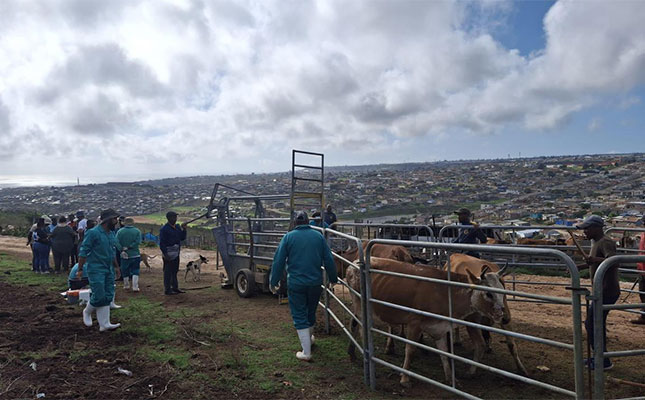
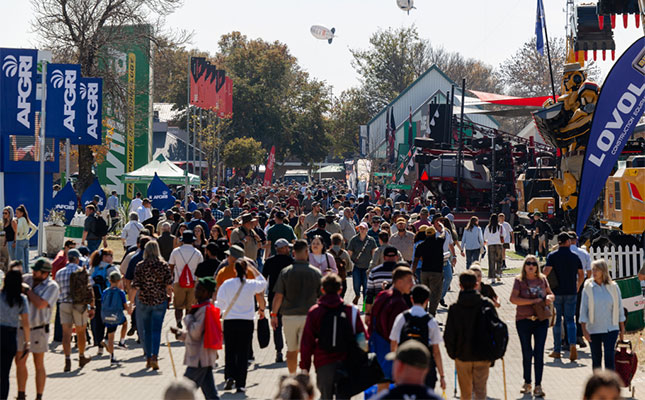
The announcement was made in a media statement issued on 6 February by Grain SA and Nampo management, following the continued spread of foot-and-mouth disease (FMD) across the country and outbreaks approaching central production regions.
The decision was taken unanimously after consultations between Nampo, Grain SA, and various breeders’ societies, supported by a detailed risk assessment and expert input. According to Danie Minnaar, chairperson of the Nampo Harvest Day Committee, the proximity of recent outbreaks left little room for compromise.
“FMD has now, quite literally, come close to home. As protectors of biosecurity, we cannot risk creating a platform where threats cannot be effectively controlled,” he said in the statement.
Early call to reduce industry risk
The announcement follows the recent cancellation of livestock exhibitions at several major shows and auctions, including the Bloem Show, together with strong recommendations from the Free State Department of Agriculture and Rural Development that the current risk associated with animal gatherings is too high.
Expert advice to Nampo management indicated that while strict protocols can reduce risk, they cannot fully eliminate the possibility of disease transmission at a large-scale event.
Speaking to Farmer’s Weekly, Dr Dirk Strydom, managing director of Nampo, said the early decision was aimed at protecting the broader agriculture sector.
“Nampo takes biosecurity extremely seriously. Making this decision well in advance allows breeders’ societies to adjust their planning in good time and helps prevent far greater risks later,” he added.
Strydom explained that although cloven-hoofed livestock exhibitions were cancelled at the Bloem Show as part of broader risk management, this did not directly affect Nampo’s decision timeline.
“Bloem is a specialised livestock show with a high volume of animals and significant animal movement, which creates a very different risk profile. As part of our assessment, we consulted with major agricultural shows across the country,” he said.
Livestock’s role at Nampo
Although Nampo is owned and managed by grain producers, it has always positioned itself as a broad agricultural platform. Historically, the livestock component has been an important part of the exhibition, particularly for diversified and mixed farming operations.
Strydom said livestock remains deeply interconnected with the grain sector. “Livestock is a major demand driver within the grain value chain, which reinforces the interdependence between the two industries.
“The livestock presence at Nampo has traditionally created valuable networking opportunities across commodity groups.”
He added that the value of livestock at Nampo has never been solely about viewing the animals: “The real focus has always been on producer networking and agribusiness trade: genetics services, animal health products, feed, handling systems, water solutions, fencing, finance, and farm technology.”
According to Strydom, feedback from breeders’ societies following the announcement has been largely positive, with many supporting alternative ways to showcase the genetic strengths, performance data, and production value of their breeds without live animals on-site.
“In practice, livestock exhibitors and producers do not attend Nampo primarily to look at animals. They attend to do business and build networks. This creates an opportunity to reposition and strengthen the livestock offering in a more commercially focused way,” he said.
What visitors can expect at this year’s show
No-risk animals such as horses, dogs, and poultry will still be permitted at Nampo 2026, subject to strict biosecurity protocols. All vehicles and facilities involved in animal-related activities will be sprayed and disinfected, and compliance with biosecurity measures will be non-negotiable.
Beyond logistical controls, Nampo management plans to use the situation as an educational opportunity. Biosecurity awareness will be integrated throughout the event programme and layout, focusing on how diseases like FMD spread and the practical steps producers can take to protect their own operations.
Strydom said livestock farmers attending Nampo as visitors are unlikely to experience a loss in value. “If anything, there may be opportunities for deeper, more strategic engagement,” he added.
While general visitors may miss seeing the cloven-hoofed animals in person, organisers believe this will be offset by a more comprehensive learning experience focused on biosecurity, industry sustainability, and performance-driven production.
Looking beyond 2026
Any future reintroduction of cloven-hoofed animals at Nampo will be guided by national disease-control policy and industry protocols, aligned with South Africa’s prevailing FMD risk status.
“Responsible decision-making sometimes means making difficult choices early. This decision was taken in the best interests of producers, the agriculture sector, and South Africa’s animal health,” Minnaar said in the press release.
The FMD threat continues to challenge the livestock industry; however, Nampo 2026 is set to reflect a shifting reality, where innovation, data-driven marketing, and biosecurity take centre stage in protecting the future of farming in South Africa.