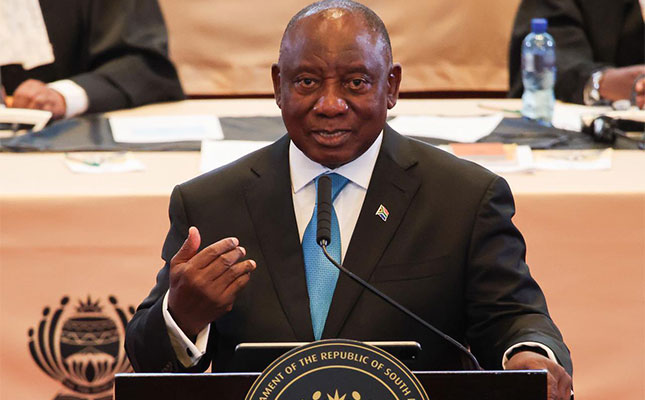

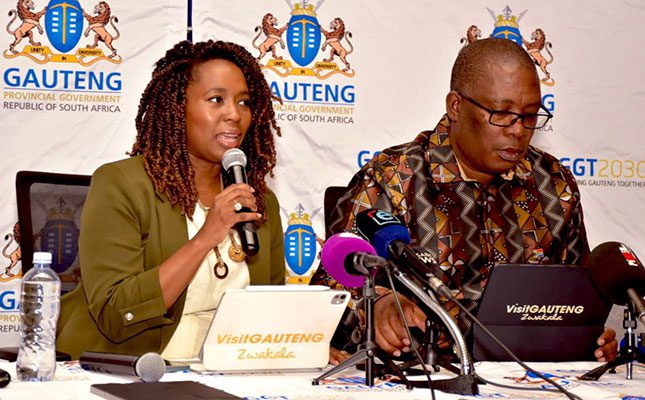
Speaking at a media briefing in Marshalltown, Johannesburg, Gauteng Premier Panyaza Lesufi said the outbreak, which has been unfolding for several months, has reached the level of a national animal health crisis.
He added that Gauteng is among the hardest-hit provinces, with 195 laboratory-confirmed outbreaks currently under management and an estimated 261 018 animals affected.
“The [accelerated response] will have implications for the movement and handling of animals within our province, but it must also ensure that the economy is not harmed. If the economy is harmed, the province cannot move forward. You will see an escalation in food prices negatively affecting food security in our homes,” Lesufi said.
He added that the outbreak in Gauteng could be traced back to April 2025, when cattle from an infected area were unlawfully transported after an auction, leading to the wider spread of the disease.
The premier warned that the consequences of the outbreak extended beyond just animal health: “It will affect trade, threaten jobs in the livestock industry and, without doubt, affect the income of small-scale and community farmers.”
Rapid response strategy
Gauteng MEC for Agriculture and Rural Development Vuyiswa Ramokgopa outlined the province’s accelerated, multi-stakeholder rapid response approach, which is aligned with the national FMD strategy but aims to suppress the virus more quickly at provincial level.
“Gauteng is a national logistics hub, and illegal animal movement has been a key challenge. We are therefore moving beyond business as usual,” she said at the briefing.
Ramokgopa revealed that the provincial strategy rests on four pillars:
- Containment of the outbreak through strict enforcement of the Animal Diseases Act (No. 35 of 1984);
- Expanded vaccination to improve herd immunity;
- Improved coordination between government departments and law enforcement; and
- Strengthened communication with farmers and industry stakeholders to combat misinformation.
She added that, to date, R16 million from the Comprehensive Agricultural Support Programme (CASP) has been allocated for vaccine testing, disinfectants, and additional mobile veterinary units, particularly in communal grazing areas and townships.
In addition, more than 286 000 vaccine doses have already been administered, with a further 90 000 doses procured from Botswana and expected by the end of March.
“All affected farms are under strict quarantine, and new cases are investigated immediately when reported,” Ramokgopa added, acknowledging that vaccine supply constraints remain a major obstacle.
South Africa requires vaccines that protect against multiple circulating FMD strains, limiting sourcing options. “This is why, in the long term, we must rebuild our domestic vaccine production capacity,” she said.
Enforcement and roadblocks
A special meeting of the Gauteng Provincial Executive Council over the weekend of 24 and 25 January resolved to significantly intensify existing response measures and mobilise other departments to strengthen enforcement.
The departments responsible for community safety, transport, environment, cooperative governance and traditional affairs, municipalities, and the security cluster have been instructed to formally participate in the FMD rapid response. This includes the establishment of roadblocks, checkpoints, and route controls in high-risk areas.
Special attention will be paid to access routes near sensitive areas such as Dinokeng Game Reserve, where unregulated livestock movement poses a risk to disease-free buffalo populations and biodiversity assets.
“The [agriculture] department alone cannot enforce containment. If communal livestock [farmers], auction houses, and traders do not comply with regulations, the entire system fails. Enforcement is key,” Ramokgopa stressed.
During the briefing’s Q&A session, officials confirmed that FMD remains a state-controlled disease and that, under current legislation, farmers may not procure or administer vaccines independently. Vaccine procurement and distribution remain the responsibility of state veterinary services while regulatory adjustments are considered.
Ramokgopa said that while Gauteng has the technical capacity to implement mass vaccination, it will require additional personnel if a national rollout is fast-tracked. No additional provincial budget has yet been allocated specifically for FMD, as veterinary services form part of the department’s core mandate.
Responding to concerns that diverting CASP funds will affect emerging and black farmers, Ramokgopa said the opposite was true: “A large proportion of cattle farmers are [black] and small-scale farmers. Protecting this industry is protecting their livelihoods, wealth, and assets.”
Food safety reassurance
Officials also moved to reassure consumers that FMD poses no risk to human health. “FMD is not the same as hand, foot, and mouth disease; it is not a zoonotic disease.
“Meat from animals previously infected with FMD cannot infect humans or cause illness,” Ramokgopa emphasised, adding that red meat remains safe for consumption.
Lesufi concluded by encouraging cooperation instead of blame. “We understand the inconvenience these interventions will cause, but we have no choice. If we do not contain [FMD] now, [meat] prices will rise and livelihoods will be lost.
“We want to work hand in hand with farmers, industry, and national government to defeat this challenge,” he said.
Following the briefing, Ramokgopa told Farmer’s Weekly that Gauteng’s response depended on coordinated enforcement, vaccination readiness, and stakeholder engagement to halt the spread of FMD and restore the province’s disease-free status as quickly as possible.
Get trusted farming news from Farmers Weekly in Google Top Stories.
➕ Add Farmers Weekly to Google ✔ Takes 10 seconds · ✔ Remove anytime