Speaking at the event, held on 22 January at Goudini Spa in Rawsonville, Western Cape, Greyling, a former senior lecturer in agricultural economics at Stellenbosch University, said that while technology is often framed as a rapid solution to industry challenges, the development and adoption of agricultural technologies typically unfold over decades.
“Time and risk are two of the most underappreciated concepts in agriculture,” he said, noting that farmers routinely make intergenerational decisions in an environment where markets, institutions, and corporates often plan just three to five years ahead.
“Think about it: if you plant pecan nuts, it will take about eight years to get into production and more than 12 to break even, and those trees can live for over 100 years.
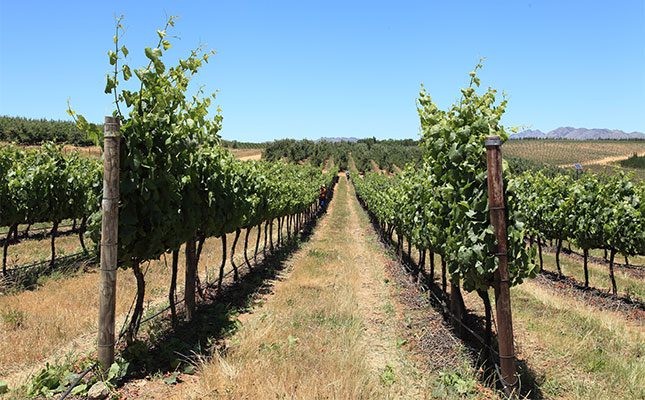
“Similarly, vines should have an average lifespan of about 25 years, which means that a wine farmer generally only has up to two chances to plant in the same land.”
Drawing on historical examples, Greyling showed that it took 50 to 100 years for major agricultural innovations, including tractors, milking machines, and herbicides, to be widely adopted.
Even more recent tools such as satellite imagery and precision agriculture technologies have taken decades to gain traction and still have not been universally adopted.
However, he said the pace of change is accelerating. Data from the US show that crop varieties are being replaced far more rapidly than in the past. In 1990, the average age of a wheat cultivar planted in that country was 36 years; today, it is just over nine years.
“This continual replacement reflects a survival-of-the-fittest process, but it also shows how quickly producers now have to adapt,” Greyling explained.
Greyling warned that South Africa’s wheat industry faces long-term challenges because of ageing cultivars and limited local breeding capacity, describing the current situation as a “crisis 30 years in the making”.
He also highlighted the long-term value of investment in agricultural research. Based on South African data aligned with international findings, Greyling said every R1 million invested in research per day can generate benefits for up to 45 years, with peak returns of about R1,4 million typically realised around the 11th year.
“Research delivers long-term, compounding benefits, but only if we are willing to be patient,” he added.
Future of research shaped by AI
Turning to digitalisation, Greyling said artificial intelligence (AI) is already reshaping agricultural research and decision-making. He noted that advanced AI tools can now deliver analysis previously associated with PhD-level research, raising questions about the future role of universities and traditional knowledge systems.
On the market side, he presented global wine consumption data showing a long-term structural decline. According to international datasets, global wine consumption peaked in the mid-1980s and has since fallen to levels last seen in the early 1960s. Consumption is declining across major markets, including the US, Europe, and China.
Despite this, the value of wine sold globally continues to rise.
“People are drinking less wine, but they are paying more for it,” Greyling said, pointing out that premiumisation is restructuring the industry.
He said that in South Africa, the only segment showing consistent growth is wines priced above R200 per bottle, while competition for global wine volumes is intensifying.
Producers, he argued, face a strategic choice: compete in premium segments, or pursue cost efficiency in an increasingly competitive and contracting volume market.
Greyling added that the industry may need to shift more focus from production gains to market development and consumer understanding. He pointed to industries like citrus and raisins, which allocate a large proportion of their funding to market access and promotion.
“Marginal gains on the production side still matter, but the bigger gains may lie in understanding consumers and markets much better,” he said.
In conclusion, Greyling said decisions made today, from cultivar choices to production systems, will shape outcomes decades into the future.
“Farming is a family business and an intergenerational business. Taking the long view is no longer optional; it’s essential,” he said.