

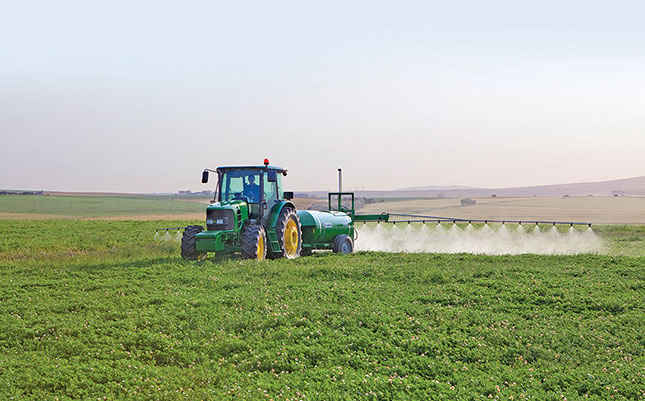
The ruling stems from legal action brought by CropLife South Africa (CropLife SA) in December 2025 to clarify apparent contradictions between two sets of regulations under the Fertilizers, Farm Feeds, Seeds and Remedies Act (No. 36 of 1947).
Roleen la Grange, regulatory manager at CropLife SA, explained during an online information session that the organisation had sought clarity on whether the term ‘restricted agricultural remedy’, used in regulations published in August 2023, was the same as ‘restricted-use agricultural remedy’ in the Pest Control Operator (PCO) Regulations published in 2011.
If they were the same, anyone applying such products would have to be registered as a PCO or work under the direct supervision of one.
She added that CropLife SA asked for a one-year suspension of this requirement, if the terms were indeed the same, to allow industry and government to address the issues hindering implementation and give farmers time to become compliant.
Court ruling
The court ruled that restricted agricultural remedies listed in the 2023 regulations do not automatically fall under the PCO regulations.
As a result, La Grange explained, farmers may currently buy and apply specific restricted agricultural remedies without a PCO licence or supervision by a registered PCO, while distributors may sell these products without requiring a PCO certificate from customers.
She added that the ruling did not change any other legal obligations governing the use of these products: “The only thing that has changed is the PCO requirement, and only temporarily. All other legislation governing restricted agricultural remedies remains fully applicable.
“Restricted agricultural remedies are still classified as Group 1, Category B hazardous substances under the Hazardous Substances Act (No. 15 of 1973), and must be sold, stored, and used in accordance with the provisions of the Act and its corresponding regulations.”
Appeal still possible
The Department of Agriculture has 15 court days from the date of the ruling, 26 January, to lodge an appeal. If an appeal is filed, the court order will automatically be suspended unless CropLife SA successfully applies for interim relief to keep the ruling in place during the appeal process.
La Grange pointed out that even without an appeal, the ruling does not prevent government from amending the legislation to close the identified gap. Such a change, nevertheless, usually requires public consultation.
Despite the temporary easing of PCO requirements, CropLife SA has asked its members to continue selling restricted agricultural remedies only to bona fide farmers who complete a declaration confirming they understand the hazards of the products and will comply with the spirit of the PCO regulations.
A declaration must be completed every time a restricted product is purchased and kept on record by the distributor.
La Grange stressed that CropLife SA supports government’s intention to restrict the use of highly hazardous pesticides to trained individuals.
“South Africa has committed, under the UN Global Framework on Chemicals, to phase out highly hazardous pesticides where risks are not adequately managed, with a deadline of 2035.
“Restricting these products to trained users is an important risk-management tool. If risks are properly managed, it helps to keep these products available to farmers for longer,” she explained.
Working group established
To address ongoing implementation challenges, CropLife SA, together with other industry associations, submitted a proposal to the Registrar appointed under Act No. 36 of 1947 in December 2025 to develop a robust, practical, and fit-for-purpose strategy for restricted agricultural remedies on farms.
A multistakeholder working group has also been established to address the challenges and concerns that have been identified. So far, proposals include recognition of prior farming experience, revising PCO training requirements to better suit agricultural use, reviewing registration fees, and aligning compliance with existing farm audit schemes.
La Grange said the organisation is not seeking a return to the status quo before the 2023 regulations but rather a workable system that balances safety, practicality, and continued access to essential crop protection tools.
“These products will remain restricted in some form. The focus now is on developing a fit-for-purpose approach that works for farmers and farmworkers,” she concluded.