

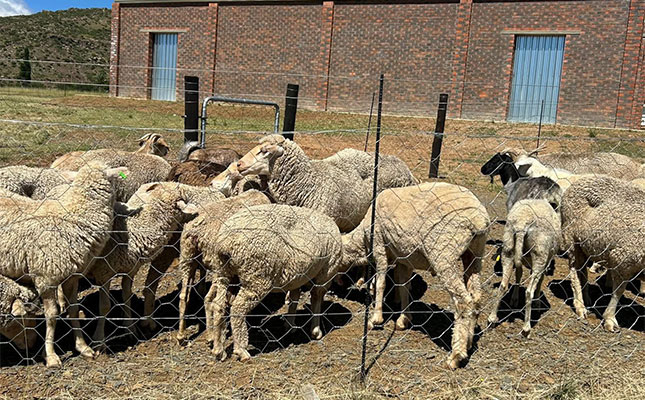
The Eastern Cape is South Africa’s leading producer of wool and mohair, with the country supplying around 50% of the world’s mohair. In an effort to help subsistence farmers elevate their operations to commercial level, the provincial agriculture department provided Qhimirha Village farmers with a multipurpose shed, a spring water project, and a tractor with implements.
Speaking at the handover, Kontsiwe urged farmers and community members to protect the government’s investment in them.
“We are here to make sure you have the necessary tools to elevate your businesses so that you can become commercial farmers.
“I urge you to safeguard the investment made by government so that it serves its intended purpose: to develop yourselves and grow economic activity in your community. These investments are meant to ensure your lives are better than yesterday.”
She also visited the Makarabha Mixed Farming Project in Qhimirha Village, owned by former mineworker Mncedisi Ncephe. After being retrenched, he returned home and started crop farming.
Ncephe told Farmer’s Weekly that he now cultivates more than 100ha, producing potatoes, pumpkins, butternut, green beans, sorghum, wheat, and maize, which he sells across Joe Gqabi District Municipality.
He thanked government for its support: “The [village’s] tractor will help grow my business. I want to ensure that all fields that were lying fallow are planted.”
The department also supported Makarabha Mixed Farming Project with a water tank and pump, vegetable seeds, fertiliser, and ongoing technical advice.
The village’s new shed is one of 10 constructed across the province in the 2025/26 financial year to help communal farmers aggregate wool for formal markets and improve income.
The department’s wool industry investment benefits 23 members – 13 men and 10 women – who collectively own more than 800 sheep.
Zwelinzima Ntambam, one of the village’s sheep farmers who is benefitting from the investment, said at the event: “We used to have headaches when it was time to shear our sheep because the old structure was dilapidated and our wool got damaged.
“We are relieved that the department has supported us with this shed, which will enhance our wool quality.”
According to Kontsiwe, the shed is fully equipped with ablution facilities, a plunge dip with evaporation pan, shearing equipment, sorting tables, bins, a cable press, and a weighing scale.
The spring water project benefits more than 500 households in the village, providing 29 water points for domestic use and irrigation, with one tap installed at Qhimirha Primary School.
The project has also created at least 51 job opportunities, with 48 positions filled by women, and 55% of total jobs held by young people.
Kontsiwe added that the investment is expected to significantly improve wool and mohair quality while supporting the economic growth of local farmers and their communities.