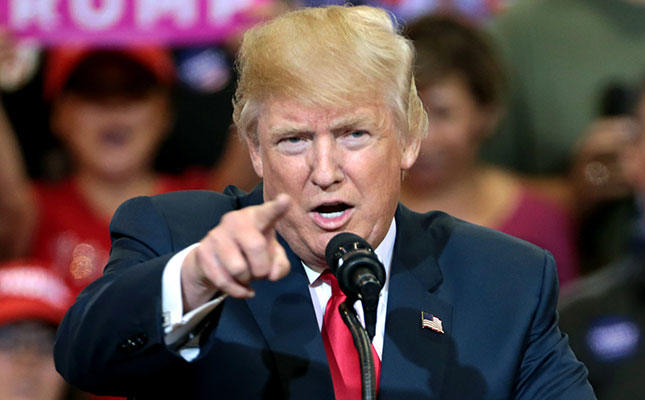
Under the new measures, Trump has invoked Section 122 of the Trade Act of 1974, which allows him to impose tariffs of up to 15% to address a large and serious balance-of-payments deficit. Tariffs imposed under this authority may remain in effect for no more than 150 days, unless Congress passes legislation to extend them.
The new tariff is expected to replace the higher duties South African exporters have faced in recent months, potentially improving access to the US market and restoring competitiveness for local producers.
READ Canning industry faces mounting pressure from climate, markets, tariffs
Wandile Sihlobo, chief economist at Agbiz and recently appointed presidential envoy on agriculture and land reform, told Farmer’s Weekly that the 10% tariff, which comes into effect today, will replace the 30% duty that South African exporters previously faced, easing pressure on trade with the US.
Given the recent extension of the African Growth Opportunity Act, South Africa will also avoid an additional most-favoured-nation tariff of 3,4%.
“The new possibility bodes well for South Africa, as it restores some of our competitiveness in the US market,” Sihlobo said.
“Under the 30% tariffs, some of our market share was taken by countries facing much lower tariffs of around 10%.”
Sihlobo said the US remains an important destination for South African agricultural exports, accounting for about 4% of the total, with key products including citrus, berries, table grapes, wine, fruit juice, apples, pears, apricots, and nuts.
During the period of the US’s higher so-called ‘Liberation Day’ tariffs, some exporters took advantage of a 90-day pause in the second quarter (Q2) of 2025, shipping higher-than-usual volumes to the US. This was followed by a cooling in exports during the third and fourth quarters (Q3 and Q4).
South Africa’s agricultural exports to the US declined by 11% year-on-year (y/y) in Q3 2025 to US$144 million (about R2,3 billion) before falling sharply by 39% in Q4 to US$81 million (R1,3 billion).
On an annual basis, agricultural exports to the US in 2025 amounted to US$504 million (R8,1 billion), down by 3% y/y.
“The relatively small annual decline masks the real impact of the previous 30% tariffs,” Sihlobo said.
“Strong exports during Q2 helped cushion the blow.”
Looking ahead, he said policy certainty will be critical: “In 2026, it may be better if the 10% tariff remains in place for some time.
“There is still profound uncertainty in the US, with high-frequency policy communication that has a significant impact on business confidence.”
Speaking to Farmer’s Weekly, Daneel Rossouw, head of sales for agriculture at Nedbank Commercial Banking, said the lower tariff could reopen opportunities for agricultural exporters, particularly in the Western Cape.
“This could have meaningful advantages as exporters reassess market diversification and consider moving volumes back into the US,” he said.
“If the 10% tariff can be kept in place for at least a year, it will provide something exporters can plan around and help restore a degree of stability.”