
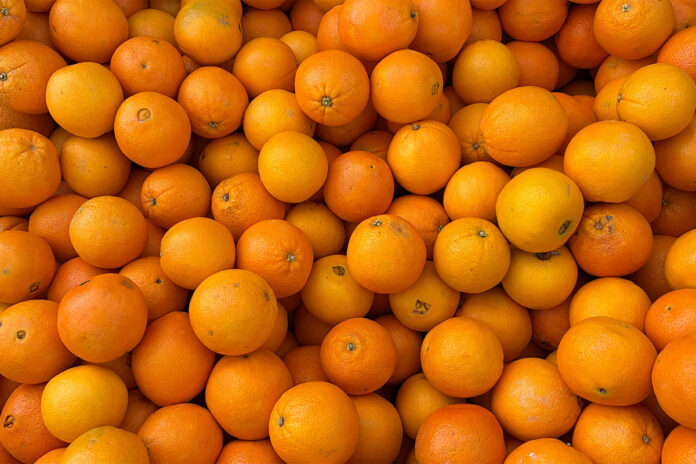
The amendment to India’s Plant Quarantine (Regulation of Import into India) Order, 2003, was published in the country’s Government Gazette on 29 July 2026. The new requirements allow citrus consignments to undergo approved cold treatment while in transit to India, rather than relying solely on land-based treatment.
According to the Department of Agriculture press release, the change provides greater regulatory certainty for exporters and allows consignments to be treated while being transported, helping fruit arrive at its destination on time and in good condition.
Dr Boitshoko Ntshabele, CEO of the Citrus Growers’ Association (CGA), told Farmer’s Weekly the approval was significant because in-transit treatment could reduce transport times and associated costs.
“The new options reduce overall transport times, because cold treatment happens on the way, which translates into cost reductions, while ensuring India receives fruit of the highest quality that adheres to the strictest plant health measures,” Ntshabele said.
India offers significant growth potential
India, with a population of about 1.47 billion people, is regarded as an important growth market for South African citrus. The market has already shown strong growth. According to Ntshabele, South African citrus exports to India increased by 85% in 2025 compared with 2024. Export volumes have also risen from just below 4 000 pallets in 2016 to about 54 000 pallets in 2025.
He said recent market-development efforts by the CGA had also contributed to growing awareness of South African citrus in India.
The CGA has been running a marketing campaign in India under the banner “Beautiful Country, Beautiful Fruit, Exceptional Taste” for more than a year. Earlier this year, South African mandarin brand Sweet C won Fresh Produce India’s market campaign award for its positioning of the fruit.
“General and more brand-specific initiatives play an important role in building awareness of South African citrus and expanding consumer appetite,” Ntshabele said.
Thabile Nkunjana, senior economist in the Trade Research Unit at the National Agricultural Marketing Council (NAMC), told Farmer’s Weekly, India was strategically important because of the size of its consumer market and the complementary production seasons of the two countries.
South Africa’s citrus season generally runs from February to October, with harvesting and packing increasing significantly between April and September, while India’s citrus season runs from November to March.
“These benefits South African exporters,” Nkunjana said.
According to Trade Map data cited by Nkunjana, South Africa accounted for 37% of India’s US$102.9 million (R1,8 billion) worth of citrus imports in 2025, making it the second-largest supplier after Egypt.
Lower costs and greater flexibility
India’s previous requirements meant exporters had to comply with specified cold-treatment measures, including methyl bromide or land-based cold treatment, to mitigate the risk posed by fruit flies such as the Mediterranean fruit fly and Natal fruit fly.
The South African government began bilateral discussions with India in 2017 to secure approval for in-transit cold treatment. The process involved the exchange of technical information and several trial shipments to determine whether the required standards and conditions could be met.
Nkunjana said the easing of non-tariff measures generally improved the competitiveness of agricultural exports.
“Positive trade development usually follows the removal or easing of cold-treatment or other non-tariff barriers from trade regulations. Fruit quality is enhanced, expenses are decreased, and shipping bottlenecks are lessened,” he said.
However, he cautioned that greater treatment flexibility alone would not remove all the structural constraints facing exporters.
“Over time, South Africa’s export earnings and volumes may increase significantly, but until more significant structural and logistical obstacles are overcome, the macroeconomic impact will be limited,” Nkunjana said.
Opportunity to diversify export markets
The development comes as South Africa seeks to diversify its agricultural export destinations and reduce its reliance on traditional markets.
Ntshabele said the citrus industry was focused on expanding access to a range of international markets as production was expected to increase in the coming years.
“More fruit will be coming off the trees, and we must ensure, through cooperation with the Department of Trade, Industry and Competition and the Department of Agriculture, that they find space on shelves overseas,” he said.
Nkunjana said India could help South Africa absorb additional citrus production while reducing exposure to disruptions in traditional markets.
“South Africa has a significant chance to diversify away from traditional markets in Europe and the Middle East by entering India,” he said.
He added that stronger trade with India could support rural employment and help mitigate the effects of market disruptions elsewhere.
Tariffs remain a barrier
Despite the progress on phytosanitary requirements, tariffs remain a significant obstacle for South African citrus exporters, particularly in Asia.
Ntshabele said South African citrus faced an average effectively applied tariff of about 20% across the Asian region, with tariffs in some markets, including Thailand, approaching 100%.
“The CGA is focused on improving access to all our markets,”he said.
He said expanding access to markets in the European Union, United States, Vietnam, Japan and elsewhere would be increasingly important as South African citrus production grew.
The development also illustrates the potential for deeper agricultural trade between BRICS countries. Nkunjana said the South Africa-India citrus agreement, which followed about a decade of negotiations, showed how cooperation between BRICS members could translate into practical trade opportunities.
He said the easing of phytosanitary and cold-treatment restrictions represented a move towards making BRICS cooperation more economically useful to South African agriculture.