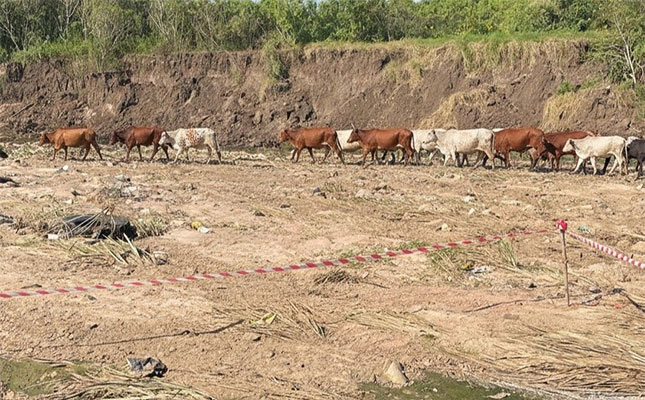

While outbreaks remain concentrated in KwaZulu-Natal, the Free State and North West, the disease has now also surfaced in the Western Cape and Northern Cape. Although the latter provinces are experiencing isolated cases rather than widespread transmission, the spread beyond traditional epicentres is deeply concerning.
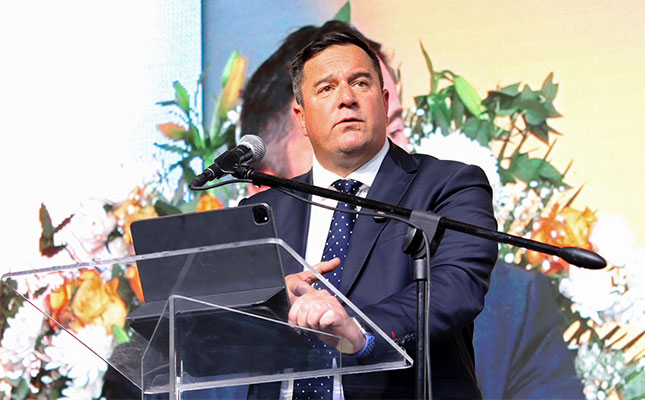
“We’ve seen an increase in spread,” Steenhuisen said.
“The epicentre remains in KwaZulu-Natal, the Free State and North West; those are the areas where outbreaks are spreading very virulently. But the emergence in the Western Cape and Northern Cape required us to move quickly with quarantine and vaccination.”
Aiming for 80% vaccination target by year-end
Government’s immediate goal is to vaccinate 80% of the national cattle herd by the end of 2026 and reduce active outbreaks by 70%.
“That is the immediate task. Vaccinate as many animals as possible as quickly as possible,” Steenhuisen said.
The vaccine roll-out, however, has faced significant supply chain disruptions. South Africa had initially secured two million doses from the Botswana Vaccine Institute late last year, but a mandatory factory shutdown at the facility created a bottleneck.
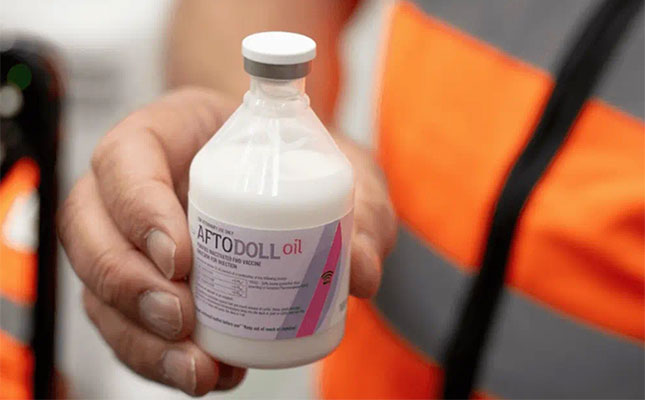
Government has since sourced alternative suppliers, including Biogénesis Bagó in Argentina and Turkish manufacturer Dollvet.
A first batch of one million doses is expected imminently, followed by further shipments of 1,5 million doses in successive consignments. From mid-March, Argentina could supply between three and five million doses per month.
To improve global vaccine matching, South Africa has, for the first time in 14 years, sent field strain samples to the Pirbright Institute in the UK, enabling international manufacturers to tailor vaccines to our local virus strains.
“This will bring an end to the bottleneck. But then the next challenge is vaccinating at scale,” Steenhuisen said.
Who gets vaccines first?
With mounting pressure from affected sectors, particularly dairy producers, Steenhuisen confirmed that feedlots and dairies are first priority, followed by communal farming areas.
A national ‘heat map’ has been developed, dividing municipalities into primary, secondary and tertiary outbreak zones. Vaccine allocation will be scientifically guided according to outbreak intensity and risk.
“There will be a bias toward cases in the Free State, Limpopo and North West in this first batch to break the back of the virus there. But every province will receive some allocation,” Steenhuisen said.
He emphasised that a science-based approach is essential to avoid political pressure influencing distribution decisions.
Why not full private roll-out?
Industry organisations have questioned why the private sector cannot take fuller control of vaccine procurement and administration, especially given that World Organisation For Animal Health does not require state-controlled vaccination.
Steenhuisen rejects claims of over-centralisation.
“FMD remains a state-controlled disease,” he said. “Vaccines are restricted substances produced in Biosafety Level 3 laboratories. There are bioterrorism and containment risks. It cannot be a free-for-all.”
However, he pointed to significant private-sector inclusion:
- Private company Dunevax is importing Turkish vaccines.
- Private veterinarians are now authorised to vaccinate under Government Gazette notice.
- Private entities were allowed to purchase vaccines last year for the first time.
- Local agents may import vaccines via Section 21 approval through the South African Health Products Regulatory Authority.
“If you allow uncontrolled vaccination, we lose reliable data,” Steenhuisen said. “We must be able to distinguish antibodies from infection versus vaccination. Without that, we cannot regain FMD-free status.”
Movement control failures
The minister acknowledged serious failures in animal movement compliance, particularly following confirmed outbreaks.
Western Cape cases were traced back to cattle moved from North West. Steenhuisen reveals that authorities uncovered a “cattle laundering” operation in which animals were bought cheaply from affected areas, relabelled, and sold into Western Cape feedlots as locally bred animals.
“It’s extremely frustrating,” he said. “Auctions continued. Speculation continued. Animals were moved despite risks.”
He conceded that agriculture lacks enforcement capacity.
“I don’t have a police force. We rely on SAPS, traffic authorities and metro police, and they’re overstretched,” he said.
The declaration of a national disaster was partly intended to elevate coordination through national security structures.
In the longer term, Steenhuisen wants newly appointed agricultural extension officers to be designated as peace officers, giving them authority to conduct roadblocks and stop livestock transport vehicles.
Regulatory shift: no more F-branding?
A major policy shift is also under way. Traditionally, FMD control relied on strict movement bans and F-branding of infected animals. (In South Africa, the F-branding of animals refers specifically to a mandated, permanent, hot-iron brand of the letter ‘F’ applied to the neck of cattle that have been vaccinated against FMD.) But with a mass vaccination strategy, those measures may be relaxed.
“If we’re vaccinating at scale, we don’t need lockdown-style restrictions and F-branding in the same way. We’ll move to tagging mechanisms,” Steenhuisen said.
For three decades, he said, South Africa has pursued a reactive approach – “chasing outbreaks around the country”. The new strategy aims to proactively eliminate the disease nationally.
Biosecurity system ‘allowed to collapse’
Asked why South Africa reached this crisis point, Steenhuisen was blunt: biosecurity has been neglected for 20 years.
“The biosecurity ecosystem was defunded,” he said. “Institutions like the Agricultural Research Council and Onderstepoort Biological Products were weakened. We don’t take biosecurity seriously enough.”
He noted that countries such as New Zealand and Australia enforce strict border biosecurity, whereas South Africa’s controls are comparatively lax.
Biosecurity has now been declared one of seven strategic pillars in the Agriculture Department. Chief Director of Biosecurity Dr Emily Mogajane has been appointed to rebuild infrastructure and strategy.
“We can’t change the past, but we can fix what’s broken,” Steenhuisen said.
Compensation for dairy farmers?
Severely affected dairy producers have called for emergency support after herd culling.
Steenhuisen said government would consider assistance, but warned that compensation would require proof of biosecurity compliance.
“We can’t ignore how the disease arrived on a farm. But it’s not in our interest to see any sector collapse,” he said.
He argued that long-term stability, achieved through vaccination and restored export status, would ultimately provide greater financial security than ad hoc bailouts.
Legal tensions and vaccine politics
Responding to criticism and legal challenges from some organisations alleging over-centralisation, Steenhuisen maintained that collaboration has never been broader.
A ministerial task team comprising 50% private sector representatives developed the vaccination model, drawing on Argentina and Brazil’s experience with mixed communal and commercial systems.
The implementation committee includes the Milk Producers’ Organisation, Red Meat Producers’ Organisation, Red Meat Industry Services, the South African Pork Producers Organisation, AgriSA, the African Farmers’ Association of South Africa, and TLU SA.
“There has never been more accessibility to the private sector,” Steenhuisen said.
On controversy surrounding vaccine import agents, Steenhuisen denied interfering in commercial arrangements between local distributors and foreign manufacturers.
“My job is to get vaccines into the country. Commercial relationships are not my concern,” he said.
Communication gaps acknowledged
Steenhuisen conceded that government communication had been too slow at times, creating space for misinformation, including inflated vaccine cost claims.
A dedicated online FMD portal has now been launched, detailing outbreak numbers, symptoms, press releases and a toll-free advisory line.
“When government fails to communicate, fake news fills the gap,” he said.
‘Work with us’
Steenhuisen ended the interview with a direct appeal to farmers.
“We’re in a crisis. There are laws that need to change and regulations that need to change, and we will do that. But right now we must work together.”
He pledged that if the vaccination plan succeeds, this could be the last major FMD outbreak South Africa experiences, unlocking export markets that have been closed for nearly two decades.
“That’s where profitability lies. We have some of the best red meat products in the world. If we regain FMD-free status, those markets will open,” he said.
For now, however, the battle remains immediate and urgent: vaccinate at scale, restore compliance, rebuild biosecurity, and restore confidence in an industry under severe strain.