The programme is designed to support farmers in choosing hybrid packages suited to their specific production regions, ultimately improving long-term productivity.
“Through our Crop Extravaganzas, we aim to equip farmers with the information and confidence they need to make the best decisions for their operations,” said De Bruyn Myburgh, lead agronomist at Pannar, in a statement.
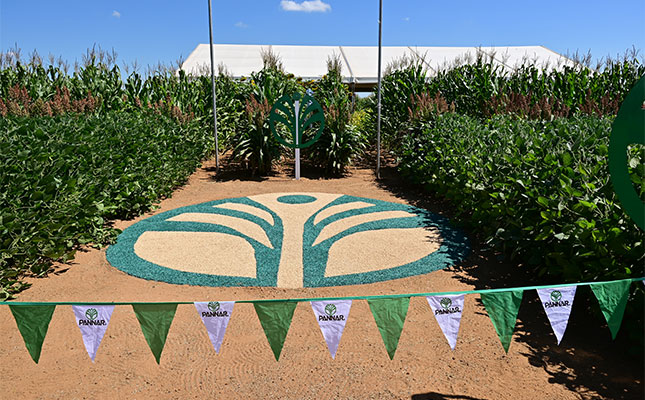
Farmer’s Weekly attended the Kroonstad Extravaganza on 17 March, one of several events hosted across the country. Held on Mariendal Boerdery’s Soutbos farm, the day gave farmers the opportunity to evaluate how different Pannar cultivars perform under local conditions.
Arrested ear syndrome under scrutiny
A key highlight of the day was a presentation by independent plant pathologist Dr Rikus Kloppers of Robigalia CropCare, who addressed the increasing occurrence of arrested ear development (AED) in maize.
AED is a physiological, non-pathogenic disorder that results in severe ear stunting, kernel abortion and, in extreme cases, blank cobs. While not a new phenomenon, it appears to be occurring more frequently and can lead to significant yield losses.
Kloppers warned that incorrect chemical application timing is a major contributing factor. He referred to field trials where all treatments were applied at the V14 growth stage. The results showed that fungicides, whether applied alone or with insecticides, did not cause arrested ears.
However, arrested ears were observed mainly in maize treated with a nonionic surfactant, strongly suggesting that the surfactant, or a component of it, was responsible.
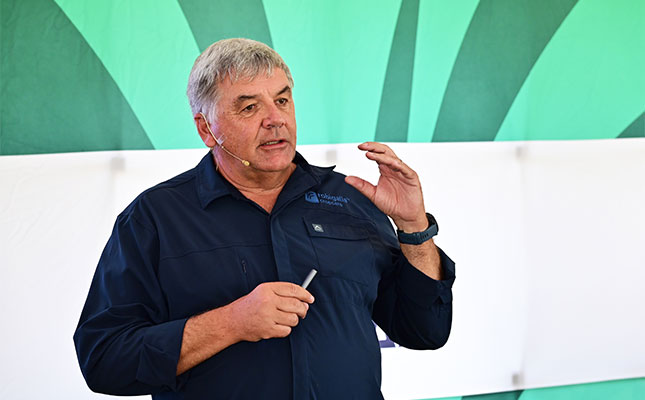
“In affected rows, plants often remain greener for longer, while surrounding plants begin to die back. It appears as if the plant remains in a vegetative state, as no ear formation takes place,” he said.
Aerial imagery of affected fields further supports the conclusion that AED is linked to spraying practices.
Kloppers cautioned that AED can be confused with conditions such as silk jamming, where silks fail to emerge from ear leaves, and leading to poor pollination. In such cases, ears develop normally but lack kernels at the tip. With AED, however, ear development is partially or in severe cases completely halted.
He added that environmental stress, particularly temperature fluctuations early in the season, can also contribute to the condition.
Plants are particularly sensitive during the V12 to V14 growth stages. Although ear development is initiated as early as V5, it is during V12 that ear size, row number and kernel set are determined.
“If something goes wrong during this period, problems are likely to develop,” Kloppers said, emphasising the importance of accurately identifying growth stages when making management decisions.
Management remains key to yield
Pannar agronomist Charl van der Merwe provided an overview of the Kroonstad trial site, emphasising that optimal nutrient availability from the outset is critical to achieving yield potential.
“Farmers must ensure that all essential nutrients are available in the soil from the start. Any deficiency at any stage of development will limit the plant’s potential,” he told Farmer’s Weekly.
He stressed that adequate soil moisture at germination is equally important, also warning that incorrect soil temperatures at planting can inhibit germination — a challenge frequently observed this season.
Van der Merwe also highlighted the importance of accurately identifying crop growth stages. “The first leaf (V1) is oval-shaped, and subsequent leaves develop a collar. Farmers often fail to count the first leaf, which can have serious consequences,” he explained.
“This understanding is particularly important when applying crop protection products, as plants are highly sensitive to chemicals during specific growth stages. Farmers must read product labels carefully, as they provide critical information on application timing,” he advised.
Van der Merwe concluded by reviewing the top-performing cultivars from the field trials, providing farmers with a practical benchmark for hybrid selection in the region.
Rewarding farmer partnerships
The Extravaganza events are linked to the Pannar Bonanza Rewards Programme, which incentivises farmers who commit early to seed purchases for the upcoming planting season.
By placing early orders for the 2026/27 season, producers can qualify for reward items – ranging from branded clothing to a Toyota Hilux single cab 2.4 bakkie – strengthening long-term partnerships between Pannar and its customers.