
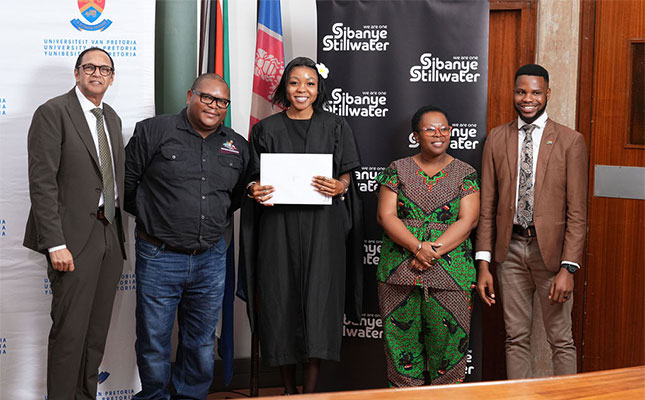
The farmers graduated from UP’s Small-Scale Farmer Development Programme, delivered through the Faculty of Veterinary Science at the Onderstepoort campus. The programme focuses on practical, solution-driven training in primary animal healthcare, herd management and production systems: areas widely recognised as barriers to smallholder participation in commercial value chains.
By addressing these gaps, the initiative is designed to help farmers improve livestock quality, reduce disease risks and meet the standards required for formal and export markets.
Building market-ready farmers
According to UP, the programme equips participants with the skills needed to transition from subsistence or informal production into viable farming enterprises.
Prof Vinny Naidoo, dean of the Faculty of Veterinary Science, said the training is already translating into improved outcomes on farms.
“As the most advanced veterinary hospital on the continent, we are proud to equip farmers with the skills to improve animal health and productivity,” he said, adding that the programme supports income generation, community nutrition and national food security.
Graduates reported early benefits, including stronger, healthier livestock and improved readiness to supply formal markets for the first time.
Partnerships drive rural development
The initiative forms part of a broader partnership model involving academia, industry and government; an approach increasingly seen as critical to unlocking rural economic development.
Prof Sunil Maharaj, UP’s vice-principal for Research, Innovation and Postgraduate Education, described the programme as an example of how universities can extend their impact beyond traditional academic roles.
“Universities must serve society beyond lecture halls, reaching farms, villages and communities where impact is most needed,” he said.
He noted that such initiatives contribute directly to addressing structural challenges including poverty, unemployment and inequality across the continent.
Inclusion and long-term sustainability
The programme also reflects a deliberate focus on inclusivity, with 30% of participants being young people and 35% women: groups often underrepresented in commercial agriculture.
Sibanye Stillwater’s executive vice-president, Thabisile Phumo, emphasised agriculture’s role in building sustainable post-mining economies.
“Mining will not last forever. Our responsibility is to help create sustainable economies that will continue to thrive beyond the life of the mines,” she said.
Local government representatives echoed the importance of expanding such partnerships to strengthen value chains, improve production standards and support broader rural development.
From training to impact
For beneficiaries like Sandra Mphahlele, the programme represents a pathway to both personal and community impact.
She said her interest in livestock production is rooted in food security, sustainability and community development, and that the training has enabled her to adopt more resilient farming practices.
“The skills I’ve learnt will help me drive positive change in my community by improving food security and creating jobs,” she said.
Strengthening the agricultural value chain
The graduation of the 90 farmers highlights the role of targeted skills development in strengthening South Africa’s agricultural value chain.
By improving animal health, production efficiency and compliance with market standards, the programme positions small-scale farmers to participate more competitively in formal markets, unlocking opportunities for income growth, job creation and more resilient food systems.