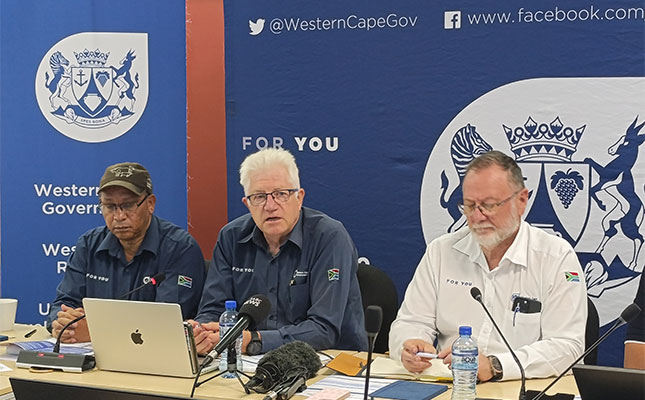
During a media briefing at the Provincial Disaster Management Centre in Bellville, Cape Town, senior provincial officials, veterinary services, and organised agriculture outlined a 21-point plan to contain foot-and-mouth disease (FMD) and prevent further spread.
While an outbreak of FMD that occurred in Gouda in November 2025 appeared to have been contained, the province was unsettled last week by the suspicion and confirmation of new cases in other areas.
The first of these was reported on 4 February, when a private veterinarian in Wellington alerted the local state veterinarian to a suspected case in the informal settlement of Mbekweni, following a report from a cattle owner.
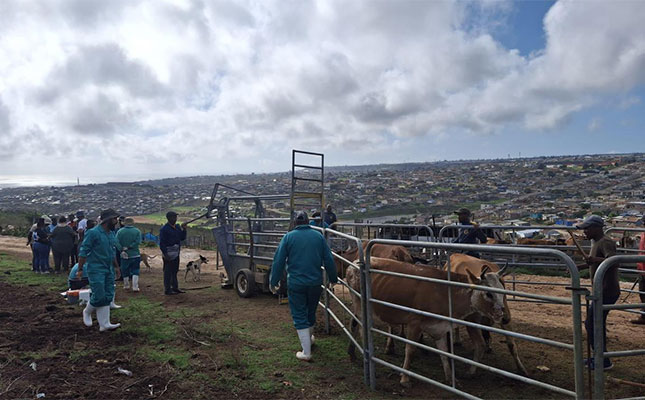
The disease was confirmed on 6 February, after which animal health officials immediately began vaccinating affected cattle and those owned by neighbouring farmers.
Suspected cases have since been reported in the informal settlements of Mfuleni, Makhaza, and Kalkfontein, as well as on a commercial dairy farm in Mossel Bay.
Swift provincial response
Western Cape Premier Alan Winde said government is acting decisively, in cooperation with all stakeholders, to get ahead of the outbreak.
“Agriculture is an important pillar of the Western Cape economy, contributing an estimated R13,5 billion. This outbreak poses a serious risk to livestock production, jobs, and market confidence. We must mitigate the risk and manage it responsibly, in the best interests of the economy and jobs,” he said at the media briefing.
To this end, the provincial government has set aside R100 million for the procurement of vaccines and has written to national government requesting approval to participate in the vaccine procurement process.
Winde added that while the province is prepared to act, vaccine procurement remains subject to national controls to prevent the introduction of inappropriate vaccines or the development of new virus strains.
Movement controls and permits
Western Cape Minister of Agriculture, Economic Development and Tourism Dr Ivan Meyer said disaster management structures have been activated to ensure a rapid and coordinated response across departments.
He explained that 24-hour roadblocks have been in place since 4 February to restrict livestock movement in affected and high-risk areas. He added that further tightening of controls is being considered, including a permit system to manage cross-border and intra-provincial livestock movement.
Under the permit system, which will be managed by Agri Western Cape, any movement of cattle, sheep, and goats must be accompanied by full documentation, including a health declaration from the place of origin and confirmation of a 28-day isolation period at the destination. Livestock movement must also be reported via the official web-based application. Failure to comply constitutes an offence.
Traffic officers will be trained to check documentation at roadblocks to strengthen enforcement. “We believe in the rule of law, and this is about ensuring traceability and limiting the spread of the virus,” Meyer added.
Containment plan
Dr Noluvuyo Magadla, director of animal health in the Western Cape, outlined the province’s 21-point FMD containment plan, which focuses on movement control, surveillance and traceability, and standardised response protocols.
Veterinary officials are conducting enhanced monitoring in high-risk areas, visiting auctions and livestock holdings, and carrying out active and passive surveillance. Abattoirs and buffalo herds are also being closely monitored. Where positive cases are identified, forward and backward tracing is undertaken to establish links to other properties.
Affected farms are placed under quarantine, with a 10km control radius enforced in accordance with legislation. Alongside cleaning and disinfection protocols, vaccination is carried out once cases have been confirmed.
Magadla said vaccination does not provide lifelong immunity and requires regular boosters, depending on the vaccine used. The strain detected in the Gouda outbreak was linked to viruses circulating in Gauteng, although investigations into the source of the outbreak are ongoing. The strains involved in the most recent suspected outbreaks have not yet been identified.
Industry support and cautions
Organised agriculture welcomed the provincial response. Agri Western Cape CEO Jannie Strydom said the livestock industry supports the permit system and tighter movement controls, emphasising the importance of limiting farm access to reduce the risk of spread.
“This is a collective effort, and biosecurity starts at the farm gate,” he added.
Officials reiterated that FMD poses no risk to humans and that animals slaughtered under formal abattoir conditions remain safe for consumption. However, farmers were urged not to move or slaughter animals showing clinical signs.
Questions were raised about compensation for the losses suffered by affected farmers, but provincial officials said no compensation mechanism exists under current legislation, and any decision on compensation will have to be taken at national level.
Despite the challenges, officials expressed confidence that decisive action and close cooperation with industry will again limit the spread of the disease in the Western Cape.