
Unfavourable market conditions are setting formidable targets for Swartland grain farmers to break even.
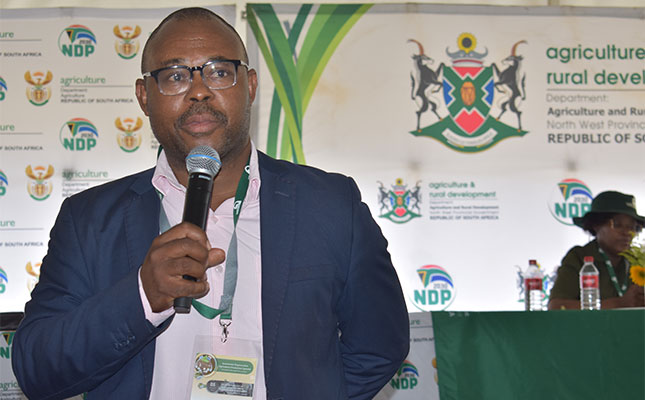
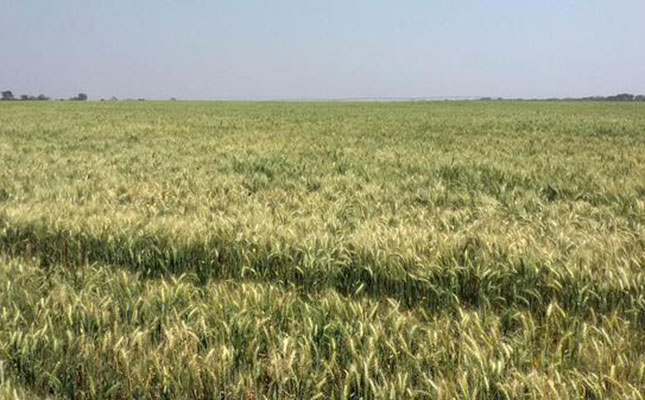
At the Regenerative Agriculture Conference on 17 March in Moorreesburg, Western Cape, Overberg Agri agricultural economist Suzanne Lureman shared calculations showing that growers in the district would need to produce 2,71 t/ha of wheat to cover all direct expenses, overheads, and external factor costs at a SAFEX price of R6 000/t.
Based on the average 2025 price, the breakeven point for canola this year would be 1,5 t/ha. These figures do not account for private expenditure or outstanding debt.
Profitability is also strongly influenced by climate trends, with seasons of average rainfall generally proving the most profitable.
However, Lureman emphasised that while factors outside the farm gate, mainly weather and grain markets, have a significant impact on farm success, growers are not powerless.
“It’s your farm gate; it’s there for a reason. Behind that gate you make the decisions,” she said.
“Your most important natural resource is your soil. Consider what you do: what do you take out, and what do you put in? Know your potential.”
She urged producers to take cognisance of the unique attributes of their district’s soil and climate.
“If you have two addresses, don’t farm address one the same as address two. You can refine your approach when you account for variations that occur even within a single field.”
She added that farmers should also understand how to get the most out of every hectare and allocate inputs effectively on the most fertile parts of the land instead of low-potential or marginal areas.
A cost squeeze
Lureman shared an overview of wheat and canola prices and input costs since 2008, which revealed that wheat and canola prices grew by a year-on-year (y/y) average of 4% and 6%, respectively. However, over the past three years (2023 to 2025), the prices of both crops declined by 4% y/y.
Meanwhile, fertiliser prices rose by 16% y/y, agrochemicals by 15%, and fuel by 10% in the past five years, specifically when measured per wheat hectare.
This gloom was somewhat offset by market conditions in other farming industries.
“When looking at the average A2/3 lamb carcass price for July, it rose by 8% y/y in the long term, and over the past five years, by 5% y/y,” Lureman explained.
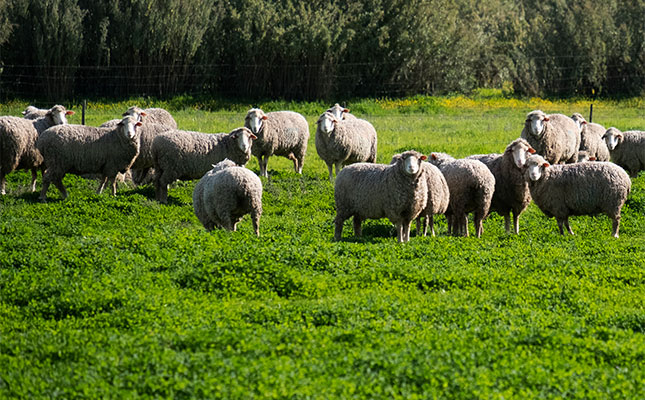
“For A2/3 beef, the long-term price increase was 10% y/y, and in the past five years, 16% y/y. These are significant positives.”
For Swartland farmers, Overberg Agri’s calculations showed that average total direct costs – including seed, chemicals, fertilisers, diesel, animal feed, and other necessities – amount to around R7 500 per arable hectare, with an additional R2 800 per hectare for overheads such as labour, accounting, banking fees, water, and electricity.
Lureman noted that these fixed costs exclude other expenses like rent or interest, which could add roughly R900 per arable hectare when considering the complete farming enterprise.
‘It is what it is’ is not an answer
Lureman emphasised that the choice of farming system is part of the business decision.
“You have control over the system you choose. Are you going to moan and plant the same crop over and over, depleting soil fertility and perhaps running into a pesticide-resistance problem? Or are you going to give your soil a chance to rest, diversify your herbicide options, and maybe even give back by fixing nitrogen in the soil by including legumes in your crop rotations?
“Perhaps by implementing a diverse crop rotation system, you can harvest a number of different commodities and put your eggs in different baskets.”
Once they had considered soil health, Lureman urged growers to take a hard look at the business side of the farm.
“Consider your overhead costs: labour, accounting, insurance, banking fees, land taxes, etc. When was the last time you double-checked your electricity bill? Is your farm registered as a farming unit or a municipal property? That makes a significant difference to your electricity costs.
“When was the last time you checked your water bill? Is there a broken pipe? Where is your water meter located? That tractor you sold four years ago… have you informed your short-term insurance broker?”
She added that ‘it is what it is’ is not a sound response to high fixed costs; they can be managed.
What do you cost your business?
Lureman warned that lifestyle decisions can have far-reaching consequences for a farming business’s financial health, urging producers to consider private withdrawals from farm profits in light of what they take from the business.
She noted that average fees for local schools are around R18 500 annually per child, whereas the cost for child attending more prestigious schools outside of town is closer to R60 000 each, with boarding adding another R70 000 each per year.
She added that expenses associated with grown children and their spouses returning to the farm can become a significant drain if paid from farm income. At R11 000 per month per vehicle, providing a vehicle for four individuals could easily total around R600 000 annually, especially if there is also a recreational vehicle tucked away under a tarp.
“Based on a R6 000/t SAFEX wheat price, minus approximately R1 000 in deductions, a grower receives about R5 000/t. Therefore, for every R100 000 that is not effectively utilised, you are losing the income equivalent of 20t of wheat. With an average yield of 3t/ha, that equates to about seven arable hectares of lost income,” Lureman explained.
She added that a good way to increase turnover and profit per hectare is to join a study group and find ways of getting more out of every hectare.
“The top producers in our Swartland district study group increased their total turnover per arable hectare from R11 000 to R15 700, in line with the average turnover of the Southern Cape. You can do that if you have your ducks in a row,” she concluded.