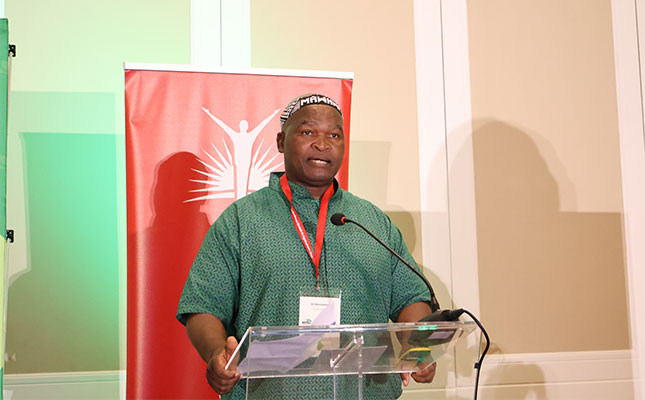


Speaking on Agbiz’s sector-inclusive growth programmes, Machaba emphasised that the future resilience of agriculture depends not only on production efficiencies but also on transforming the people-side of the sector.
Agbiz leads the Diversity, Equity, Inclusion & Belonging Network (DEI&B), a cross-sector platform created to give agribusinesses a neutral space to collaborate, share information, and address practical workforce challenges.
The network brings together organisations that shape jobs, opportunities, and narratives in rural economies, namely Vector Logistics, OBARO, AFGRI Farmer Development, OVK, VKB Group, BKB, Agbiz and its partners across inputs, finance, storage, logistics, and organised business.
The inaugural DEI&B session, hosted in partnership with VKB Group, featured industry specialist Trevonica Naidu, executive head of diversity, equity, inclusion, and belonging at VKB Group, who presented global workplace trends and how they are reshaping work environments worldwide.
According to Machaba, these trends have direct implications for South Africa’s agriculture sector, which must modernise not only its production systems but also its leadership structures, employment pipelines, and internal cultures.
Shifting workplace expectations
Key global trends highlighted included the need for more inclusive leadership in agribusiness. “Agriculture can’t continue to be led mainly by urban, male voices,” Machaba said.
She noted that boards and executive teams need more women, more black professionals, and stronger representation from younger rural leaders if the sector is to remain relevant and competitive.
She also stressed the need to tackle bias in recruitment, bursary allocation, learnerships, and promotions, a long-standing issue that determines who enters and advances within the sector.
Employee resource groups were identified as powerful internal tools for the early identification of workplace culture problems.
Machaba noted that global markets and environmental, social, and governance expectations increasingly require visible support for LGBTQ+ inclusion, even in traditionally conservative rural and agricultural environments.
Gender diversity, neurodiversity, and disability inclusion were also flagged as areas where agriculture could unlock significant untapped talent, particularly in roles linked to precision agriculture, logistics, data analytics, and technical leadership.
Making space for generational diversity, particularly integrating Gen Z alongside older leadership, was also highlighted as a competitive advantage for companies hoping to attract future skills.
Policy developments impacting rural enterprises
Machaba also reflected on the potential impact that the proposed Business Licensing Bill could have on agriculture. The bill, which aims to overhaul the outdated 1991 licensing system, introduces a national–local licensing model and a risk-based approach intended to cut duplication, reduce costs, and simplify compliance.
If properly implemented, the bill could create lower-cost, more accessible licensing pathways for small, medium, and micro enterprises, co-ops, and small rural enterprises, easing entry into the formal economy. Designated trading areas may also protect opportunities for township and rural traders.
However, Machaba cautioned that poor implementation could add to rather than reduce red tape.
She briefly referenced upcoming amendments to the AgriBEE Sector Code, indicating that further details would follow as consultations progressed.
Machaba said that through these initiatives, Agbiz aims to ensure the agriculture sector not only grows but grows inclusively, strengthening rural economies and supporting a modern workforce aligned with global expectations.