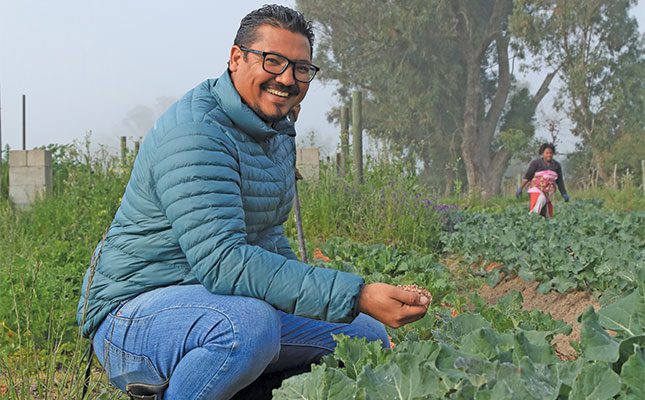
As a child, Angelo Marman loved tending to his family’s vegetable garden, enriching the soil with compost made from donkey manure. After matriculating, he pursued a diploma in agriculture at the Cape Peninsula University of Technology and later joined the Perishable Products Export Control Board.
While he enjoys his role at the board, he longed for the hands-on application of what he had studied. That desire led him to farm tilapia and vegetables on a small, rented plot in Abbotsdale near Malmesbury in the Swartland.
He named the venture Vyf Vissies en ’n Blaartjie – Afrikaans for ‘five fish and a leaf’ – a nod to the biblical story of the multiplication of loaves and fish. The offspring from his original five tilapia brought in R25 000, which funded further expansion. Before long, Marman was using his set-up to train aspiring farmers in aquaponics and vegetable production.
From five fish to a thriving business
Just over a year ago, Marman achieved a major milestone: purchasing his own 8ha farm near Chatsworth, about 20km away.
“People think I am crazy to pay R4 million for this land, but it is less than what a house in Cape Town costs these days, and unlike a house, a farm can generate an income and be turned into a legacy for future generations,” he says.
He has secured several markets for his produce, supplying companies such as Metro Organics, Real Fresh, and an organic dog food brand.
To meet demand, he has partnered with other small-scale and commercial producers in the region, coordinating logistics for their collective supply.
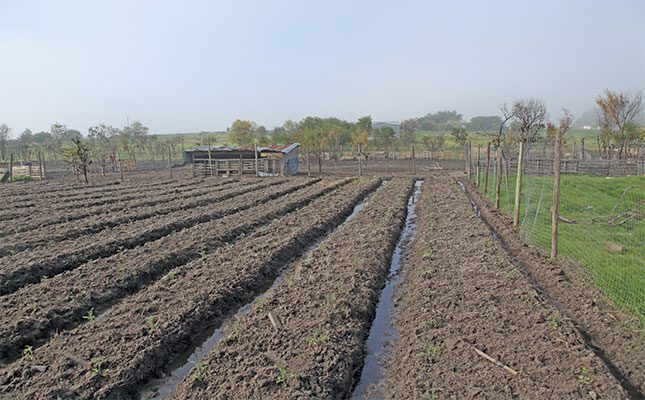
To reduce the cost of third-party organic certification, Marman belongs to the Swartland Participatory Guarantee System (PGS), where different organic producers from the region check up on one another.
“Members of the system visit each other’s farms once a year to check whether the producers are indeed following organic practices. The PGS has also turned into a valuable support network, where you can discuss production problems and bounce ideas around,” he says.
On his farm is a dilapidated chicken house, which Marman hopes to transform into a packaging facility with financial support from the Western Cape Department of Agriculture.
“I am in the process of finishing the paperwork. A packaging facility will allow us to add value to our produce while creating at least 50 full-time jobs,” he says.
Training remains a key focus for Marman, and he participates in the Social Employment Fund programme, through which government funds the employment of job seekers for seven days each month in exchange for skills development.
“This programme allows me to give people valuable farming skills so they can find work or start their own food gardens. It also helps me identify talent for permanent positions on my farm,” he explains.
Farming with friends
For Marman, teamwork isn’t just for people – it extends to his crops too. His fields thrive on companion planting, where plants are strategically used to support each other in a natural partnership.
First up are the soil boosters. “Legumes, like beans and peas, fix nitrogen in the soil, feeding other crops and cutting the need for chemical fertilisers,” he explains.
Stinging nettles also earn a spot here, packed with nitrogen, calcium, magnesium, and iron.
“It was tough at first to wrap my head around it, and even harder to explain to workers that they should remove all weeds except the nettles, but the nettles have made a huge difference in my production system,” he says.
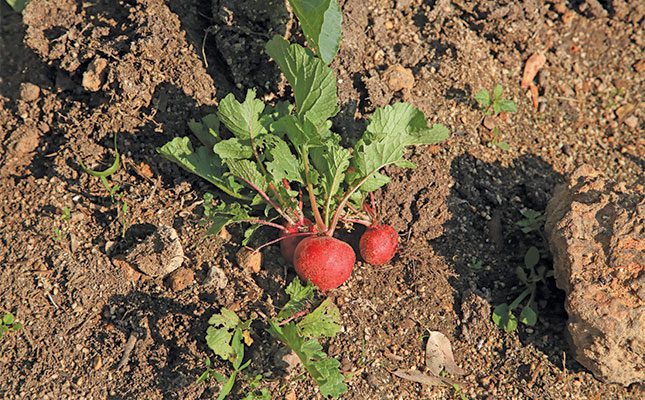
Marman leaves plant roots in the soil when harvesting, allowing them to decompose and boost organic matter and carbon content. Deep-rooted plants, such as radishes, also help to loosen the soil and improve structure.
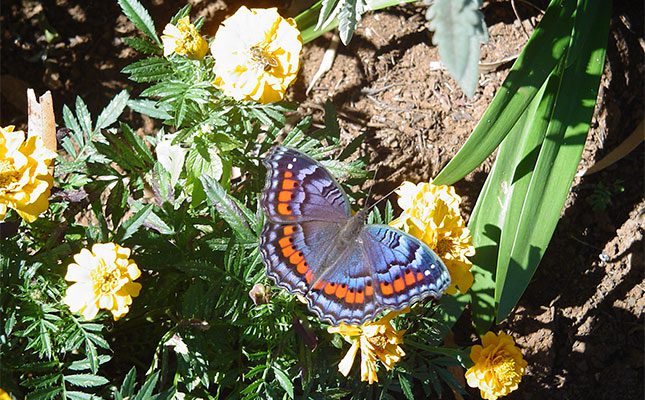
Then there are the insect allies. Flowering plants lure beneficial insects, such as bees, butterflies, wasps, and ladybirds, boosting pollination and keeping pests in check. Marigolds serve a double duty, attracting beneficial insects while repelling unwanted visitors.
Rosebushes, on the other hand, attract aphids, but also serve as an early indicator of fungal problems, as they tend to get sick before other crops.
Marman lets his best vegetables and salad plants go to seed after harvest, which not only produces the next generation of seedlings but also attracts beneficial insects during flowering.
“I grow as many seedlings as I can, but it is time-consuming, so I have to top up with purchased seedlings, which adds costs,” he says.
Pest repellents and trap crops
Most herbs – anything with a strong scent – fall into the pest-repellent category. Marman points out that he plants rosemary around some of this vegetable beds to keep pests at bay, and he uses garlic strategically for the same purpose.
He also leaves patches of natural vegetation as trap crops, which lure problem insects and organisms away from his planted crops. These areas double as habitats for beneficial organisms that help maintain a balanced ecosystem and keep pest populations in check.
In addition, Marman tries to leave as little open space as possible in his plant beds to limit weed growth. To achieve this, he grows pairs of crops together that do not compete for the same nutrients and have different root structures and growth speeds.
For example, radishes are almost planted everywhere between crops if it will not interfere with its growth. Leaving stinging nettles in the beds and using sawdust as mulch also help suppress weeds and enrich the soil.
“Weeding at an organic enterprise like mine, where roughly 6ha are under production, can cost you up to R40 000 per month, so you need to find innovative ways to reduce this expense,” he says.
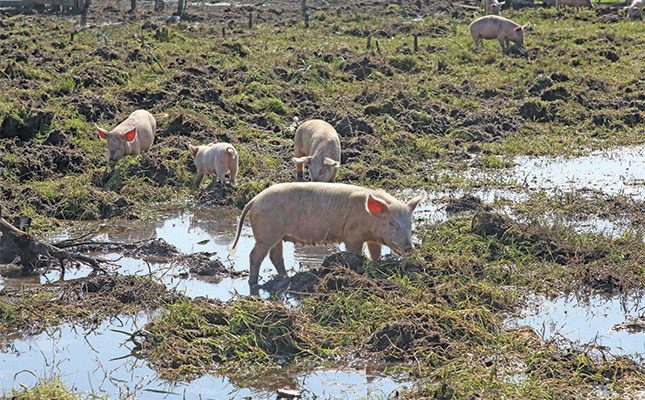
Another of his solutions is pigs: “The pigs are free-range and help ‘till’ and clean the land before it is converted into plant beds. They also reduce farm waste – which averages around 30% for a typical farm – and generate an additional income stream,” he says.
Marman also keeps layers and uses their litter, along with the pig manure and other farm waste, to produce compost. The raw materials are brought to the vegetable lands, where they are formed into heaps, covered with plastic bags, and turned and watered once a month.
“Making the compost in the vegetable lands makes it easier to apply the finished product where it is needed,” he adds.
Different plants can also be planted together to offer shade to one another. Marman, for instance, might plant lettuce and mustard in between slower-growing tomato seedlings to offer shade to the seedlings. The mustard and lettuce leaves are then harvested by the time the tomatoes are ready for harvest.
The same is done with coriander, which can provide shade for small cabbages.
Finding the right Balance
Marman says the trick with all of this is to match plants that work well together.
“You need plants that do not compete for nutrients, do not inhibit the growth of neighbouring plants and do not attract the same pests.”
Tomatoes, for instance, go well when rotated with basil and garlic chives, which help to deter insects, and nitrogen-fixing legumes, such as beans and peas, to enrich the soil.
Tomatoes do not get along with Brassicas, such as cabbage, broccoli, cauliflower and kale, because they compete for the same nutrients. Brassicas also release chemicals that inhibit the growth of neighbouring plants, including tomatoes.
Tomatoes also do not thrive when planted with potatoes, aubergines or peppers, as they all form part of the nightshade family and have similar growing requirements and attract the same pests and diseases.
Marman points out that he specifically struggles to get suitable companions for fennel in his production system, as it has allelopathic properties, which inhibit the growth of most plants if planted too close together.
“Companion planting is not about strict rules,” he adds. “Use charts and guides for inspiration, but observe your own conditions to find solutions that work best for you. The goal in any form of partnership, whether with plants or people, is not just perfect matches, but matches that help to create a more resilient future.”
For more information email Angelo Marman at [email protected].