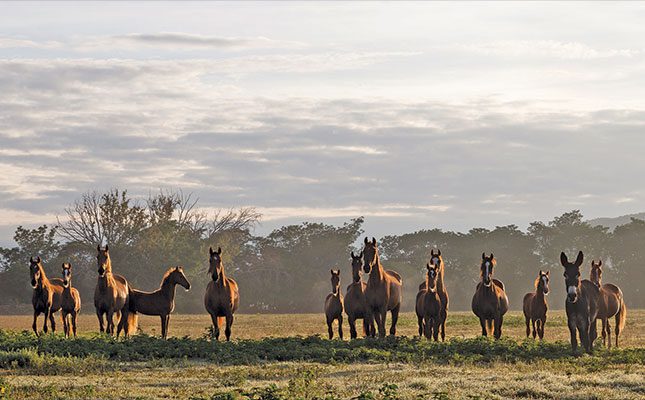
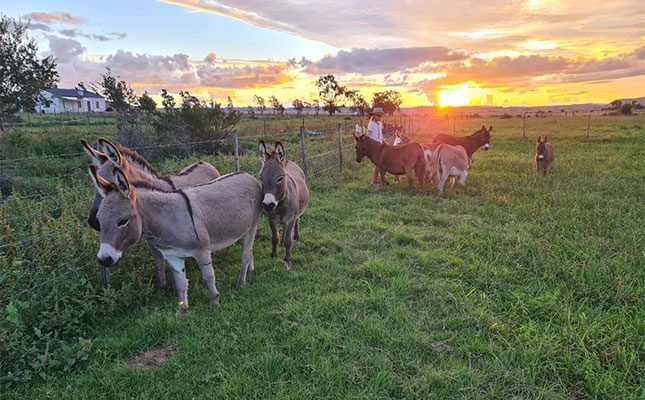
Miniature Mediterranean Donkeys make ideal pets because of their small size and gentle nature. Angelique du Preez, who runs a herd of miniature donkeys in Bethulie in the Free State, says the breed is distinct, not derived from other breeds, and originates from the islands of Sardinia and Sicily.
“Unlike many other small breeds, the miniature donkey is not a bred-down version of a larger one,” she explains.
These donkeys naturally evolved to their small stature, perfectly adapted to the islands’ challenging terrain. Their manageable size, engaging personalities, and versatility make them excellent companions.
Because of their size, the donkeys were, in the past, employed in mines and for turning grindstones for grain and working in vineyards. They were also used to carry water from village wells and supplies into the mountains for shepherds.
“Now almost extinct in their native land, these diminutive animals have become extremely popular pets. The first Miniature Mediterranean Donkeys were imported into the US in 1929 by Robert Green, a stockbroker from New York. And it is from America that Gert Vorster imported the first four miniature donkeys into South Africa.
“Three jennies and one jack arrived in South Africa on 30 November 1998. The majority of the Collett Farming herd’s genetics were obtained from Deon Vlok from Calvinia,” Du Preez adds.
Hardy and robust
She says that despite their small size, Miniature Mediterranean Donkeys are strong, healthy, and hardy. Breed standards require that jennies and jacks stand no more than 91cm at the withers to qualify as miniature donkeys, while those under 76cm are classified as Micro Miniature Donkeys. The micro donkeys form part of the miniature donkey breed. A jenny carries her foal for 12 months, and they can become pregnant again just five days after foaling.
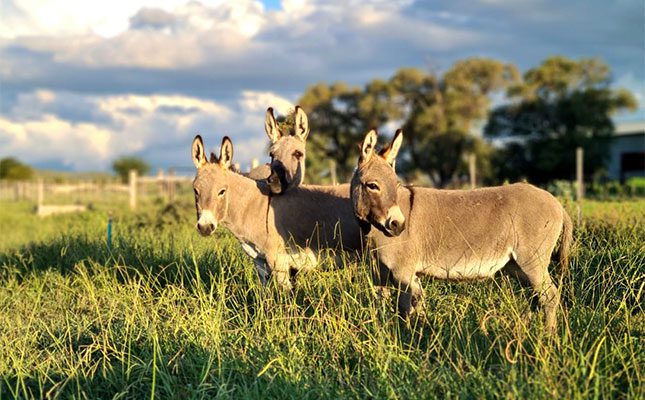
At Collett Farming, jennies are usually bred from around two years of age, giving them time to fully mature. Most foal for the first time at three years old. Foals are weaned at six months, with some mothers starting the process themselves while others continue nursing. In cases of extended nursing, Du Preez and her team gradually wean the foals to give the mothers ample time to recover before their next foal.
Suited to the semi-karoo
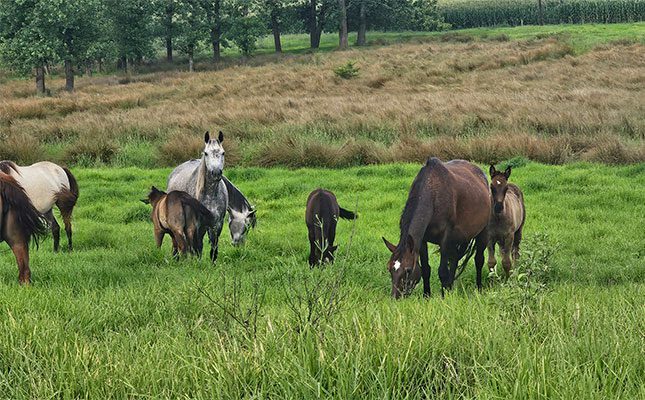
“We farm in the semi-arid Karoo area, which suits our donkeys well. They are mostly kept on the veld, as they love roughage and will munch on branches, bushes, and leaves. Interestingly, they aren’t particularly keen on being kept permanently on planted pastures. If they are kept on pastures, it is advisable to supplement their grazing with teff to give them access to dry matter,” explains Du Preez.
In winter, the donkeys grow long, thick coats that protect them from the cold. At the start of summer, they shed these coats, revealing beautiful, short, smooth hair. They don’t like staying wet for long, so it’s advisable to provide them with shelter from the rain.
It’s also important to monitor the donkeys’ weight, given that they are kept as pets and are often spoilt with too many treats. Overweight donkeys may develop fat deposits and a crest on their necks, causing their necks to fall sideways. This is a permanent conditio
n, even if they later lose weight. Overfeeding can also lead to serious problems, such as laminitis.
Health and well-being
According to Du Preez, donkeys don’t require an extensive health programme, as they aren’t prone to many diseases. She vaccinates them against African horse sickness once a year and deworms them as needed. Their hooves are also attended to when requir
ed.
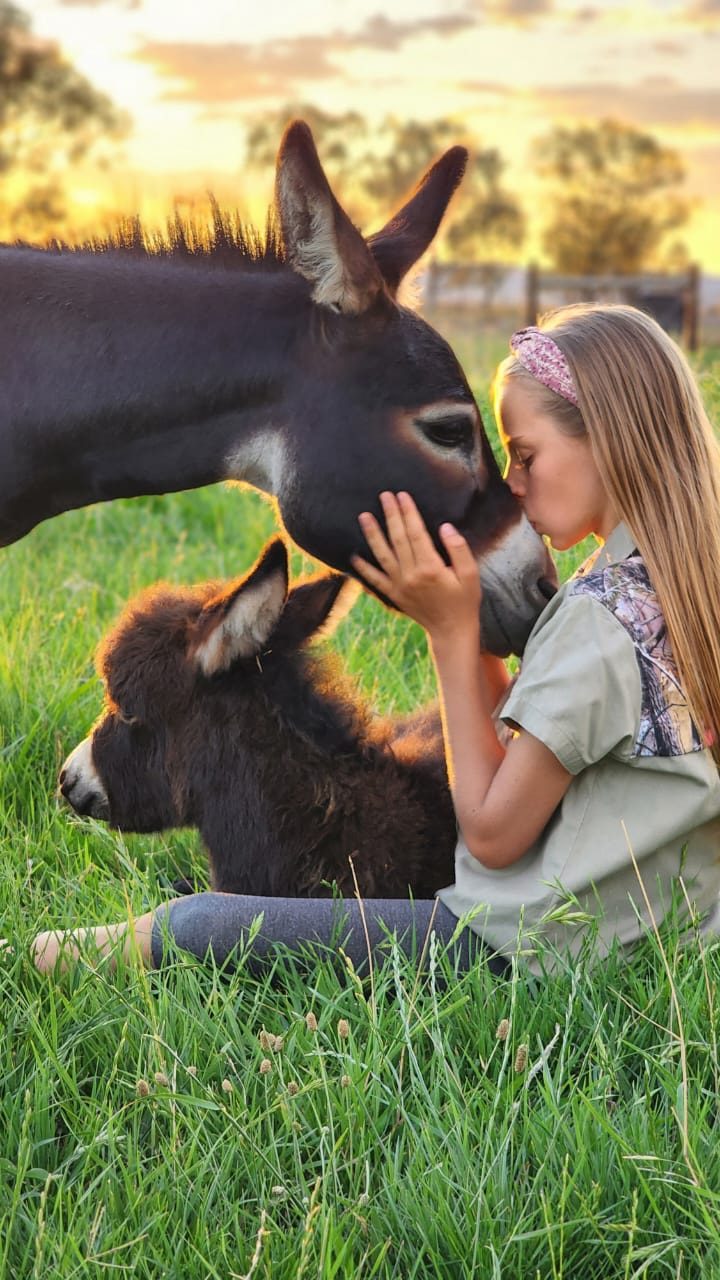
She says she always encourages her clients to make the donkeys part of their families.
“Let them come into your house and say hello to you at your kitchen table. If you want to, place their stable or little camp outside your bedroom window so you can keep them close. Enjoy them as much as possible, as they actively seek human attention and affection,” she advises.
Herd animals
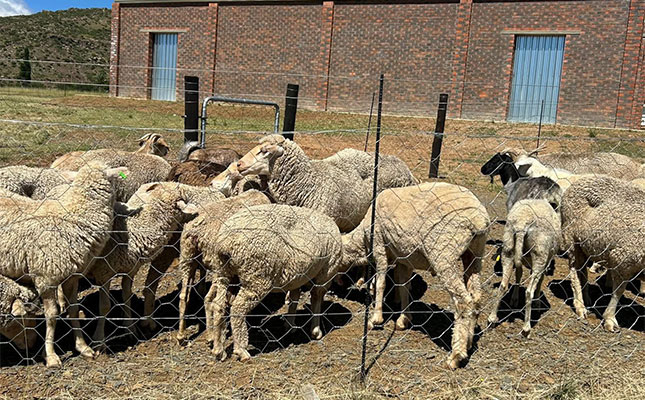
Donkeys are herd animals and form close bonds, so they don’t do well in isolation. It isn’t wise to keep just one miniature donkey, as Du Preez explains: they “need a friend with them”. While they interact well with horses, cows, goats, sheep, alpacas, and even dogs, the best companion is another donkey.
For more information email Angelique du Preez at [email protected].