
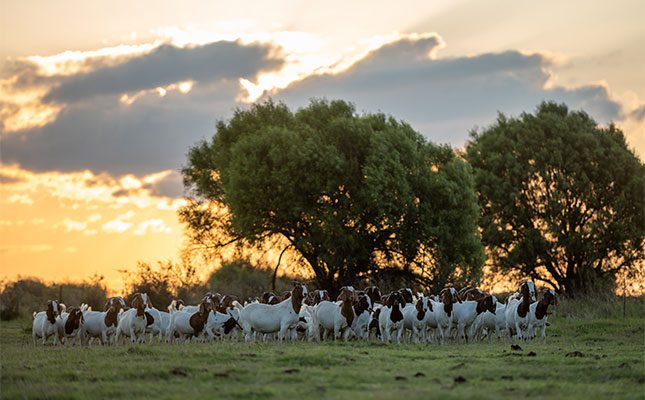
Joubert Horn, owner of the Joubert Horn Boer Goat Stud, didn’t initially plan on becoming a farmer.
“I don’t come from a farming background,” he says. “My father, a lawyer, had a small piece of land on which some Boer goats roamed when I was growing up, but he wasn’t a farmer.”
Horn was born and raised in Burgersdorp in the Eastern Cape, and it was only at university that his interest in farming was piqued.
“Many of my friends came from farming backgrounds, and as I interacted with them, I began to grow an interest in farming.”
It was this influence that eventually led Horn to approach his father in 2010 about farming the Boer goats on his land.
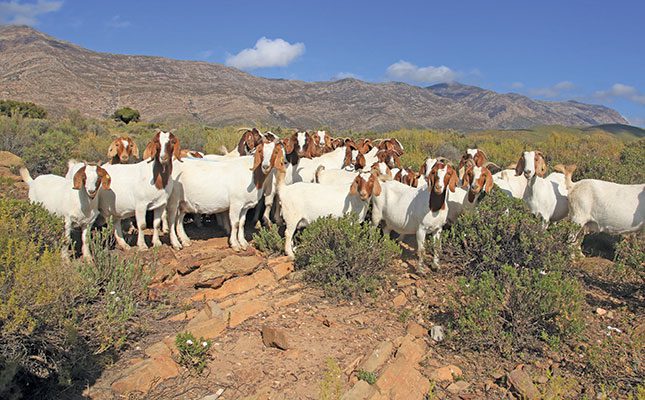
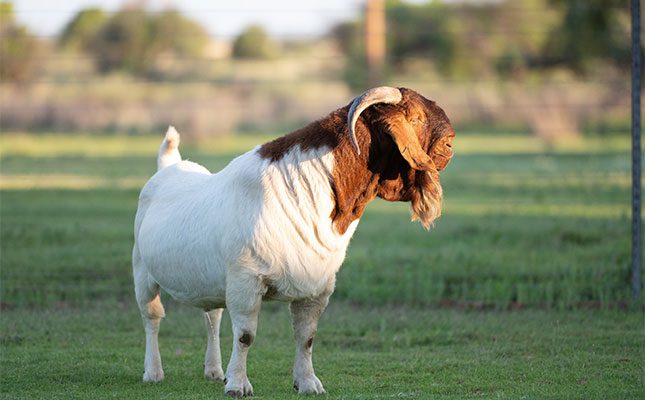
“When my interest in farming began, I started self-studying farming and learning as much as I could about the Boer goat. I had developed a real passion for the breed,” says Horn. “There is nothing more beautiful than a Boer goat ram walking in the veld between the trees.”
His father agreed to his proposition.
“He told me that I could buy half the flock, and then we would farm the goats together.”
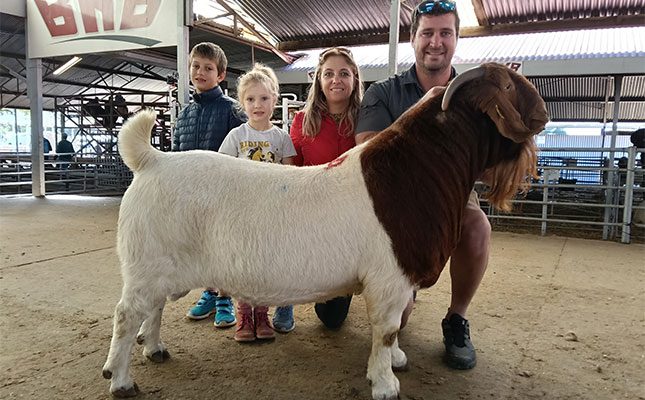
At the time, Horn was playing rugby abroad. He used the money he earned from this to pay off his father for his share of the flock.
In 2015, Kobus Lötter, a well-known name in the Boer goat fraternity in South Africa, came to the farm and helped the Horns select the best ewes of the flock. At the time, there were between 200 and 300 ewes on the farm; under Lötter’s guidance, this was whittled down to around 50 ewes.
“From then on, I selected goats every year for breeding,” says Horn.
By the end of 2016, his rugby career had come to an end and he returned to South Africa to become a full-time farmer. His father-in-law then offered him the opportunity to work on his farm near Vanzylsrus in the Northern Cape. At the same time, his father decided to retire from farming, and Horn bought the rest of the flock from his father before moving the goats to the Northern Cape.
“The move from the extreme cold of the Eastern Cape to the extreme heat of the Kalahari is a testament to the adaptability of the Boer goat,” says Horn. “They adapted extremely well. The breed is very hardy.”
After two years in Van Zylsrus, Horn and the flock moved again: this time to a piece of land he rents from his father-in-law near Vryburg in North West. This is where Horn still currently farms.
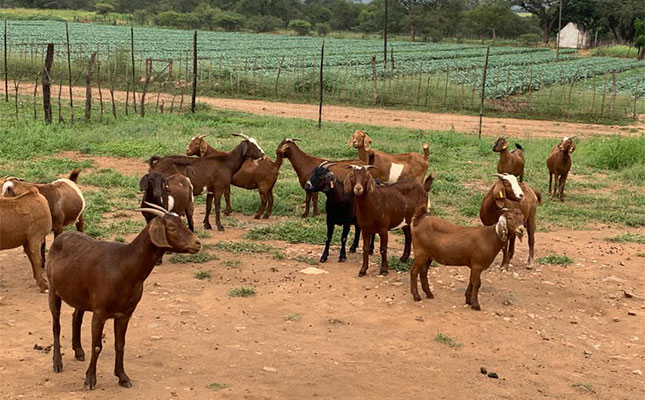
While he has been selecting goats since 2015, his stud was officially registered in 2017. His flock currently consists of around 120 ewes.
Other than the Boer goat stud, Horn also runs a herd of commercial cattle.
Breeding
Horn says he likes to follow the goats’ natural mating season, which tends to run from February to April.
“I want to be in production all year round, as I attend many auctions and shows,” he says.
As such, when ewes are ready for covering, he puts a small group of these ewes to a ram. This means that he actually runs between two and four mating seasons every year.
“Having small groups kidding throughout the year actually makes it easier to manage,” he says.
He adds that while most farmers prefer ewes kidding down in summer, he prefers his ewes to kid down in winter.
“There are fewer parasites and flies around in winter to bother the ewes,” says Horn. “In summer, ewes don’t want to stand still because of the flies, which makes it difficult for the kids to suckle. They also get very hot.”
He says the biggest challenge in winter is keeping the kids warm. But as he uses kidding pens and kraals, the kids are kept warm throughout the most vulnerable time of their life cycle.
“Kids born in winter also seem stronger than those born in summer. By the time it rains in summer, they’re already three months old and strong. There’s also green grass available for them to graze by the time they go out on the veld.”
Horn mostly relies on natural mating, but uses artificial insemination from time to time, particularly as many top rams’ semen is available on the market.
Diseases and parasites
Horn says that there are fortunately not many diseases prevalent where he farms, and that the biggest disease challenges he faces is pasteurellosis, pulpy kidney disease, respiratory diseases, and clostridium.
Ewes are vaccinated against clostridium six weeks before kidding. At one month old, kids are vaccinated against pulpy kidney disease and clostridium. They receive a booster vaccine four to six weeks later.
“If it is very cold, I might vaccinate the goats against pasteurellosis,” says Horn.
Six weeks before kidding, ewes are dewormed with a medication that protects them against nasal worm, says Horn. This is so that the ewes can smell their kids once they’ve been born.
At between three and four weeks of age, kids are dewormed for milk tapeworm, and at two months old, for roundworm. At three months old when they are weaned, kids are dewormed again.
“Goats are browsers,” says Horn. “Their heads are thus higher off the ground, so they don’t get as many worms as sheep.”
He adds that he doesn’t want to overdo deworming, as the goats need to build up natural immunity. “I might deworm the adult goats after heavy rain when parasite loads are high. I also deworm if the goats are showing symptoms of infection.”
Feeding
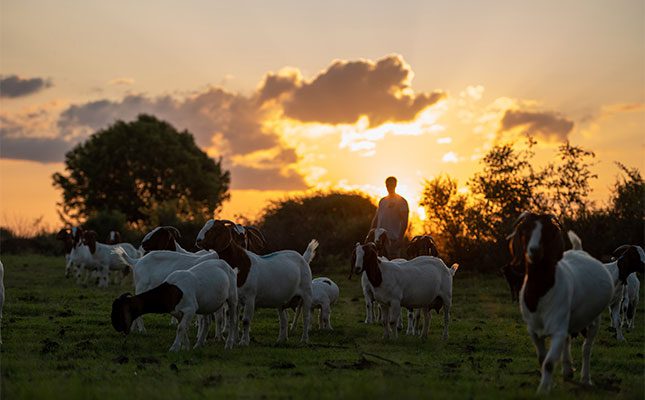
Horn runs a semi-intensive system. During the day, the goats go out on the veld where they graze and browse over 600ha. They are then kraaled in the evening.
“What and how much I feed depends on the veld and how much grazing is available,” says Horn. “But in winter, they usually receive some supplementary feeding.”
Auction and show animals receive full feed rations in the kraal before the events. Gestating ewes also receive supplementary feeding.
“If you look after your ewes, they will look after you,” says Horn. “Six weeks before kidding down, I begin giving the ewes supplementary feed to ensure high milk production. They receive supplementary feed regardless of the state of the veld.”
Two weeks before kidding, the ewes are moved to a big kraal and kept on full rations. They then kid down in the kraal before being moved to the kidding pens with their kids. They continue to receive full rations in the pens.
“After seven days in the pens, the ewes and their kids are moved into a big kraal where they run together for a month.”
After a month, the ewes go back to the veld to graze, while the kids remain in the kraal.
“In the past, I used to send the ewes and kids out together after a month, but I suffered too many losses due to predators,” explains Horn.
After another two months, the kids join their dams on the veld and begin receiving creep feed as they are weaned.
“After weaning, kid rams go to the kraal to prevent them bothering the ewes, where they receive full rations. Kid ewes get the same feed as their dams and stay on the veld.”
Rams are weaned at around 100 days, or when they begin bothering the ewes, says Horn. Ewes, however, are only weaned at around four to four-and-a-half months.
“Boer goats make great mothers,” says Horn. “They produce a lot of milk and look after their kids.”
One of the challenges, however, is that multiples (twins, triplets and even quadruplets) are common for the breed.
“This means that you need to keep an eye on ewes when they are close to kidding. In the veld, the mother may stay with her kids for a few hours, but eventually she’ll leave them to go look for water and food.
“The smaller kids, particularly those that were born as part of multiples, can’t keep up, and they may end up dying.”
This is why, says Horn, it is better to keep the dams close to the homestead when they are close to giving birth.
Challenges and opportunities
One of the biggest challenges facing Horn and other small- stock producers is stock theft.
“My goats can’t walk freely at night,” says Horn. “Stock theft is a major challenge. If you are a small-stock farmer, you have to look after them very carefully.”
Horn kraals his goats at night to keep them safe from potential intruders.
Another challenge, but also a major opportunity, says Horn, is the demand for South African Boer goat genetics.
“The Boer goat comes from South Africa, and so the best genetics are in this country. One of our biggest challenges is exporting our genetics to other countries,” he explains.
He adds that Boer goat genetics are high in demand abroad.
“When the Botswana border was open, we saw lots of farmers in various countries interested in buying our genetics. We exported a lot to Botswana. But now that the Botswana border is closed [due to foot-and- mouth disease outbreaks in South Africa], it’s a challenge to export our genetics there.”
Horn also says that once the borders open again, he expects demand for breeding material to grow significantly. “Demand for genetics in our own country is also significant,” he says.
Marketing
Horn sells his animals at the Red Carpet Boer Bok and Extreme Genetics sales every year, as well as at club and national sales.
He also markets rams that he has not selected for his own stud to interested parties.
“There is a big demand for Boer goats, and people in the industry get lots of calls. But most studs are small and cannot meet the demand,” says Horn. He adds that goats are usually secondary to other farming operations.
“I don’t know of a goat farmer that has 2 000 to 3 000 head, which is common in sheep farming. That’s why you can’t find goat meat in stores; there’s not enough meat being produced. We are struggling to meet the demand,” he says.
He also says in order for goat production in South Africa to expand further, the public perception that goat meat is secondary to sheep meat has to change.
“Lots of people are against goat meat, but only because it is not yet common in South African diets,” says Horn.
Future plans
Horn says that while he is proud of what he has accomplished thus far, he is always looking forward to the future.
“I want to get to a place where I don’t have to spend so much money on buying champions; I want to be the guy breeding those champions and selling them off to other farmers,” he says.
He also wants to expand his operation. “I want my stud to grow to about 200 to 250 head.”
He also says he wants to become more actively involved in the industry by attending more shows and auctions.
“I didn’t inherit a stud; I built my stud from scratch. It’s been a challenge, but it’s paying off. Ultimately, I want to leave a stud that my son can inherit and appreciate for the hard work that has gone into building it. I hope that he will continue to build on it for generations to come.”
His advice to new and upcoming farmers is to put passion before profit.
“I’ve often received phone calls from new farmers wanting to buy goats. When asked why, they say there is such a big demand for goats and that they want to jump at the opportunity.
“My advice is that if you want to farm goats, but only because of the current market demand, don’t do it. Goats are hard work. You need a lot of passion,” he says.
Horn adds that whatever happens, he will continue to remain true to his motto: ‘where honesty and quality is our first priority’.
For more information phone Joubert Horn on 072 111 8301.