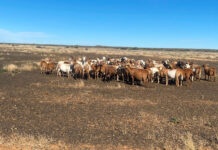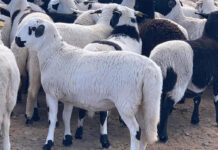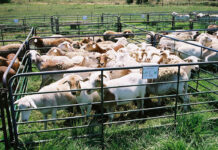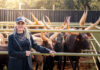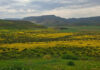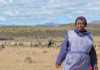

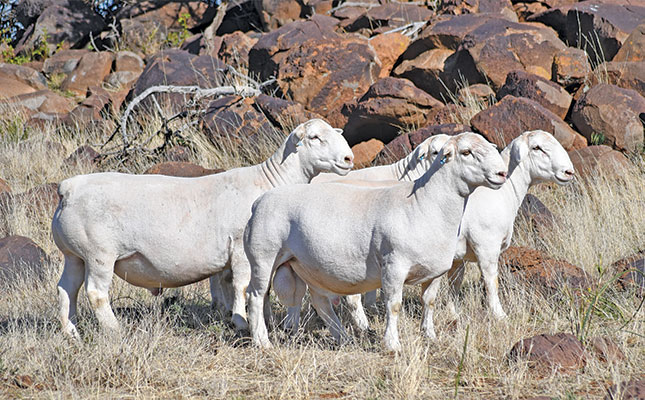
On the edge of the Karoo, where rainfall is unpredictable and margins are tight, sheep farming leaves little room for error. For farmer Ashley Phillips, Dorpers have become the backbone of a performance-driven operation.
Phillips says the success of their operation is rooted in adaptability, disciplined production systems, and a long- standing family focus on genetic improvement.
“We farm just outside the small town of Tarkastad in the Eastern Cape, right on the edge of the Karoo. I’m the fifth-generation farming on this property, and although my great-great-grandfather and earlier generations were big Merino farmers, my grandfather and father started looking at other breeds to improve veld utilisation and overall returns,” says Phillips.
That shift was driven by practical production considerations rather than sentiment. “They started testing different meat breeds, crossing them with Merinos, and the Dorpers performed the best by far. From there, they decided to move fully into Dorpers and eventually into the stud industry to increase value per head.”
Phillips explains that scale was always a constraint. “We didn’t have a very big farm at that stage, so the only way to make it work financially was to increase the value per animal. That’s how the Dorper stud developed, and we’ve been farming Dorpers now for more than 50 years,” he says.
A stud built on performance
Today, the family farms on approximately 12 000ha, combining commercial and stud production. Over the years, the stud has gained international recognition.
“We’ve been fortunate enough to win a few world champion ram titles and ewe titles over the years, on four or so different occasions. We also do a lot of business overseas with embryos, so our genetics are spread across the world,” says Phillips.
He attributes the operation’s longevity to consistency. “Because of the quality of the product we provide, about 90% of our customers come back. That’s a big honour, and it shows that what we’re doing works,” he says.
Why Dorpers work in Tarkastad
Phillips says the Dorper’s adaptability is the main reason the breed thrives in their environment.
“We’re in an area that’s very susceptible to drought. When our testing was done, the Dorper was shown to adapt best to the Karoo and bushveld conditions, and we get the most out of them with the least effort,” he says.
He adds that profitability is a decisive factor. “The profit margin on Dorpers is significantly higher than on any other breed we tested. They handle dry conditions well, they convert feed efficiently, and their fertility is exceptionally good,” he says.
Non-seasonal breeding is another advantage. “Compared to other meat breeds, the Dorper is far less seasonal, which gives you much more flexibility in managing your production cycle,” he says.
Structured production systems
Phillips’s operation runs strictly according to carrying capacity, with a strong emphasis on reproductive efficiency.
“We like to run at our carrying capacity, but we also use laparoscopic artificial reproduction (AR) in our females – it’s far better from a management point of view,” he says.
Reproduction is scheduled around two key breeding periods each year. “We do two laparoscopic AR programmes annually. “The main one is in our natural breeding season, around April and May, and then a second one is in October,” he says.
The timing is deliberate. “The October programme gives ewes that have already weaned lambs enough time to recover before going back into breeding. The aim is always to maximise lamb numbers, whether you’re a stud or a commercial producer,” he says.
Grazing and supplementation
Phillips manages nutrition according to seasonal veld conditions. “We’re in a summer rainfall area, so during summer we don’t supplement much at all. If we get rain, the sheep run extensively and do very well on natural grazing,” he says.
Winter requires a more strategic approach.
“As it gets drier and the veld loses nutritional value, we supplement with protein licks to address deficiencies. The advantage of the Karoo is that the bushveld provides good forage in winter, so animals can still perform well,” he says.
This seasonal balance reduces feed costs while maintaining the animals’ condition.
“In summer they graze grass, and in winter they graze bushveld. That allows us to keep them productive throughout the year,” says Phillips.
Nutrition during critical stages
Targeted supplementation is central to the operation, particularly around breeding and lambing.
“Before breeding, we give ewes a production lick formulated by a company we work with, AgriNutro. It’s designed to put the animals on an upward nutritional plane before mating,” he says.
Condition at mating is critical. “If ewes’ nutrional intake is enhanced before you breed them, you get exceptionally good conception rates. That’s one of the most important principles we follow,” he adds.
Late pregnancy nutrition is treated with equal importance. “During late pregnancy, the ewes stay on a good production lick. We also supplement with vitamin A and selenium about six weeks before lambing, along with Multivax P to cover clostridial diseases,” he says.
These measures are aimed at protecting both ewe and lamb. “It ensures better lamb survival and helps the ewe recover quicker after lambing.”
Supporting lactation and lamb growth
Once lambs are born, nutrition shifts to supporting milk production and early rumen development. “When ewes have lambs at foot, we keep them on a production lick to maintain peak milk production,” says Phillips.
The operation also provides lambs with creep feed, despite the added cost.

“A lot of farmers say creep feed is expensive, but we see clear benefits. Lambs’ rumens develop earlier, which helps them digest veld better, and the ewes don’t lose as much condition.”
Phillips says the long-term gains of creep feed outweigh the short-term expense. “You get stronger lambs, better growth, and healthier ewes going back into the next breeding cycle.”
A long-term view
Phillips says Dorper farming, particularly at stud level, requires patience and consistency.
“It’s been a passion in our family for generations. I’m fortunate to be one of the sons who wanted to stay in farming and take it further,” he says.
For him, success lies in aligning genetics, environment and management.
“If you match the right breed to your veld, manage nutrition properly, and stay disciplined with your production system, the Dorper will reward you. “That’s something we’ve seen over decades of farming here in the Eastern Cape,” he says.
Breeding flexibility strengthens output
Phillips says the flock’s breeding programme is structured around periods that consistently deliver the best conception rates, while still taking advantage of the breed’s non-seasonal nature.
“Our best natural breeding time is from about March, April and May. That’s when we get the best conception rates, and the rams are always very fertile at that time,” he says.
A second breeding window is used later in the year. “October, when we start getting early rains, is also a good time for us. It’s not quite as good as the natural breeding season, but it still works well,” says Phillips.
He explains that this flexibility is one of the main reasons the Dorper fits their system so well. “We’ve done various tests over the years, and the Dorpers always had the best conception rates right throughout the year. Other breeds, when bred out of season, often had very poor conception rates,” he says.
According to Phillips, this ability to perform both in and out of season is critical. “In season, the Dorper has exceptional conception rates, and out of season they still perform very well. That’s one of the key reasons they’re such an integral part of our farming set-up, because they can produce more lambs out of season than most other breeds,” he says.
Selecting for function and performance
When it comes to selecting rams and replacement ewes, Phillips says experience plays a major role.
“We’re members of SA Stud Book and Logix, so we do look at figures. But in our farming set-up, we prioritise phenotype first,” he says.
Animals are initially selected on visual appraisal. “We select animals that we believe fit well into our breeding programme based on what we see. From there, we look at the figures and then phase out the animals that might look good phenotypically, but don’t perform as well genetically,” he says.
Years of selection in the same environment have sharpened their eye. “Because we’ve been doing this for so many years, we know the type of animal that works best in our environment and adapts the quickest. Phenotypically, we get it right about 90% of the time, and then the genotype just helps with the final refinement,” he says.
Growth and carcass potential are key considerations. “We really like animals with long bodies. Those animals always put the most kilos on the scale, whether it’s at slaughter or at breeding time,” he says.
Ewe management around lambing
Phillips’s management of ewes before, during and after lambing is focused on maintaining condition without creating unnecessary risks.
“Before lambing, it’s very important that the ewes are in good body condition so they can give optimal nutrition to their lambs,” he says.
As lambing approaches, feeding is carefully controlled. “We move the ewes into smaller lambing camps to protect them from vermin. But we don’t feed high concentrates just before lambing, because that can cause the foetus to grow too big and increase lambing difficulties,” he says.
Instead, the focus is on balanced roughage. “Before lambing, we give ewes good- quality hay, like lucerne, which has a high protein content and supports them without pushing lamb size too much,” he says.
After lambing, nutrition is stepped up again. “Once the ewes have lambed, we give creep feed to the lambs and a production lick to the ewes. That keeps the ewes in optimal condition and ensures they can produce enough milk,” he says.
Lamb survival and early growth
Lamb survival is supported through veld-based lambing systems rather than intensive housing.
“Our ewes lamb in relatively small camps of about 10ha. We don’t use sheds or lambing barns as they’re too labour-intensive, and we believe that ewes need to lamb naturally and allow lambs to follow their mothers,” he says.
Predator control is a key consideration.
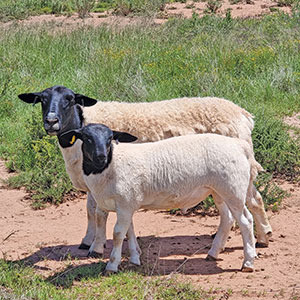
“The lambing camps are netted to protect lambs from vermin. Jackal and lynx are always a problem in sheep areas, so the protection we provide is essential,” says Phillips.
Early growth is driven by nutrition and strict selection.
“We use lamb creep for exceptional early growth, but we’re also very strict on selecting females with good milk,” he says.
Milk production is non-negotiable. “The milking ability of Dorper ewes is exceptional, and they’re very good mothers. Any females that don’t meet our milk criteria are culled from the breeding programme, because good milk means healthy lambs that grow quickly,” he says.
Weaning age and discipline
Lambs are weaned early to maintain control within the breeding system.
“We wean our lambs at about 90 days, or three months. Dorpers grow exceptionally well, and because we run a strict breeding programme, young ram lambs will start trying to mount their mothers quite early,” he says.
Early weaning prevents management problems.
“We remove both ram and ewe lambs at 90 days. By that stage, they’re well equipped to perform on their own.”
Health and resilience in the flock
Overall, Phillips says health challenges in the Dorper flock are minimal. “The main issue we occasionally see during the rainy season is wireworm,” he says.
Even that is managed through selection.
“You can select against it by removing females that are more susceptible to worms,” he says.
Beyond that, the breed’s hardiness stands out. “Dorpers shed well, their veld utilisation is excellent, and they’re non- selective grazers. They’ll utilise almost everything available in the veld,” he says.
For Phillips, disciplined selection remains the foundation.
“If you select properly over time, you can really make the Dorper a super breed within your own flock,” he says.
Strict biosecurity underpins flock health
Biosecurity is treated as non-negotiable on the farm.
“We run a closed flock and generally don’t bring in outside genetics, but on the few occasions that we do, we follow very strict protocols,” says Phillips.
Incoming animals are thoroughly treated before joining the flock.
“They’re washed down with disinfectant, like an F10 solution, or run through a dip. They’re then treated with Drastic Deadline to remove any ticks, dosed, and given an antibiotic before they join the rest of the animals,” he says.
These measures, he says, protect the long- term integrity of the flock. “If you don’t take biosecurity seriously, you can undo years of selection in a very short time.”
Advice for new Dorper producers
Drawing on five generations of farming experience, Phillips keeps his advice simple and practical.
“If you look after your animals, they will look after you. Only buy rams that you can afford for your flock, and focus on improving your herd steadily over time.”
He concludes that success is less about shortcuts and more about consistency.