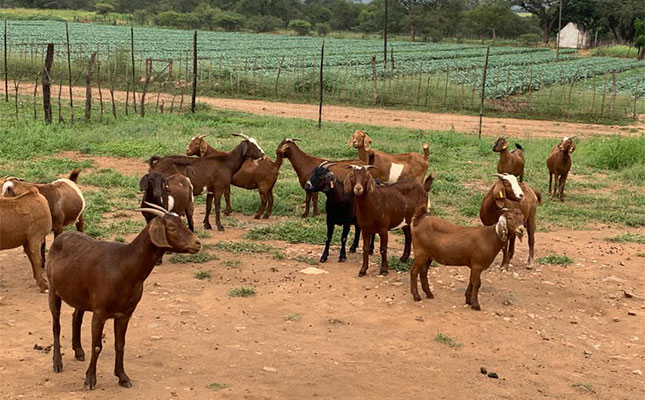
The Goat Breeders Association of Zimbabwe (GBAZ) was established in 2018 by farmers Divine Simbi Ndhlukula and Anisha Cader and began with only three registered breeders. The two had imported stud-registered goats from South Africa, but at the time, there was no recognised body in Zimbabwe responsible for goat breed standards, inspections, or registration.
They wanted the progeny of their imported goats to be inspected and formally registered locally, but no institutional framework existed to support this. Following consultations with the Zimbabwe Herd Book (ZHB), they established the GBAZ as an umbrella body for all goat breeds.
Their vision was to create a structure in which each breed would eventually have its own society, responsible for maintaining breed standards, conducting inspections, and supporting breeder development.
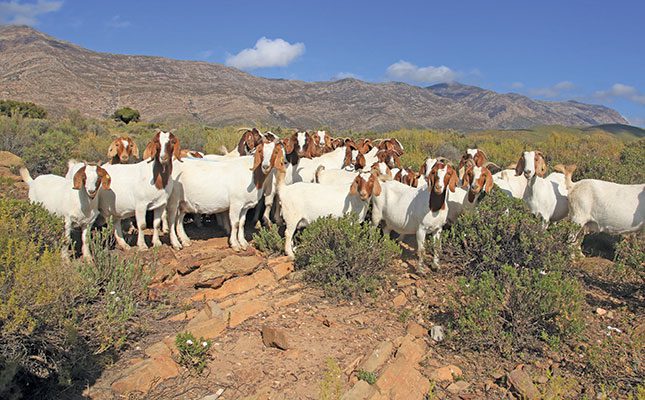
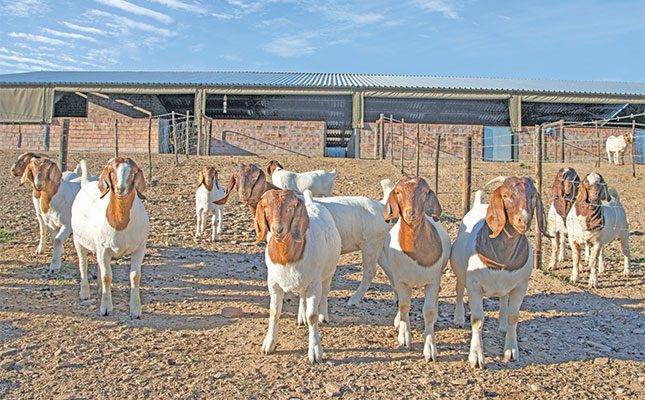
The Boer Goat Society of Zimbabwe was the first society to be launched, in 2025, with others expected to follow, including societies for indigenous breeds.
However, shortly after, the COVID-19 pandemic severely disrupted industry activities.
Despite this setback, GBAZ Chairperson Sifiso Ndlovu Agbetorwoka says that within five years from now, a more organised, commercialised goat industry with regular auctions, registered studs, and stronger regional trade will have emerged.
“The progress we are seeing now reflects the work done between 2023 and 2025, including breeder training, nationwide awareness campaigns, and public engagement that laid the groundwork for formal inspections and ZHB registrations,” she adds.
“In 2025, 11 breeders were formally inspected by an inspector from the SA Boer Goat Breeders’ Association and are now eligible to register their goats with the ZHB. This marks a major milestone, not only for GBAZ but for Zimbabwe’s goat industry as a whole, because it signals the transition from informal production to a structured, traceable, and breed-standard-driven industry.”
Training from SA breed societies
According to Agbetorwoka, Zimbabwe doesn’t have any fully qualified Boer goat inspectors of its own, so to address this, the GBAZ has built a close working relationship with South African institutions and breed societies.
The association invites qualified South African inspectors to Zimbabwe to conduct farm inspections and junior breeder courses, while also facilitating senior course training in South Africa for its members. The next senior course is set to take place in Limpopo in the first week of March.
She explains that these programmes aren’t just about inspections; they are a deliberate strategy to build local capacity.
“The long-term goal is to develop our own pool of competent Zimbabwean inspectors, judges, and breed specialists, while continuing to strengthen regional collaboration and knowledge exchange,” adds Agbetorwoka.
From nurse to farmer
Agbetorwoka is a trained nurse turned farmer. She spent 24 years in the UK working in nursing, a background she says helped her adapt quickly to goat farming.
“Nursing trains you to observe closely, understand symptoms, prioritise prevention, and respond early to problems. Those same principles apply to livestock health. I found myself naturally attentive to [the goats’] body condition, behaviour changes, nutrition, hygiene, and disease prevention,” she explains.
She farms on Bulembe Farm, a family farm in Fort Rixon, Matabeleland South, a semi-arid province classified as a low rainfall zone. Farming here requires resilience, adaptability, and a deep understanding of land and livestock.
She started farming goats in 2019, following a severe drought in the region. Agbetorwoka says these conditions have shaped her enterprise’s production choices and pushed them towards climate-smart livestock systems, particularly goat farming.
“Like many farmers in semi-arid areas, we were searching for a system that could survive and thrive under harsh conditions. Goats came into our lives almost accidentally.
“My husband, Daniel, kept seeing goats in his research on drought-resilient farming and came across a video by a Ugandan government livestock adviser on commercial goat farming. That led us to Hamiisi Semanda, a successful Ugandan breeder and educator on YouTube, and that was our turning point; we were completely sold on goats,” says Agbetorwoka.
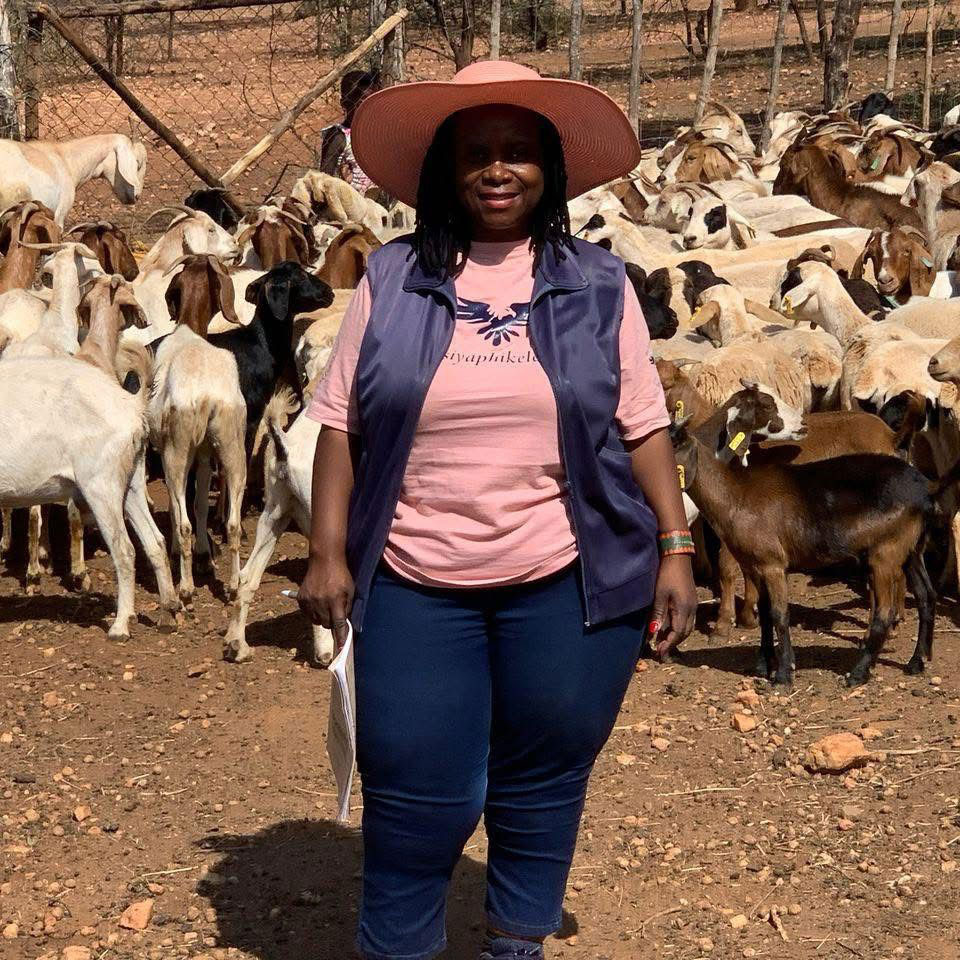
According to her, their experience with goats has been largely positive. While they have faced challenges like diseases and early management mistakes, they were able to overcome them through continuous learning, networking, and mentorship, including guidance from more experienced South African goat farmers.
They began with nine in-lamb indigenous Matabele ewes in 2019, reaching a peak of 500 goats in 2023, before beginning to sell breeding stock the following year. Initially, she sold only males for meat, but she now also sells female breeding stock to emerging goat farmers, helping to grow the industry.
In addition to goats, they have 15ha planted to lucerne and 5ha under maize, which are sold as green maize and silage. Lucerne is a critical component of their feeding programme, particularly for lactating ewes breeding stock, and dry-season supplementation.
They also sell lucerne to other livestock farmers, supporting local producers and generating an additional income stream for the farm.
But goats remain their priority, adds Agbetorwoka, because they are highly drought-resilient and easy to sell, providing quick cash flow. In comparison, sheep are usually sold once a year and cattle twice a year, while goats offer continuous market opportunities.
Breeding practices and market strategies
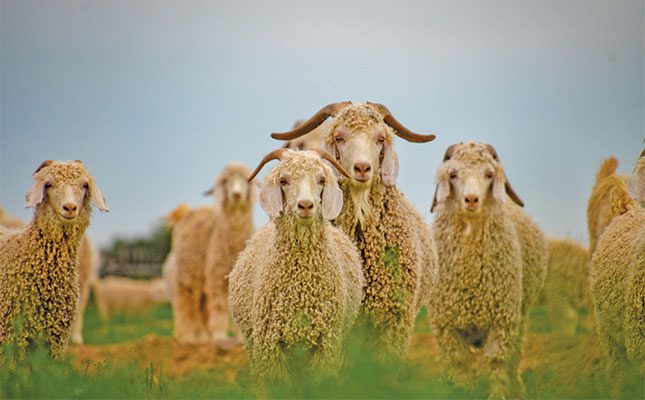
Agbetorwoka says that over the years, she has developed a keen eye for selecting good breeding bucks. She primarily uses Boer and Kalahari Red bucks for crossbreeding and also maintains a small herd of pure Boer and Kalahari Red females.
Since 2022, she has attended three junior courses and one senior course, which have significantly sharpened her understanding of breed standards and selection criteria.
She prioritises frame and structural correctness, muscle development and weight gain potential, and adaptability to local conditions.
To maintain genetic diversity and prevent inbreeding, she regularly rotates bucks and purchases new ones from outside the farm. All male kids are castrated and separated at weaning, while uncastrated males are kept in a separate camp.
Goat pricing is informed by market trends, break-even analysis, quarterly cost reviews, but Agbetorwoka says the GBAZ is actively pushing for structured auctions, drawing inspiration from organisations like the Dorper Sheep Breeders Association.
No regrets
Agbetorwoka says her decision to leave the UK and return to Zimbabwe was influenced by several factors.
“From a professional and financial perspective, I became increasingly concerned about the constantly shifting goalposts around retirement and pensions. The retirement age kept rising, and I realised I needed to take control of my financial future and build something tangible and transferable.
“My children could never inherit my nursing job, no matter how much I loved it, but they can inherit a farming business, land, skills, and a legacy,” she explains.
“I don’t have any regrets. Farming has given me purpose, independence, and the opportunity to contribute directly to food security, rural development, and youth empowerment.”