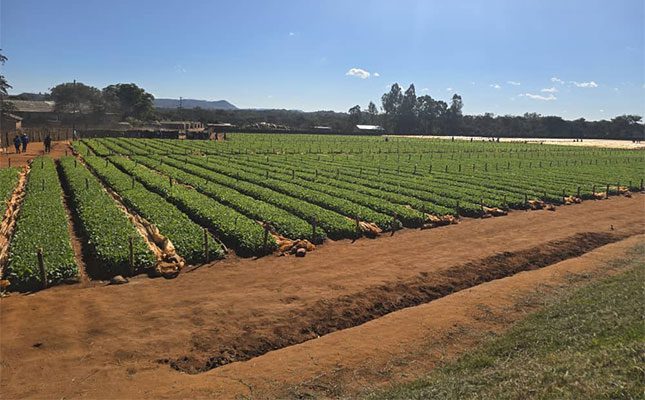

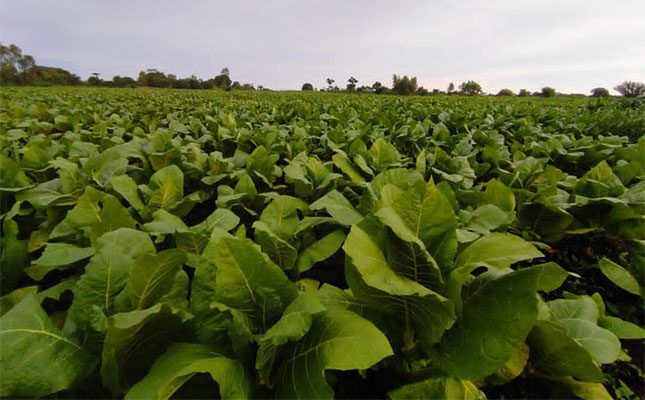
Malawi mainly grows burley and, to a lesser extent, flue-cured and dark fire-cured tobacco. The crop generates more than 50% of the country’s foreign exchange earnings and contributes between 12% and 15% to its GDP.
According to Chilungamo Kambirinya, corporate planning and development manager at Malawi’s Tobacco Commission, more than 221 000t of tobacco were sold during the 2025 season at an average price per ton of US$2 450 (R40 190). During the 2024 season, 133 300t were sold at an average price of US$2 980/t (R48 880/t).
Steady increase in tobacco production
“Sales volumes have increased steadily over the years, rising 10,6%
from 120 500t in 2023 to 133 300t in 2024, and a further 66% to 221 300t in 2025,” says Kambirinya.
“The growth in volume was accompanied by a consistent rise in total sales value, which expanded from US$283,76 million (R4,65 billion) in 2023 to US$396,78 million (R6,5 billion) in 2024, up 39,8%, and further to US$542,31 million (R8,7 billion) in 2025, up 36,7%.
“This level of production has been reached and surpassed before. In 2009, 2010, and 2011, Malawi produced 232 100t, 220 200t, and 237 200t, respectively.”
Around 70% of tobacco produced in Malawi is grown under contract farming.
He adds that the tobacco industry is one of Malawi’s major employers and is a reliable source of income for most smallholder farmers in rural parts of the country.
Threats to industry
Despite the upward trend in production, challenges remain. Kambirinya says anti-smoking campaigns worldwide lead to reduced demand for tobacco, while illegal cross-border trade persists and global demand remains unstable.
However, he adds that key opportunities include a reliable tobacco supply, creating room for new buying companies. Malawi also has a tobacco and nicotine manufacturer, opening up opportunities for value addition, including the production of products beyond cigarettes.
There is also a well-structured, regulated industry with established auction and contract marketing systems, offering predictability for investors and businesses planning long-term involvement.
Climate change threatens production
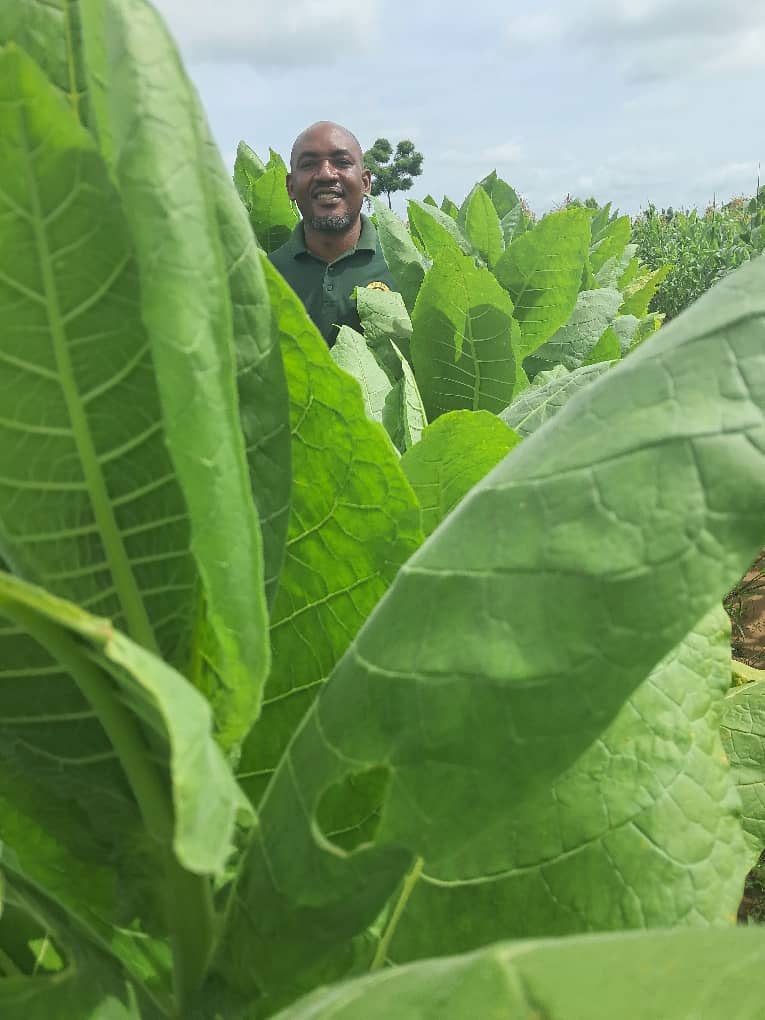
Small-scale contract farmer Rhodes Sulumba, who comes from a family of tobacco producers, says he began growing the crop in the late 1990s on 10ha in southern Malawi.
He says the country’s tobacco farmers face several challenges, including the effects of climate change, with rainfall sometimes arriving too late or too early, affecting yields.
“We’re currently at the reaping stage. I’m contracted to JTI [Japan Tobacco International], and my contract is renewed every year,” he adds.