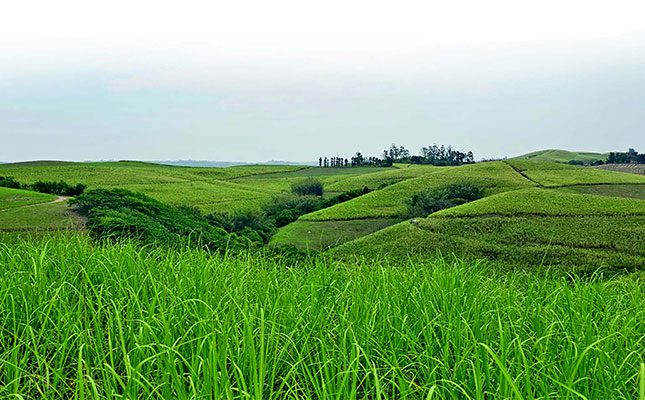
Fourth-generation sugar cane farmer Pratish Sharma is adamant that the first priority for anyone wanting to grow sugar cane is to learn what the crop is, and what conditions are required to grow it.
Learning the basics
He explains that sugar cane requires the right balance of soil quality, moisture, sunlight and fertilisation.
“It’s quite simple, quite basic, but it’s the first thing you need to know. Sugar cane grows in soil, it needs moisture, and it requires fertilisation. We mainly use urea-based fertilisers.”
Understanding the industry
Sharma says that technical knowledge alone is not enough; farmers must also grasp the structure of the industry. “The sugar industry is highly regulated, and even the way we get paid for the cane we produce is determined by legislation through the Sugar Industry Agreement.
“Anyone starting out needs to understand the rules of the game. You need to know who you are producing for, the quality you must achieve, and how to maximise your revenue.
“Too many growers don’t understand how the payment system works, and if you’re in business for the long term, knowing how you get paid is the most important thing,” he says.
Choosing the right variety
South Africa has numerous sugar cane varieties, developed by the South African Sugarcane Research Institute (SASRI), each bred with specific traits.
“There are varieties resistant to pests, others to certain diseases. Some perform better in wet valley conditions, while others thrive in drier, rocky, or sandy fields.
“When choosing a variety, you must understand where you’re planting and what type of soil you have. Through SASRI’s Fertiliser Advisory Service, you can send in soil samples for analysis, and they’ll recommend the best treatments and fertilisers. Planting the correct variety for your land is critical, because if you plant the wrong one, it may not grow well,” he says.
Planting and harvesting cycles
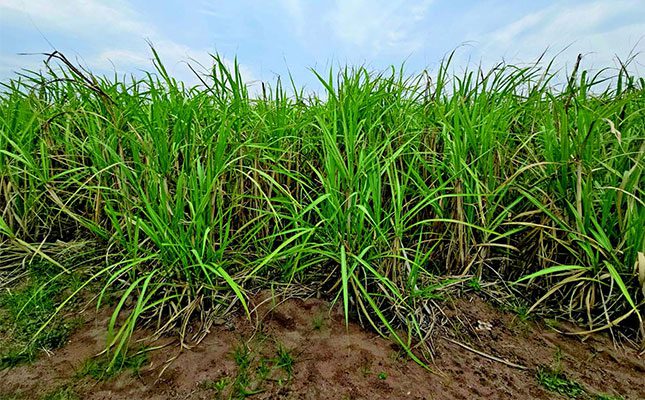
Sugar cane has the unique ability to ratoon, meaning the plant regrows after harvest without needing to be replanted.
“It’s similar to cutting your lawn; it regrows. Our role is to nurse the field back to health, keep it free of weeds, and supply enough nutrition so it can grow again.”
The length of the ratooning cycle varies by region:
- KZN Coast: About 14 months;
- KZN Midlands: 18 to 24 months;
- Mpumalanga (irrigated fields): around 12 months, benefitting from precise rainfall management.
Understanding these regional cycles allows farmers to optimise yields while maintaining soil health and cane quality.
Managing soil health
Sharma mentions that soil is the foundation of sugar cane farming. “Sugar cane requires soil that is not very acidic; we need very low acidity to almost alkaline conditions. If the soil is too acidic, we correct it with lime. Depending on the field, that could mean applying 6t/ha to 8t/ha, sometimes even 10t/ha,” he says.
Farmers can also choose fertilisers that protect soil health. “Limestone ammonium nitrate (LAN), which comes from limestone, is alkaline in nature and helps reduce soil acidity over the long term. While sugar cane naturally increases soil acidity as it grows, LAN helps balance this cycle,” he explains.
Over a 10-year cycle, sugar cane fields are ratooned multiple times. “You’ll get around eight or nine ratoons over 10 years. After that, the ground needs to be rehabilitated and replanted. It’s a constant cycle of balancing soil health and production,” he says.
Crop rotation and fallowing
Sharma adds that monocropping comes withlong-term risks. “The bottom line is monocrop farming, like what we do in the sugar industry, is not good for soil health,” he warns.
“One way to protect the soil is to fallow fields, meaning you don’t grow sugar cane on them for a period. On my farm, I take 3h to 4h a year out of cane production and plant something else, like beans or chillies.
“Different crops draw nutrients differently, and when plowed back into the ground, they add organic matter that sugar cane doesn’t provide. This rejuvenates the soil and benefits future crops,” he explains.
Water is another critical factor for sugar cane growers.
Water and irrigation challenges
Sharma says that production varies across regions depending on rainfall and irrigation systems.
“The KZN coast gets about 1 000mm to 1 200mm of rain per year, while Mpumalanga receives far less, around 700mm to 800mm. But farmers in Mpumalanga succeed because they have access to irrigation from the Crocodile River,” he explains.
“You can’t grow sugar cane without water. In areas with limited rainfall, it’s only possible with irrigation. In Mpumalanga, their yields are around 100t/ha compared to our 60t/ha, but it comes at a cost. Around 60% of that extra yield is offset by the expense of irrigation. Yes, it works, but it’s costly and comes with challenges,” says Sharma.
Spotting diseases early
One of the key responsibilities of a sugar cane farmer is vigilance in the field.
“You’ve got to pay attention to your fields. As you’re looking through, you might find leaves that are discoloured, insects stuck to the underside, or strange mutations growing from stalks. Those are signs of disease,” he points out. Among the most common threats are smut, rust, and, less frequently, mosaic.
“Smut is especially tricky because there’s no chemical fix. You have to physically dig out and destroy infected plants. Rust shows up as a brown, rusty appearance on the leaves, and certain varieties are more prone to it than others,” he says.
Battling pests
Alongside disease, pests present another serious challenge. Yellow sugar cane aphids are a major problem. “They come in huge numbers; you might find a hundred or more attached to a single leaf, sucking it dry until the plant dies,” says Sharma.
Another notorious pest is the Eldana moth.
“It’s not the moth itself, but the caterpillars that hatch from the eggs it lays inside the cane. They bore into the stalks, feed on the cane, and by the time they mature into moths, that stalk is destroyed. Left unchecked, Eldana can wipe out an entire field,” he says.
Although hard to detect from the outside, Sharma says farmers can cut into stalks to check for internal damage. “There’s been progress in controlling Eldana with new generation insecticides. Numbers have gone down over the last five or six years, but it’s still a serious risk,” he explains.
Knowing when to harvest
Timing is critical when it comes to harvesting sugar cane. “You want to harvest when the cane is mature, when it’s made sucrose. Cold, dry conditions trigger that process, which is why our best harvesting time is usually July to September,” he says.
However, harvesting is not limited to winter.
“The season typically runs from mid-April to the end of November. We don’t have the mill or farmer capacity to harvest everything in just three months. So we use chemicals like Ethon to artificially induce maturation earlier, allowing us to stagger harvesting and still maintain quality,” he says.
Manual vs mechanical harvesting
When it comes to harvesting methods, Sharma says manual cutting is still the norm in much of South Africa due to terrain and costs. “Mechanical harvesting requires flat land, which we don’t have on the hilly North Coast. Even in flat areas, farmers say the machines are expensive to run, and manual harvesting often works out cheaper,” he says.
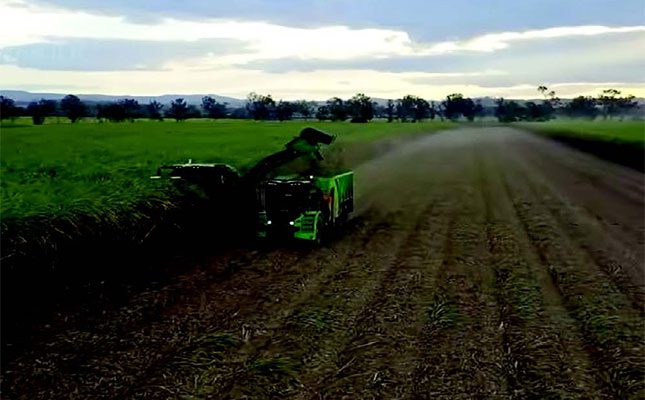
He adds that machinery can damage long-term soil health. “Heavy harvesters compact the soil, reducing root growth and nutrient absorption. That’s a big drawback compared to manual labour, even if the machines are quicker,” he explains.
The struggle for protection
Beyond the field, Sharma says that the biggest threat to the industry is cheap imports.
“The South African sugar industry supports up to a million livelihoods, but we are under siege from dumped sugar.
“Countries subsidise their growers, which lets them sell sugar below production cost on the world market. When that sugar comes here, it displaces locally produced sugar, hurting farmers and workers,” he says.
Sharma further mentions how government action is urgently needed. “We need better tariff protection. I know tariffs are unpopular globally, but without them, our entire industry is at risk. We’re not asking for handouts, just fair conditions to compete,” he says.
Mechanisation: a double-edged sword
While mechanical harvesters are rare in KZN’s hilly terrain, many growers do make use of mechanical grab loaders to improve efficiency.
“The loader does reduce the number of people needed to get cane out of the field, but it comes at a cost. Those wheels traverse every inch of your ground, compacting the soil. That means your ratoons don’t last as long. Instead of getting 10 years out of a field, you may only get six or seven before you need to replant. That’s expensive in the long run,” says Sharma.
Keeping production profitable
With fertiliser, pesticides, diesel, and labour costs rising every year, farmers often struggle to keep margins intact.
According to Sharma, the key is not in cutting corners, but in maximising efficiency from the ground up.
“The most practical steps are to start with soil health. Know your soil, correct its issues, and match the right cane varieties to your area.
“That way, the inputs you spend, whether it’s fertiliser, lime, or diesel are used as effectively as possible,” he says.
He says that farming is unforgiving. “If you miss a beat, you could be finished. My father always told me that you’ve got to treat your farm like your wife.
“Look after her, keep her happy, or you won’t have her for long. Farming works the same way,” he says with a giggle.
Farming sustainably
Sharma says that sustainability is no longer optional, but essential for the industry’s survival.
“We have a programme in the industry called SUSFARMS. It’s a framework that tracks best practices for environment, labour, and management. It doesn’t cost anything to join, but it helps farmers monitor and improve their operations over time,” he says.
For regions with steep slopes, Sharma says water management is critical.
“If you don’t channel water properly, you’ll face erosion on a massive scale. After the April 2022 floods, some farms lost 20m of soil depth over hundreds of metres. That’s your farm literally washing away into the river,” he says.
According to Sharma, preventing this requires a proactive approach.
“We need drainage systems, contour channels, and retaining plants like vetiver grass to hold slopes. With climate change bringing more floods and cut-off lows, we can’t afford to be complacent. Managing erosion is key to keeping farms alive for the next generation,” he says.
For more information email Pratish Sharma at [email protected].