Of the five cultivated species of Capsicum, the pubescens species is by far the least known. As the name implies, the leaves are hairy, which probably contributes to its large degree of insect resistance. It is rather resistant to disease as well, and is not prone to Phytophthora, for example.
This species has been domesticated for 8 000 years and was widely used by the Incas in South America. They are known as Rocoto peppers in their area of origin. Due to its isolation and very different characteristics, it has lost its ability to cross with other Capsicum species.
The fruit are mostly red-fleshed, but can also be found in other colours. C. pubescens originates at mid-elevations of the Andes mountains in Bolivia, Ecuador and Peru. It is widely planted in some regions of these countries.
Because of its place of origin, it is well adapted to cool climates in contrast to other species, but not to the extent of being resistant to frost. It does not like hot climates. I have grown these peppers very successfully in Gauteng.
Slow maturing
C. pubescens is slow maturing and should be transplanted as soon after the first frost as possible. The plants can be perennial in cool climates that have frost-free winters. There are reports of them being able to handle a temperature of -5°C.
In areas that experience just light frost, the plants could be protected with frost cover and be kept productive for at least five years. They have been known to last for 15 years. The plants have the ability to reach 5m in height and are sometimes referred to as tree chillies.
In Peru, the seeds are often removed before the fruit are stuffed with minced beef, garlic and spices, topped with cheese and baked in an oven. This could be an idea for food chains who have used jalapeño chillies in a similar way.
The fruit of C. pubescens are very juicy and make a wonderful sauce with a pleasant aroma.
Unique sensation on the palate
The contrast to other Capsicum species also applies to the range of capsaicinoids that are different in C. pubescens. As a consequence there is also a difference in the burning sensation on the palate, and the degree of pungency may vary from 50 000 to 250 000 Scoville heat units.
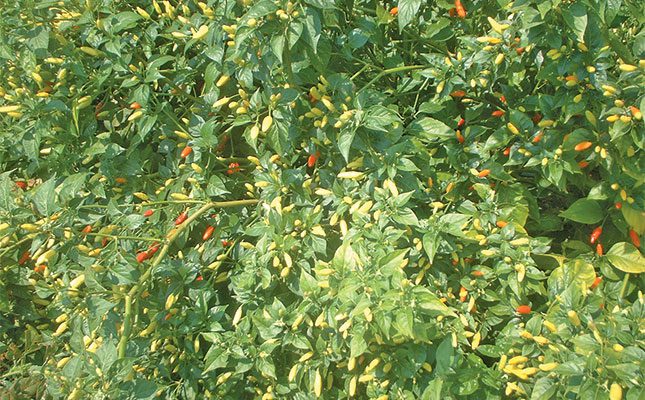
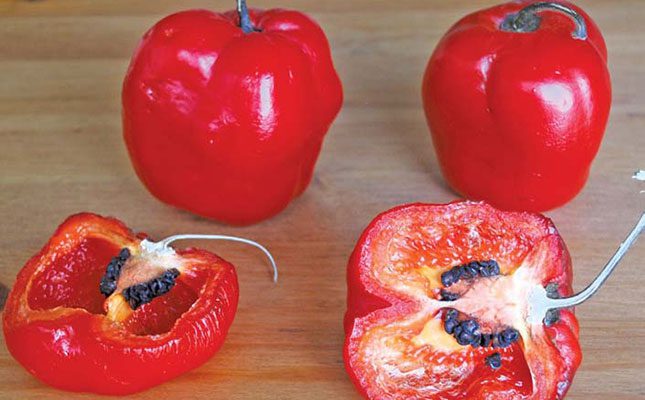
The fruit themselves are also rather different, usually in the shape of little apples, with some varieties being quite large. The wall is also thicker, even more so than that of jalapeño chillies.
The seeds are black, which makes a striking difference to what one would expect, and the flowers are a very showy purple colour, whereas all other Capsicum species have white flowers.
In South America, C. pubescens is used to treat a number of medical conditions, including fever, stomach problems, rheumatism, varicose veins, and asthma. It is also antihaemorrhoidal and antiseptic.