
Onion harvesting can commence when most of the onion tops have toppled over. The necks and leaves will still be green at this stage. It is important to allow the tops to dry off before trimming takes place, as nutrients are still being transported to the bulbs.
If the onions were grown on raised beds or flat ground, you can draw a blade under the onions, loosening them from the soil and severing the roots, so that they will begin to dry out.
If the onions are still upright, they can be left to dry out just as they are, provided the weather is dry. If the bulbs are pulled, they should be stacked in windrows or heaps in such a way that the leaves provide them with protection from sunlight, which may burn them. You can also use grass or straw to protect the bulbs until they are dry.
Aim for smooth, shiny skin
If you cut the tops off the bulbs as soon as they have fallen over, the quality and shelf life will be compromised, and you will subsequently get a lower price on the market.
Properly cured onions will have a smooth, shiny skin with an appealing appearance.
Onions should be sorted into the same sizes before being packed into pockets, or you are likely to get a lower price. They certainly look more attractive when sized.
If split bulbs, even only a small percentage, are packed with perfect bulbs, the price will be affected.
Demand for green onions
In rural areas and in some markets, there is a demand for green onions. By selling these, you can extend your marketing season.
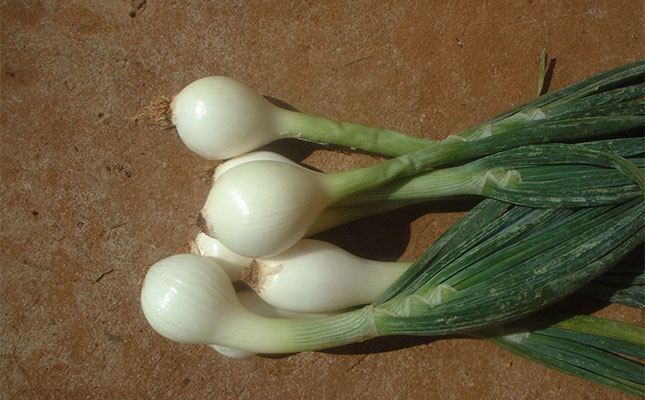
These onions are harvested when the bulbs are not quite ready for the tops to fall over. They are pulled and tied into bunches.
Green onions are valued in many rural communities, as the stems and leaves can also be eaten and are wonderful for use in soups and stews.
Texas Grano is a good variety for this market, as it is early maturing and sweet. Planting a portion of the crop to this variety can help kick-start the marketing season.
In addition, intermediate-day onions typically grown in the Western Cape can be planted in short-day areas to extend the green onion marketing window. These onions initiate bulb formation much later in the season, after the short-day varieties have already been harvested, ensuring a continued supply.
Usually, the Cape intermediate-day onions will not form mature bulbs in the northern regions of South Africa and can be harvested as green onions right through December and possibly into early January.
To prepare green onions for marketing, pull the outer leaf down and over each bulb. Discard these leaves. The bulbs are then clean and attractive.
By direct seeding early-maturing onions in warm, short-day areas, you can market them from mid-September to early January.
In these areas, you can do direct seeding of an early variety from June. If sets are planted, you can even start marketing from May. In rural areas where marketing is done locally, you can have an extended marketing period.
Bill Kerr is a vegetable specialist and breeder.