Hydroponic farming is all about finding the sweet spot within the matrix of factors that influence plant growth – temperature, light, water, and nutrition. High-end greenhouses are designed to manipulate all these variables according to the plant’s needs.
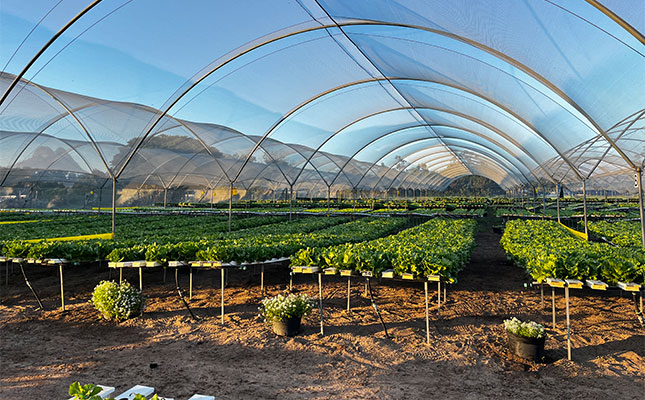
Leafy green and vegetable producer Cultura Fresh, however, runs its hydroponic operation outdoors, with only shade netting protecting its crops from the sometimes harsh climate conditions at its two Western Cape sites. Yet they grow between 70 000 (in winter) and 100 000 (in summer) heads of lettuce per week, which are sold in supermarkets and in quick-service food outlets in the Western and Eastern Cape.
“Growing produce in a controlled climate is extremely expensive. Erecting tunnels with plastic covering costs multiple millions of rands,” says Kaylee Smit, chief cultivation officer at Cultura Fresh.
“Along with the structure and plastic, you also need fans and a wet wall to control the climate, which adds significantly to both the expense and the running costs, particularly electricity.”
For Cultura Fresh, light was a key reason for sticking to natural sunlight. The largest proportion of their output (60 000 heads per week in summer and 40 000 in winter) is iceberg lettuce, which is extremely difficult to grow in greenhouse conditions.
“Iceberg lettuce loves sunlight, and the moment you bring in plastic sheeting, it becomes very complex to obtain the optimum light spectrum for it to grow well. Not even hi-tech European operations manage; most iceberg lettuce in Europe is imported from Spain, which has a Mediterranean climate like South Africa,” says Smit.
Along with the best light for their main crop, Cultura Fresh’s approach also gives them most of the advantages that come with a hydroponics system.
“As a grower, you want as much control over your crop and inputs as possible, so that the outputs are as predictable as possible,” says Smit.
“In a hydroponics system, we can control a significant proportion of our growing conditions and inputs, and it also allows us to have many more growth cycles per year than would be possible in a conventional, soil-based setting.
“Soil-borne diseases are another important factor; there are many soil-borne diseases in the Western Cape, and not being exposed to those ensures a much more secure supply.”
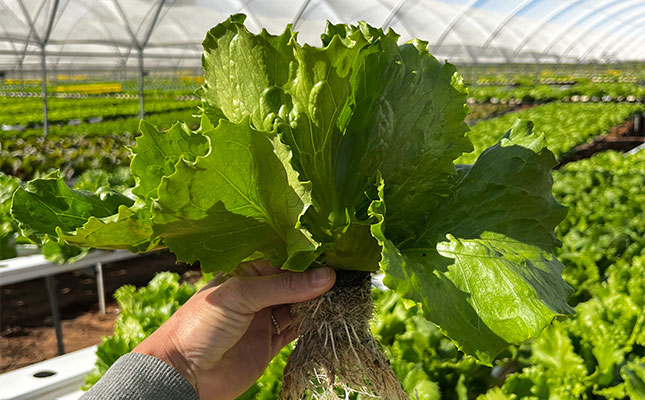
Growing in a soil-free environment is also a plus when it comes to processing. “The product is just so much cleaner. You just remove it from the gutter; there are no insects or soil particles sticking to the product, which means once you get to processing, the process is so much smoother.”
Cultura Fresh’s growth cycle from seeding lettuce to harvesting it for processing at their own packing facility takes nine weeks: four weeks from germination to seedling, and then five weeks to harvest in summer, and twice as long in winter.
They also pride themselves on using 90% less water than would be required for cultivating the same crops in a soil-based system. One batch of water is recirculated through the growing system five times before being replaced.
The company is fortunate to have access to high-quality borehole water, which does not need any additional purification. Its GlobalGAP (good agricultural practices) certification requires it to have the water quality tested annually to ensure it complies with international standards.
“We also monitor our water use weekly to ensure we don’t use any more than what the borehole can supply,” says Smit.
Managing Mother Nature
Shade netting only provides partial shelter from what Mother Nature throws at them.
“Sometimes she is angry, when it gets hot and windy,” Smit laughs, “but that is where your skill as a grower comes in – how you help your plants to cope in stress conditions.”
Wind can burn the tips of the frilly lettuce leaves. This does not lead to significant yield losses, but does increase processing time.
“In extreme heat, we cannot really increase our water use, but we do adjust fertiliser. Much like human beings, plants are in survival mode when it gets very hot – they don’t get hungry, but they do get thirsty. So we reduce fertiliser dosage and give the plants more water so they can transpirate more. We also add biostimulants to nurture the root systems.”
Although they use comparatively few crop protection products, plant pests such as thrips, aphids and moths are unavoidable in an outdoor setting, even if the risks are much lower than with field cultivation.
Gradual changes
Cultura Fresh has been growing gradually since its establishment in 2016, with a second site being added in 2021 and a significant expansion currently under way, which is expected to come into operation in the winter and will increase its footprint from the current 2,4ha to 6ha.
Its current netting tunnels are fixed and can be neither opened or expanded, but Smit says this will change with its third site, where they are considering a second layer of removable shade netting to shield plants in extremely hot conditions, and also misters to slightly increase the humidity and reduce the risk of leaf tips drying out.
Although their current level of automation is still fairly low, they do rely on data from an on-site weather station and also record data on all growing parameters.
“We don’t make any decisions without data; we have to know what we’ve done to help us decide what to do today.”
They also monitor overall water use, and their pump rooms contain monitoring systems that constantly monitor fertiliser concentration, water pH and water temperature.
Most of the key production activities are still done manually; labourers add fertiliser to the water reservoirs five times per day. Smit says the company intends to increase automation once their new site is in operation, particularly for real-time water pH and fertiliser level adjustment.
Amid considerable hype online with regard to the potential of the use of artificial intelligence (AI) in production systems, Smit says the unique nature of their operation would require significant efforts to train any AI system, and they rather prefer to use it to streamline smaller tasks.
“It is quite helpful to use AI to work through data, filtering it and narrowing it down to help us reach three or four key conclusions rather than working through a large number of theories to reach the root cause of a problem. I also use AI to find blind spots or inefficiencies in new processes or to help me establish what I need to focus on,” she says.
A sustainable base for expansion
Cultura Fresh is also not content to continue at its current pace. According to Theo Mokken, the company’s CEO, their current expansion will double production from 100 000 heads of lettuce weekly to 200 000, with volumes split 50/50 between retail and quick-service food outlets.
“We have capacity to expand by a further 6ha in the next five years with more product lines currently in development.”
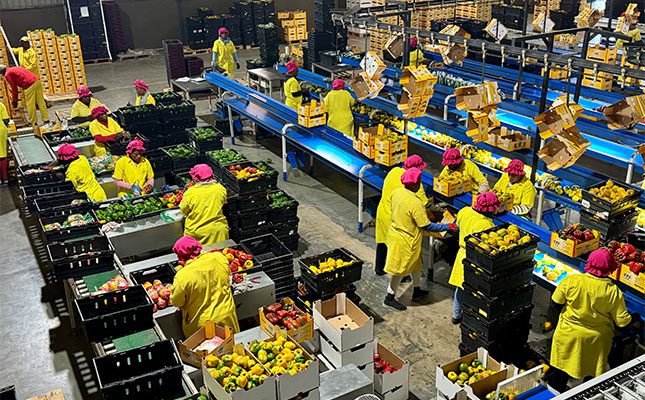
All produce is packaged on-site in a 2 000m2 packhouse, with plans to expand it to 7 000m2.
“Our clients operate at international blue- label standards and need a reliable and sustainable partner that can provide produce that complies to international standards.
“Being a hydroponic operation makes us sustainable and also enables us to grow sustainably, as our footprint is smaller than that of conventional soil-based farming and we are not reliant on soil that can deplete after a few years of intensive production. We’ve proved that we can meet exacting requirements and are keen to continue growing while maintaining high standards,” says Mokken.