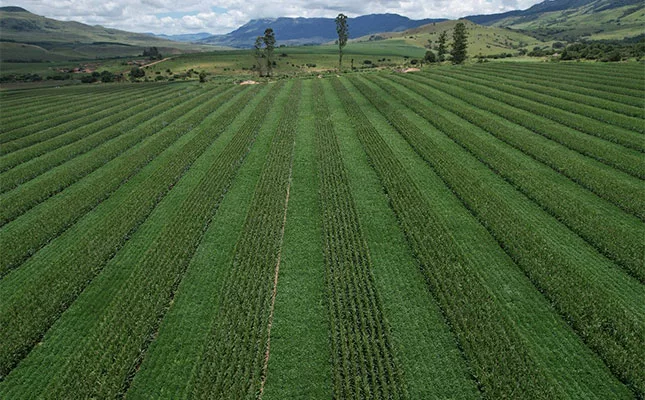
Local company, Orizon, recently made headlines with the registration of their CarbonCrop Programme, positioning them as leaders in the carbon space for agriculture.
The proudly South African company made its mark with the largest carbon project registered globally under Verra’s flagship sustainable agriculture methodology to date. This milestone not only marks a breakthrough for local farmers, but also underscores the value of regenerative agriculture, which lies at the heart of Orizon’s mission.
Regenerative agriculture (RA) is gaining traction among farmers across South Africa as a farming philosophy that aims to work with nature, not against it.
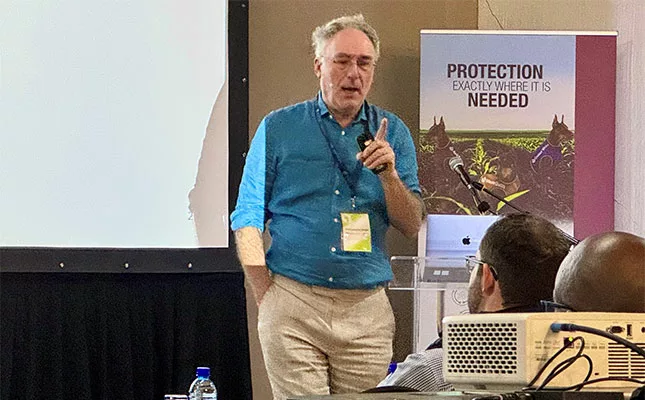
According to Willem van der Westhuizen, business development manager at Orizon Agriculture, regenerative agriculture is a mindset, a way of thinking that focuses on reducing farming’s dependence on external inputs by following more natural processes.
Soil health is the foundation of a profitable farm. Well-functioning soil supports diverse microbial communities, contains higher carbon levels, and cycles nutrients efficiently. These characteristics contribute to a system that is more resilient, more productive, and ultimately more sustainable.
For Orizon Agriculture, regenerative agriculture is about building this foundation, helping farmers improve their soil, reduce reliance on synthetic inputs, and earn income by being rewarded for the carbon they store in their soils.
What is regenerative agriculture?
Regenerative agriculture promotes soil health by minimising disturbance and increasing root biomass and diversity. These actions lead to higher soil carbon levels and support a rich microbial ecosystem that enhances nutrient cycling and plant health.
In a regenerative system, plant roots and soil microbes form a symbiotic relationship. Microbes extract nutrients from the soil and deliver them to plant roots in exchange for carbon-based exudates. This natural relationship creates a buffer for farmers.
For example, while soil pH is still important, a healthy biological soil system can self-regulate more effectively. Each type of bacteria can create its own ideal pH zone around itself to optimise nutrient exchange with the plant.
Regenerative vs conventional and conservation agriculture
To better understand what regenerative agriculture is, Van der Westhuizen mentions that it helps to contrast it with conventional and sustainable (or conservation) agriculture.
Conventional agriculture can be compared to a hydroponic system. In this model, the soil is treated as a growth medium, similar to perlite or another inert material. The crop is given exactly what it needs, when it needs it, and there is very little left for nature to do.
This approach suppresses the relationship between plant roots and soil microbes. Because plants receive nutrients directly from fertilisers, they no longer need to depend on microbes to fetch nutrients for them. Over time, this approach ‘mines’ the soil of its potential, breaking down organic matter and disrupting natural cycles.
In South Africa, this has contributed to a loss of up to 50% of our soil’s carbon.
Conservation agriculture, on the other hand, lies somewhere in between. It is typically a stepping stone for farmers on their way to adopting regenerative systems. It focuses on minimising soil disturbance, increasing diversity through crop rotation and livestock integration, and maintaining some level of soil cover.
These are important steps, particularly in reducing soil erosion caused by wind and water. However, conservation systems still rely heavily on finite external inputs and generally focus more on what is happening above the ground, rather than on what’s happening underneath it.
Regenerative agriculture goes further. It aims to rebuild the soil, not just preserve it. This includes actively increasing soil carbon levels, restoring biological activity, and improving the soil’s natural ability to cycle nutrients and retain moisture.
It is a more holistic and dynamic approach, one that focuses on building long-term potential, not just maintaining current conditions.
Orizon’s regenerative principles
Orizon promotes a practical, farmer-friendly approach to regenerative agriculture by focusing on the widely accepted set of core principles. These principles provide a flexible framework that can be adapted to each farm’s context:
- Minimal soil disturbance: this includes both physical disturbance (such as tillage) and chemical disturbance (such as heavy fertiliser and pesticide use). Reducing disturbance helps the soil structure recover and supports the development of diverse microbial communities.
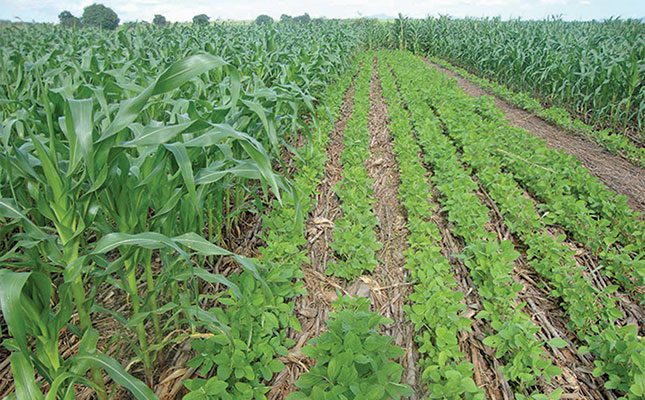
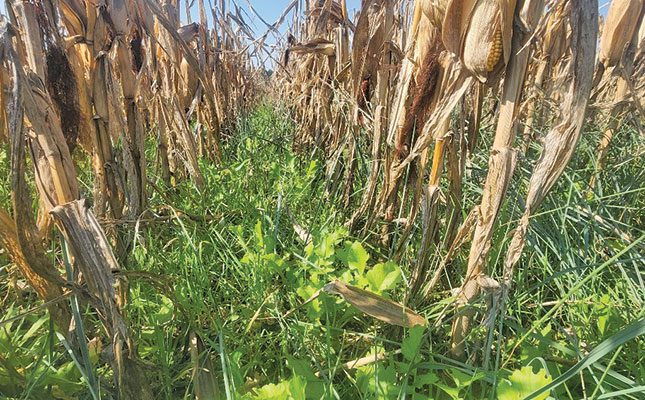
- Keep the soil covered: covering the soil with crop residues or cover crops helps regulate soil temperature, preserve moisture, and protect microbes. It also prevents erosion of valuable topsoil through wind and water.
- Living roots for as long as possible: most commercial fields have living roots for only part of the year. Off-season cover crops can be planted to maintain microbial activity during the rest of the year.
In many areas, winter cover crops can be established after harvest or through relay cropping while moisture is still available. In drier zones, summer cover crops can help provide cover for most of the season. The goal is to maximise photosynthesis and biological activity year-round.
- Maximum diversity: diversity creates resilience. By increasing crop rotation variety and planting diverse cover crop mixes, farmers can support more robust microbial communities and reduce risk.
- Livestock integration: introducing livestock into cropping systems increases profitability and accelerates biological activity. Grazing helps break down crop residues, cycle nutrients, and stimulate plant regrowth. This boosts microbial activity and improves soil structure.
- Farm-specific context: regenerative agriculture is not a one-size-fits-all system. Each farm has unique characteristics, financial constraints, rainfall patterns, soil types, crop types, and available equipment.
All of these influence how regenerative practices are adopted. For example, South Africa’s variable climate poses significant challenges. As South Africa is the 31st driest country in the world, some farmers cannot follow the same practices as in wetter regions.
However, farmers in all nine provinces have successfully implemented regenerative systems by adapting to their conditions.
Role in the transition
Orizon plays an active role in helping farmers transition from conventional systems to regenerative systems by offering both technical guidance and financial incentives.
- Earning carbon credits: one of Orizon’s most important services is helping farmers earn carbon credits for their regenerative practices.
In South Africa, many practices that build soil health, such as no-till farming and cover cropping, are still relatively uncommon. This means they qualify for carbon credits under international carbon credit registries such as Verra.
Orizon takes care of the entire process of issuing and selling carbon credits on behalf of farmers. This includes:
- Collecting cropping data;
- Conducting soil carbon sampling;
- Modelling soil carbon levels;
- Completing a carbon audit;
- Submitting all documentation to the registry;
- Selling the credits;
-
Paying the profits to farmers: farmers receive up to 75% of the carbon credit profits, with the remaining amount covering Orizon’s service and administration. This allows farmers to earn per hectare annual income based on their soil carbon sequestration and emission reductions. This income often aligns with the cost of implementing practices such as cover cropping or composting.
-
Technical support: in addition to carbon financing, Orizon offers free advice and support to help farmers implement regenerative agriculture effectively. Their team assists farmers with planning, decision-making, and evaluating what works best for their unique conditions. By helping farmers make informed choices and avoid common pitfalls, Orizon lowers the barriers to entry and builds confidence in the system.
-
Measuring soil health: all of the practices Orizon promotes contribute to improved soil health. One of the key metrics Orizon uses to track this improvement is soil organic carbon (SOC). Over the past few years, Orizon has taken more than 3 000 composite soil samples across South Africa.
These samples help model emissions reductions, track soil carbon sequestration, and inform future decisions.
Orizon covers the sampling costs up front. These costs are only recovered once carbon credits are sold, further reducing risk for the farmer.
SOC is a valuable indicator because it correlates with:
- Improved soil structure;
- Better water infiltration and retention;
- Increased food availability for soil microbes.
Orizon also uses satellite imagery and modelling to assess cover crop biomass. Off-season cover crops are essential for feeding the soil microbiome and preparing the land for the next cash crop.
By increasing biomass production, farmers feed their soil and build a better environment for future crops.
- Farmer feedback: although Orizon’s first carbon credit payouts are still pending, many farmers already report positive results from their regenerative practices.
- No-till soils: during the 2023/24 droughts, Orizon farmers saw that crops on no-till soils remained healthy for longer. This was due to improved soil structure and better water retention.
After intense rainfall in the 2024/25 season, these same farmers could access their fields earlier than others because of better drainage. Some reported that their dams are filling slower, not due to reduced rainfall, but because water is now infiltrating into the soil instead of running off.
Many have noticed an explosion of earthworms and other soil life, which reflects the improved moisture balance and reduction in chemical use. These changes are not just anecdotal; they signal a deeper transformation in the soil and in the overall health of the farming system.
One of Orizon’s central messages is that regenerative agriculture must be both ecologically and financially sustainable.
Economic viability and future prospects
Orizon encourages farmers to focus on profit per hectare, not just yield. Lower input costs, better soil health, and carbon credit income can all contribute to greater overall profitability.
Orizon advocates a gradual approach to adoption. Farmers are encouraged to make calculated changes, not to overhaul their entire system overnight. This method allows for learning, adaptation, and financial stability during the transition.
Orizon works primarily with family farms of various commercial scales. They believe that strong, healthy family farms are essential for a healthy economy and a resilient food system.
Through partnerships with consultants, agribusinesses, and other stakeholders, they help farmers take steps toward a regenerative future.
Conclusion
Regenerative agriculture is a long-term journey rooted in soil health, biodiversity, and natural balance. With its focus on restoring soil function and improving resilience, it offers farmers a way to rebuild their land and secure their future.
Through financial incentives like carbon credits and technical support, Orizon is helping farmers turn regenerative principles into practical, profitable realities.
Van der Westhuizen says: “Like a big, shady tree, a regenerative farmer is not made in a day. It takes many seasons of trial and error.”
Email Willem van der Westhuizen at [email protected], or visit orizonagriculture.com.