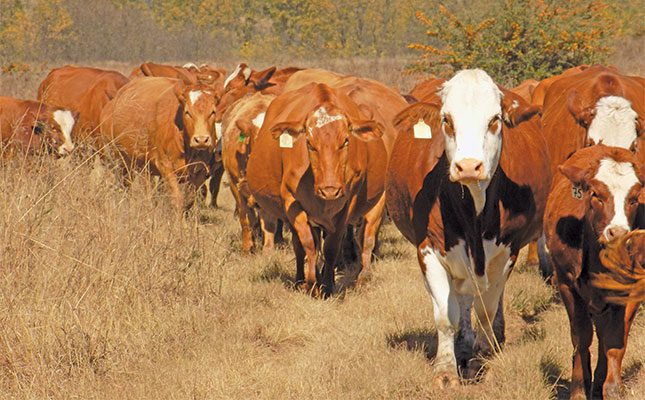

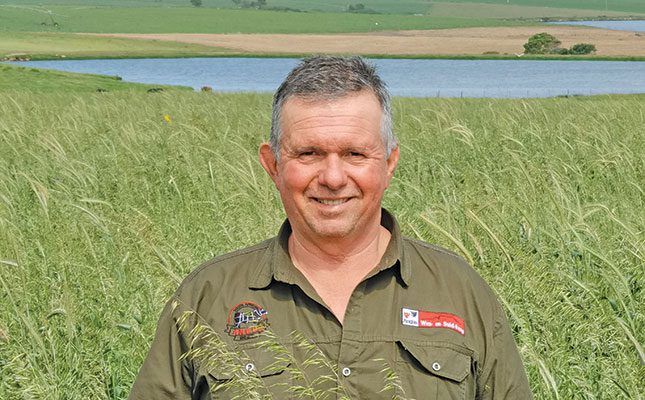
The Mastersons run their farming enterprise near Oyster Bay in the Eastern Cape’s Humansdorp district. Their Milagro Simmentaler stud was started in 2004, while the Angus stud was started in 2009.
“We enjoy the competitive aspect of participating in shows and showing gives any breeder the opportunity to compare his best animals with the best from other herds. Showing provides the ideal opportunity for networking with fellow breeders and potential customers and the marketing benefits of being successful in the show ring cannot be underestimated,” Andrew Masterson explains.
He adds that while social media has provided the opportunity for breeders to ‘show’ their cattle through photos that can be manipulated, it cannot compare with actual showing.
“Many breeders have Facebook champions, but I would encourage them to experience the exposure and thrill of the real show,” says Masterson.
Benefits of showing
Asked how the livestock breeds in South Africa benefit from partaking in shows, Masterson explains that a show is an event where the breeds can be introduced to potential buyers and the general public.
Breeds that participate in shows are constantly under scrutiny, and if certain breed characteristics are being neglected, competing in the show ring highlights this.
“When selecting my Simmentalers and Angus breeds for a show, my main criteria are that the animals must be functionally sound. That means that they need basic structural correctness to enable them to survive and thrive in the different environmental conditions in which cattle are farmed.
“Bulls need to be masculine and females need to be feminine. Feet and legs must be functionally correct for the animals to produce and reproduce.
“Strong toplines are important, because the frame of an animal is basically suspended from its spine. Natural width and length ensure that beef can be packed onto a carcass without having to use an excessive amount of feed. Masculine males and feminine females are generally fertile,” he continues.
Masterson adds that beef cattle bulls, for instance, don’t need to be excessively big, and that moderate-sized, easy-fleshing animals generally do well.
He points out that recording data is included in numerous ways in a show. There are Phase C and Phase D performance test classes for bulls, where their growth figures and visual appraisal are used to determine the final placing of a class.
In the super cow class, for example, a number of productive and reproductive criteria are required before a cow can qualify for the class.
Preparation
Masterson says preparation for a show begins many months before a show date. Nutrition and the condition of the show animal is of utmost importance.
“Animals must be neither over or under condition when participating at a show. I prefer feeding preparation to take place over an extended time of up to five months for the animal to be in optimal condition. I recommend a diet that is not too high in energy and that contains ample amounts of long hay.
“Long hay is essential for developing capacity in show animals. It is important that halter training starts at least three months before a show. Animals need time to get used to a halter and being handled. Putting a halter on before brushing an animal in a crush helps to get the animal settled. At all costs, avoid ‘breaking in’ the animal,” he advises.
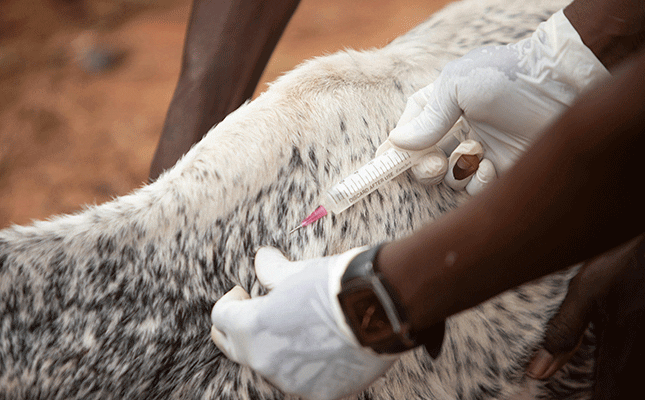
Masterson emphasises the fact that biosecurity has become of utmost importance, and every effort must be made to keep show animals disease-free. Show organisers need to ensure that legislated biosecurity requirements are adhered to.
Biosecurity
John Melville, president of the Bloem Show, previously told Farmer’s Weekly (21 March 2025) that preventing the spread of disease during an event such as a show is a major challenge. If an exhibitor brings their best animal to the show and it contracts a disease, it will have to stand in quarantine for a protracted period, which would clearly mean additional expenses.
“The containment and prevention of disease is therefore a high priority for us. To that effect, we are working closely with the state veterinary services to ensure that we take all the necessary precautions when animals enter and exit the show grounds. Every animal is inspected before entering the grounds and again upon exiting,” says Melville.
According to Masterson, special care must also be taken when show animals are transported. They have to be comfortable and stress needs to be minimised. If possible, during long journeys, they should be able to lie down. Show animals are valuable and deserve to be treated with the utmost care at all times.
Presentation
As far as presentation in the show ring is concerned, Masterson points out that attention to detail is extremely important for professional presentation of an animal.
In many countries, especially with dairy breed shows, the services of professional cow fitters are made use of for the clipping and prepping of cows and heifers before they enter the ring on show day.
Masterson says: “Many hours are spent on each animal days and weeks before the show to ensure that the timing for each animal is optimal when entering the judging ring. It takes many years to learn the intricacies of showing, preparation and showmanship. However, getting the results that you strive to achieve makes all the effort worthwhile.”
Asked what he expects from a show venue, he says venues and facilities don’t need to be elaborate and fancy, but they do need to offer safe and comfortable housing facilities for both grooms and animals. Neat and tidy ablution facilities, with hot water and working toilets have to be available at any show facility.
Loading facilities must be in a good state of repair and should be easily accessible for trucks of all sizes. Electricity and lights must be available and in working order. Clean water for drinking and washing the show cattle has to be available at all times.
Handlers’ role
Masterson also elaborates on the value of experienced handlers and describes these handlers as one of the most important factors, with a direct influence on a good result in the show ring.
“Competent handlers know exactly what to do to make an animal look at its best. Poor and inexperienced handlers are detrimental to achieving good show results. It takes years to become a good handler, and some people are not cut out for the job. Good handlers are in sync with their animals and create a relaxed, harmonious picture.
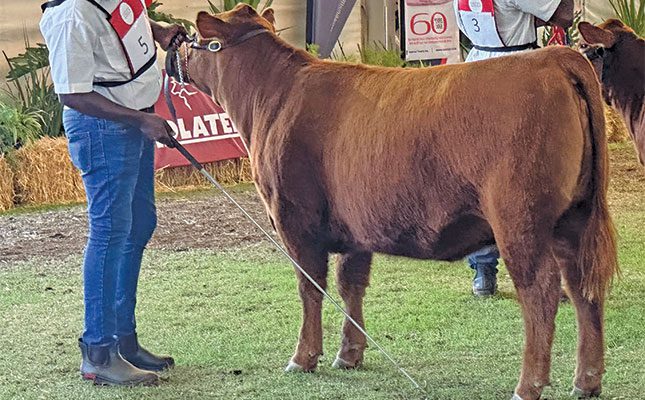
“Most breed societies have their own dress codes that need to be adhered to. The responsibility of ensuring that all regulations are followed rests with the show stewards and not the judge,” he says.
He stresses the fact that most preparations should be completed well before show day. On show day, animals need to be clean and well groomed in order for them to be well placed in the judging ring.
Interbreed judges
Interbreed livestock judge and secretary of the South African Interbreed Judges Association, Jan de Jong, says having well-trained judges is of paramount importance. Often, farmers and breeders change and adapt their breeding philosophies based on the evaluation of judges.
“It is therefore the judges’ responsibility to make sure the message they give is correct. For example, it is of no value to judge animals only on good points that have no economic feasibility. Those animals must be able to sustain themselves and be fertile in the long term under the farming conditions where they are kept,” says De Jong.
He adds that livestock judges always wear collar and tie in the show ring as a sign of respect for the competing animals.
Willie de Jager, president of the South African Interbreed Judges Association, says Namibia also forms part of the association.
“I call on more people to join the livestock judging fraternity. This means that we’ll have more judges closer to the show venues. We work on a voluntary basis, and travelling between the shows can become a costly affair in the long run,” he adds.
For more information email Andrew Masterson at [email protected].