
Administering injections to livestock requires attention to detail, proper technique,
and adherence to sterile procedures to ensure the health and safety of both the animal and the handler.
Injecting livestock in the incorrect manner, or not as per the specific instructions of manufacturers, can either make vaccines ineffective or even harmful to livestock.
I have heard of farmers who have given ‘double doses’ of mineral and vitamin injectables to livestock, thinking that this will assist such ailing animals to heal quicker. In many such cases, the animals died because such solutions are often highly concentrated.
Sterile equipment
Maintaining sterility of equipment, such as needles and syringes, is crucial:
• Use sterile needles and syringes: ensure all needles and syringes are sterilised before use, either by autoclaving (steam treatment) or boiling for at least 15 minutes, or using
disposable, pre-sterilised equipment. Do not use common disinfectants to sterilise
equipment because this can affect the efficacy of vaccines and medicines.
• Injection site: be certain it is as clean as possible; consider using something like iodine to disinfect the site if it looks dirty or contaminated with faeces or soil.
• Handle needles and syringes correctly: avoid touching the needle or syringe parts that come into contact with the animal’s tissue or the medication. Ensure your hands have been thoroughly washed with soap and rinsed with clean, sterile water.
• Use new needles for each injection: blunt or bent needles can cause tissue damage to livestock.
• Store equipment properly: keep sterile equipment in a clean, dry and dark environment, protected from contamination, in a properly sterilised (boiled) Tupperware or old ice cream container or glass jar (make certain that lids are tightly closed).
Proper injecting techniques
Proper injecting techniques are essential to ensure the safe and effective administration of medications.
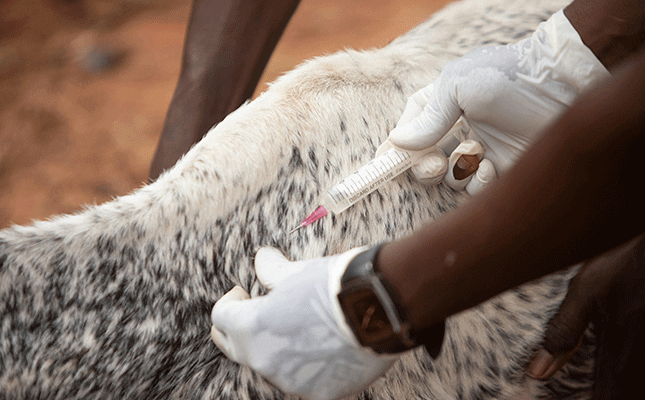
• Subcutaneous (SC) injections: administer SC injections under the skin, typically in the neck or behind the shoulder. Use a 1” to 2” needle, depending on the animal’s size and the medication’s viscosity (thickness).
Longer and/or thicker gauge needles are generally used for cattle, while thinner, shorter ones are used for small stock.
• Intramuscular (IM) injections: give IM injections into a muscle, usually in the neck or hindquarters. Use the same needles as advised above.
• Intravenous (IV) injections: IV injections, administered directly into main veins, require specialised training and equipment. Consult a veterinarian for guidance. Do not attempt this yourself – it’s not only highly possible to miss veins when injecting, but untrained people can cause devastating vein ruptures.
Commonly used medications
Commonly used medications in sheep, cattle and goats include antibiotics, antiparasitic injections, and vaccines. Antibiotics include drugs like penicillin that are effective against bacterial infections such as pneumonia and foot rot – usually only available from vets.
Tetracyclines are generally available at co-operatives and farm supply stores and are used to treat respiratory and gastrointestinal infections. Cephalosporins are broad-spectrum antibiotics effective against various bacterial infections.
Antiparasitic injections include ivermectin, which controls internal parasites such as worms, and acts against ectoparasites like sheep scab. Closantel treats liver fluke and other internal parasites. Levamisole is effective against gastrointestinal worms.
There are various brand names that include the above-mentioned active ingredients, with some being cheaper than others.
Vaccines are widely used to prevent common but often fatal diseases like botulism, pulpy kidney, and blackquarter. There are vaccines for specific illnesses, but multi- strain vaccines can cover up to 10 prevalent diseases – it is highly advised that such vaccines are used to proactively prevent costly diseases.
It is important to be well versed in the symptoms of diseases and to know what medications to use, and it is thus essential to keep these in stock and under conditions as advised by manufacturers.
Also remember there are other farming regimens, such as dipping, that help control disease-causing parasites.
Shane Brody is involved in an outreach programme aimed at transferring skills to communal farmers.