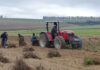


Agri Skills Transfer (AST) is an accredited skills development and agricultural training institute that offers diplomas, short courses, and re-skilling programmes for a wide range of farming practices.
Welmans stresses the importance of steering students into the agriculture sector after they complete their qualifications. However, he says that many young people have misconceptions about what it means to be a committed farmer or staff member on a farm.
“In most cases, farming practices are labour-intensive and require a physical presence. Some students think they’ll be so-called ‘bakkie boere’, but a large portion of farming demands physical labour,” he explains.
Welmans believes a significant part of the sector’s skills shortage, at a foundational level, comes from a lack of commitment to developing well-rounded, ‘complete farmers’, rather than people skilled in only one aspect of farming.
Thus, institutions like AST ensure that lessons cover practical and theoretical factors to give students real-world insight into the labour, time, and knowledge needed to sustain farming operations.
Sector skill gaps
Welmans explains that simply pointing to a skills shortage in one particular agricultural industry does not reflect overall labour demand. He notes that while any contribution to food security is valuable, gaps in the industry slow progression along the entire value chain.
He believes two main areas of the sector’s value chain reveal skill gaps and a lack of preparedness.
Firstly, he explains that limited training and knowledge transfer from experts can leave prospective farmers with narrow skillsets that are not widely applicable.
“There is a definite need for dynamic, skilled labour. If one has a background in various aspects of an operation, there is an opportunity to progress and potentially specialise later,” he says.
Welmans adds that established commercial producers are more likely to employ junior staff who can work across multiple aspects of the business, making it easier for them to transition thanks to their foundational knowledge.
Secondly, he believes there is insufficient structure to support progression from technical or junior roles into managerial and eventually executive positions.
“The leadership of large agricultural enterprises should have a background in the technical side of the industry. This enables better understanding and decision-making throughout the chain of command,” he explains.
According to Welmans, the agriculture sector would benefit from education and training in leadership, economics, and business management. He believes this would support career progression built on technical farming knowledge, helping top executives better align with producers.
The role institutions play
Welmans says training and development programmes are crucial to closing skill gaps. Institutions such as AST have expanded their courses to teach students how farms must be run to remain profitable, covering finance, accounting, economics, and business management.
“We aim to not just teach students how to contribute to a farm but also what input is required behind the scenes,” he explains.
He recognises that access to education remains a challenge on many fronts, from financial constraints to logistical issues, but hybrid and online learning now allow students who cannot attend in person to complete certain courses.
Additionally, studies can be funded via payment plans, and AST collaborates with banks to facilitate the approval of student loans.
Gaps in skilled labour and knowledge transfer are largely due to a shortage of a dynamic young workforce able to work across multiple aspects of agricultural production. Development programmes provide comprehensive education and training, preparing prospective farmers for technical and managerial roles.
For more information email Agri Skills Transfer at [email protected], or phone the head office on 012 002 3723.