In the months since the outbreak and its declaration as a national disaster on 12 February a pattern has emerged: conflicting statements on vaccine costs, shifting policy positions, delays in funding decisions, and breakdowns in basic operational coordination.
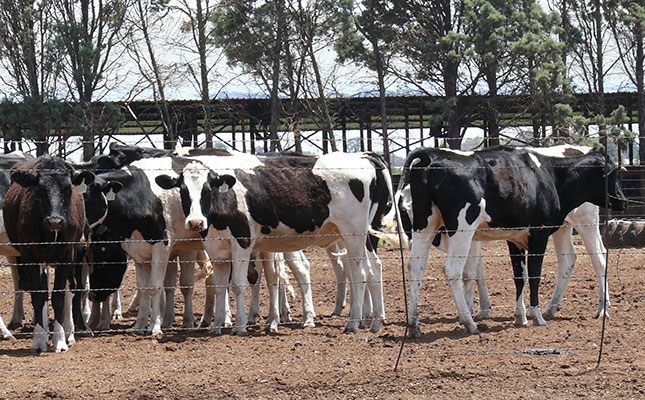
On farms, this has translated into halted vaccination rollouts due to missing ear tags, uncertainty over who is responsible for critical inputs, and growing confusion about whether vaccines are truly “free” or who ultimately pays.
At the centre of the crisis lies a widening gap between official assurances and on-the-ground reality. While government insists it has the resources, systems and strategy to contain the outbreak, farmers, media, industry bodies and even provincial authorities are raising the same concern: communication has not kept pace with the disease.
Conflicting messages on vaccine costs
A key source of confusion has been the cost of FMD vaccines.
Agriculture minister John Steenhuisen has repeatedly confirmed that the state will cover the full cost of vaccinating the national herd, with no charge to farmers for vaccines administered under the national programme. However, multiple price points continue to circulate in the sector.
Dr David Gerber, CEO of Dunevax and importer of the Dollvet vaccine, has publicly stated that the vaccine could be supplied at about R45 per dose, including logistics and cold-chain management.
By contrast, estimates of up to R80 per dose have been linked to the state’s full cost once additional logistics and distribution are included. Earlier official communication from the Department of Agriculture also referred to a possible cost of R300 per animal per year.
Steenhuisen has argued that the lower figure reflects only the bulk supply price to a cold-storage facility, and not the full cost of moving vaccines through the national system, including storage, handling and distribution.
Bennie van Zyl, CEO of TLU SA, said the absence of a detailed, publicly available cost breakdown has left farmers unable to reconcile these figures or understand the final cost per animal.
“Free” vaccines but not for everyone
While vaccines are officially free, this applies only under specific conditions.
According to an update by the FMD Industry Coordination Council (ICC), government-funded vaccination currently focuses on active outbreak areas, where doses are administered by provincial veterinary services.
Farmers outside these zones or those seeking faster access may still face costs.
“If you are in an active outbreak area but want your herd vaccinated as soon as possible, you can contact an authorised private veterinarian… you will need to pay the private veterinarian’s service fee,” the ICC statement said.
For producers outside priority areas, both the vaccine and administration costs may fall to the farmer.
This tiered system has created a disconnect between policy messaging and practical reality, leaving farmers uncertain about their eligibility and potential financial exposure.
Operational breakdowns on the ground
Beyond pricing, basic implementation failures are adding to the confusion.
Reports of delays in vaccination in some provinces due to a shortage of ear tags have highlighted a lack of coordination between national and provincial authorities. Jóhni Bontle Steenkamp, MPL and DA spokesperson on agriculture in North West, told Farmer’s Weekly that the province was unaware that ear tag procurement might fall under its responsibility, and that no clear directive had been issued.
At the same time, Mooketsa Ramasodi, director general of the Department of Agriculture, told Parliament that a national tender for ear tags is still being adjudicated, raising questions about planning and timing in a programme described as urgent.
These breakdowns, affected parties say, point to a deeper issue: the absence of a clearly communicated, unified national implementation plan.
Funding delays raise further questions
Government has maintained that sufficient resources are available for the vaccination campaign. However, the timing of key funding decisions has raised concerns.
More than a month after the disaster declaration, National Treasury moved on 17 March to exempt the Department of Agriculture from certain provisions of the Public Finance Management Act (PFMA), allowing it to reallocate funds internally to support the response.
The move unlocked hundreds of millions of rand for vaccine procurement, logistics and campaign support, but its timing has raised questions.
This comes amid reports that vaccine importers have been waiting weeks for payment for earlier consignments, raising concerns about cash flow management and whether delays may have affected future deliveries.
Steenhuisen had indicated that five million doses from Biogénesis Bagó would arrive by 15 March, but the shipment has yet to materialise.
Ramasodi told Parliament that discrepancies between the invoice and the first shipment required verification before payment could be processed in line with PFMA requirements. This process has taken nearly a month, delaying both payment and the procurement process for subsequent shipments.
Regulatory delays slow vaccine supply
Regulatory processes are adding further delays.
Ramasodi said the department is in discussions with the South African Health Products Regulatory Authority (SAHPRA) to accelerate Section 21 import approvals, a step stakeholders argue should have been prioritised earlier.
Friedl von Maltitz, vice-president of Free State Agriculture, told Farmer’s Weekly that he had recently returned from a fact-finding visit to Argentina, which included a tour of the Biogénesis Bagó manufacturing facility. On his return flight on 28 February, he travelled with four Biogénesis employees who confirmed that five million vaccine doses were already manufactured and ready for shipment, pending Section 21 approval.
However, further delays have since emerged. Von Maltitz said Free State Agriculture was informed in a recent ICC Zoom meeting that additional testing requirements had been introduced before approval could be granted with no time-lines communicated.
Similarly, Dollvet is awaiting approval for a further six million doses. As production will only begin once permits are granted, delivery could take at least six weeks from approval.
These delays point to mounting pressure in the vaccine supply pipeline just as the rollout is expected to accelerate.
A complex system, poorly communicated
Part of the confusion stems from the complexity of the vaccination programme itself.
Vaccines must undergo strain matching, regulatory approval and import permitting before use. Once in the country, they move through a tightly controlled system involving cold-chain logistics, provincial allocation and prioritised rollout.
Farmers must apply for vaccination through provincial structures, comply with movement controls, and adhere to post-vaccination monitoring requirements.
While these steps are scientifically necessary, industry stakeholders say they have not been clearly or consistently communicated and lack urgency.
“There is a massive communication gap. Farmers are left in the dark — they often don’t know what is going on,” said Francois Rossouw, CEO of Saai.
Information vacuum fuels misinformation
In the absence of clear, centralised communication, misinformation has flourished.
Industry bodies have reported cases of individuals attempting to sell or reserve vaccines privately, sometimes requesting upfront payments from desperate farmers.
One farmer, who asked to remain anonymous, said he had been approached to buy large batches of vaccine originating from Botswana privately.
The ICC has warned that such practices are illegal and risk undermining the national vaccination strategy.
A system under strain
Underlying many of these challenges is a structural.
South Africa’s FMD regulatory framework was developed decades ago and was not designed for a multi-province outbreak of this scale. Responsibility is split between national government, which sets policy, and provinces, which implement it, often with varying capacity and resources.
Industry bodies have called for a more coordinated national implementation platform to align planning, communication and execution.