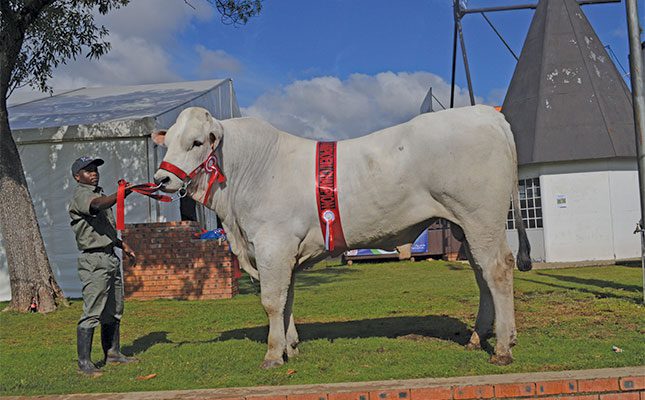
For many outside the agricultural community, an animal show is little more than a spectacle – a parade of magnificent animals competing for ribbons or rosettes. However, for farmers, these events are a cornerstone of modern agriculture, providing invaluable opportunities for growth, networking, and progress.
Beyond the prestige of a champion title, and all that comes with it, animal shows serve as a vital marketplace for breeders and a critical scouting ground for buyers.
Breeders
For breeders, animal shows are the ultimate showcase. These events are where years of careful genetic planning, dedicated animal husbandry, and tireless preparation are put to the test. A show provides a professional platform to display the culmination of a breeder’s work, from the genetic traits they’ve sought to develop to the physical conditioning of their animals.
Winning a championship or even placing well in a competitive class is not just a personal victory; it is a powerful validation of a breeding programme’s success.
This recognition translates directly into increased market value for their animals and a stronger reputation within the industry. A champion bull or cow can attract significant interest from buyers looking to improve their own herds, leading to sales of breeding stock, semen, and embryos that can sustain and grow a farm for years to come.
The champion animals may also become high in demand, fetching high prices for the use of their genetics.
Buyers
For buyers, animal shows are a one-stop-shop for sourcing top-tier genetics. Instead of travelling to multiple farms across different regions, a buyer can see a curated collection of the best animals the industry has to offer in one place. This direct comparison is invaluable.
A buyer can observe the animals in their stalls and watch them compete in the ring, assessing their conformation, movement, and overall quality. This tangible, side-by-side evaluation is far more effective than relying on photos or videos.
Animal shows allow buyers to make informed decisions about which genetics to introduce into their own herds, whether they are looking for a new breeding bull to improve their herd’s muscling, for example. It also allows them an opportunity to find breeders that produce the kind of animals that they may want to add to their own herds.
Networking
Shows facilitate crucial face-to-face networking. For both breeders and buyers, these events are the primary forum for building relationships. A buyer can meet the breeder, ask detailed questions about the animal’s history, health, and parentage, and build the trust necessary for a significant transaction.
These connections often go beyond a single sale, leading to long-term partnerships and mentorships that benefit both parties. In a world of digital commerce, the handshake and personal conversation remain the bedrock of the agricultural community, and animal shows provide the perfect setting for these vital interactions.
Feedback
Animal shows are an essential feedback mechanism. A judge’s critique, whether in a formal class or a showmanship competition, provides objective insights into an animal’s strengths and weaknesses. This is a priceless learning opportunity for breeders, allowing them to benchmark their stock against industry standards and their peers.
They can identify areas for improvement in their breeding programme, from structural conformation and muscle development to temperament and herd health. This feedback loop is what drives continuous improvement, pushing the entire industry toward higher quality and more efficient production.
For those new to the show ring, it can be a daunting prospect to have their animals judged. But knowing the criteria that judges look for is a step in the right direction. Willemien Pieterse, an independent cattle inspector for various breeds and a show judge, says that when it comes to bulls, she looks for masculine qualities.
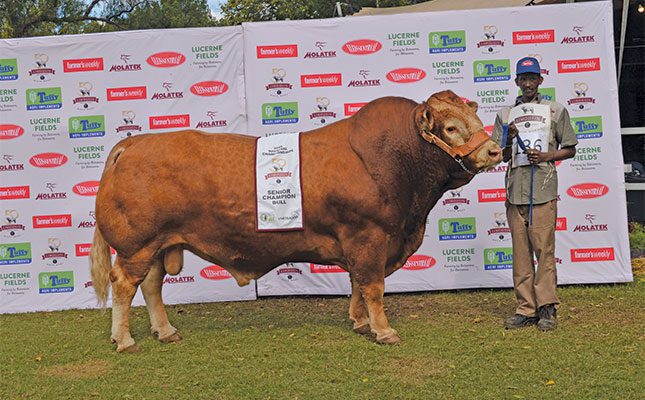
“I also look for well-developed eye banks, and good muscling in the neck, back, front and hindquarter,” she says.
She adds that the bull must have a broad chest floor, and deep and large hoofs, and must be a good size and have developed testicles.
Likewise, when it comes to female animals, Pieterse says she looks for femininity.
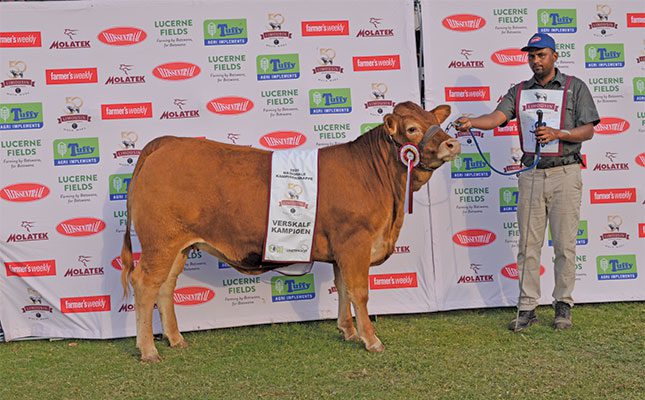
“Female animals must have slender necks and wide chest floors,” Pieterse explains. She adds that female animals must have a wedge that makes her lighter in the front and heavier towards the hindquarter.
“She must have a nicely developed udder with good teat placement and size. Ultimately, all animals need to be true to their sex.”
Head to tail
Pieterse says that when evaluating cattle, she starts at the muzzle and works her way down to the tail.
“I start at the muzzle, which needs to be nice and broad, and then examine the width between the eyes. I then look at the front legs, which should be well placed and square, and move onto the shoulders, which should show good attachment. The animal’s back should show well-developed muscling, and the animal’s body should have good length.”
The hind legs, she says, need to be supple and wide at the base. Flanks should be full. She also examines the hip-to-pin length, as well as the width between the pin bones.
“I am very critical on shoulder attachment, which impacts head carriage. Another very important aspect is the animal’s locomotion: how weak or strong they move or walk,” she says. “We often use the term ‘balance’ flippantly, when in fact all traits need to come together. Ultimately, a well-balanced animal needs to show structural soundness as well as good muscling and fat distribution.”
Common faults and misconceptions
One of the most common faults Pieterse encounters at shows is the ‘overcooking’ of animals, she says.
“[This means] feeding them too much [before the show], which inherently affects the animal’s walking ability,” she says.
Another common fault she encounters is that some breeders expect the progeny of their champion animals to perform just as well as their parents.
“But just because a parent used to be a champion, doesn’t mean that its progeny will also be a champion,” she says.
She urges farmers to not fall into this trap, and to judge all animals on their own individual traits.
“Breeding pedigree doesn’t and shouldn’t factor into my opinion as a show judge. We judge what is in front of us on the day; we are not allowed to factor in who the animal belongs to, or its breeding pedigree.”
She adds that a common misconception she encounters in the show ring is that bigger is always better.
“But we’ve moved away from animals that are too big. Instead, the industry wants functional animals that are early maturing and efficient,” she explains.
This is not necessarily connected to size, and buyers should be careful not to select animals only based on size.
Behaviour and appearance In the ring
When it comes to handling the animal in the ring, Pieterse says she can tell a lot about an exhibitor’s preparation simply by watching them lead the animal into the ring.
“Animals that have been well prepared often look healthy and have shiny coats. Handlers that have been well prepared tend to have animals that look comfortable being handled. These animals tend to carry themselves well in the show ring and are receptive to the handler,” she says.
Behaviour is also important in the show ring.
“As we are dealing with animals, some misbehaviour is expected, especially in the younger animals or cows with calves. However, if it gets dangerous to other animals and the handler, the animal will be excused from the ring.”
Advice for aspiring judges
Pieterse says she became a show judge because of her passion for the cattle industry.
“My admiration for the people breeding these incredible specimens, and seeing what different parts of the country have to offer to our industry, is one of my favourite parts of the job. Everyone in the industry becomes part of an extended family and friends, and that’s where you learn from one another.”
She advises aspiring show judges to find joy in the industry.
“Just enjoy it, learn from it and grow from it,” she says.