Although the application timeline for firearm licences can be lengthy due to state backlogs, applications for new licences are steadily increasing. According to the South African Police Service’s (SAPS) 2022/23 annual report, the Central Firearms Register received a total of 413 197 firearm-related applications, of which 139 451 were new firearm licence applications. There was roughly a 36% increase in new firearm applications since 2019.
The report does not mention the type of licences that were applied for. However, figures from previous reports suggest that self-defence firearm licences make up between 50% and 60% of all new applications, with hunting and sporting licences making up between 30% and 40%, and the remaining applications being for business-related holders.
The process of acquiring a licensed firearm can be done in part through various organisations that offer their services at different price points, but the steps needed remain the same for all individual licensing for private applicants. The SAPS Fire Control Regulations sectioned in the Firearms Control Act of 2000 outline each separate process of accreditation for licensing a firearm.
The basic requirements that must be met before the licensing process can begin are: being at least 21 years of age, being a South African citizen or permanent resident, and having no convictions for violent crimes.
Process divided into three steps
Licensing a firearm can take upwards of six months, depending on the time in which SAPS can approve the relevant documentation. The process is divided into three steps, each of which entails completing various tests and applications.
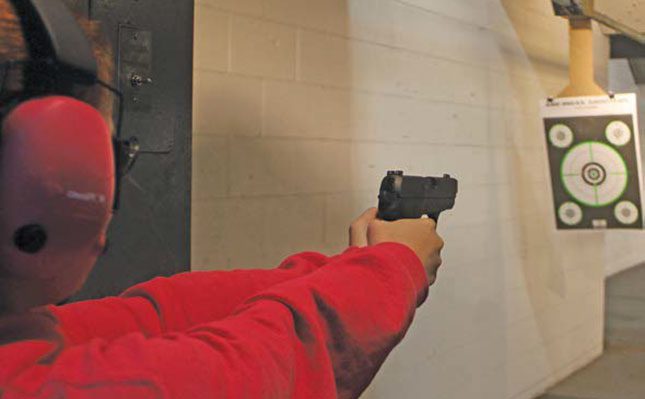
The first is known as proficiency testing. These tests are done at accredited private training centres and include practical training and theoretical tests. Practical training entails physically handling the firearm that is being licensed, while theoretical tests are based on the relevant knowledge needed to possess the firearm. Once completed, the centre provides a statement of results and a proficiency training certificate.
These documents are then submitted to SAPS for the application of a competency certificate. The competency certification is the second step in the licensing process. Applicants must fill in a SAPS 517 form and submit the form to their Designated Firearms Officer (DFO) alongside supporting documentation.
This includes the proficiency certificate, statement of results, proof of address, ID document, identification photographs, and three testimonies from family or friends to confirm the applicant’s character. All supporting documents must be certified before submission.
Once these documents are approved and the applicant receives their competency certificate, the final step in the process is taken, which is the application for a licence to possess a firearm.
Documentation required
The applicant must submit their competency certificate, a completed SAPS 271 form—which details the specific firearm the applicant has chosen to purchase and license—and a document motivating the application to their regional DFO.
Motivations can be written by the applicant themselves, but can also be done on behalf of the applicant by an accredited training centre using the applicant’s input. These motivations must be accurate and provide extensive detail pertaining to the reasoning behind the application. They must also include supporting documents or evidence of intent, such as photographs of the applicant using the particular firearm for its intended purpose.
Once the licensing application is considered successful, the DFO will contact the applicant to request the installation of an approved firearm safe, which then undergoes inspection. Following the approval of the firearm safe, the DFO will issue the applicant with their firearm licence, which must be presented when the licensed firearm is collected from the dealer or seller.
The total cost of licensing a firearm varies depending on the training centre used and the number of firearm types forming part of the proficiency training. Applicants may choose to complete proficiency for multiple firearm types.
Self-defence implications
Owning a firearm for self-defence and the legal ramifications that come with it can feel intimidating. A former law enforcement representative provides insight into the legal guidelines surrounding the use of deadly force in self-defence.
“Using a firearm in self-defence is reasonable when an individual considers the scenario to be life-threatening,” says Monray Nel, former lieutenant-colonel in the Makhanda police in the Eastern Cape. He encourages farmers not to be deterred by the use of a firearm, but instead advises them to educate themselves on the legality of self-defence so they can exercise their rights within reasonable limits.
“Simply put, a self-defence case will be considered fair if the defendant acts reasonably and can make a judgement of a deadly threat, and their clear intent is to protect themselves and others in their vicinity,” Nel explains. In most farm attack cases, this will be family members or farm staff.
The intruders do not necessarily have to be armed with firearms to justify the use of deadly force. When intruders are carrying a knife or other deadly weapon, a reasonable individual can make the judgement that the weapon is being carried with the intent to harm, and therefore the defendant may act in self-defence.
Nel advises farmers to keep their self-defence firearm close by overnight, as one might not be able to quickly reach a firearm stored in another part of the property when an intruder is armed.
Nel also suggests safely firing a warning shot to intimidate intruders in scenarios where one is certain of an intruder’s presence. “There is no legal framework to suggest that a warning shot must be fired first, but if one can safely fire a warning shot without injuring innocent individuals or animals, it can be done to scare someone off,” he says.
There is no limitation on the type of ammunition that may be used in self-defence, and one is also not confined to only using the registered self-defence weapon in a life-threatening scenario. “When all you have is a hunting rifle, you may use it, and the same legal tenets apply,” he says.
Sstored away safely
All firearms must be stored in an approved safe whenever the firearm is not in use. The firearm may not be handled without the owner being present. When self-defence handguns are brought into public or outside of the owner’s residence, the gun must be holstered on the owner’s person, within complete control, and hidden from plain sight. This usually entails covering the weapon with a shirt or jacket.
Owning a firearm for the extreme scenario in which it is needed for self-defence may also be beneficial for some farmers due to the distance between their farms and the nearest law enforcement units.
“When criminals enter a property, especially when it is outside of town or city limits, like a farm, one can consider it malicious intent and therefore one has the right to act accordingly,” says Nel. He suggests having multiple secondary security measures, such as alarms or sensors, as this will further justify the use of deadly force. When intruders come across these secondary measures and still choose to continue further, it presents as dangerous and potentially life-threatening.
In agreement with Nel, Kobus Breytenbach, farm safety representative of the Southern African Agri Initiative, says they emphasise the importance of prioritising the protection of farmers.
“When a situation becomes an extreme danger to a farmer or their livestock, the farmer should exercise their rights to act,” he says.
Aside from human threats, Breytenbach advises farmers to be careful when encountering dogs or other animals that pose a threat to livestock. The legal framework around killing dogs in particular can fall within a legal grey area, as the animals are domesticated and are likely owned by another individual.
“It would be in the farmer’s best interest to attempt to scare animals away first before using a weapon. When a farmer has no other choice but to eliminate the animal, it becomes reasonable,” he says.
Firearm accessibility through legal licensing has allowed farmers to protect themselves against deadly threats. Although owning a firearm may seem risky, there are legal frameworks to protect farmers in their act of self-defence.