
David Cock has more than 30 years of experience in Bonsmara breeding and is now serving his second term as technical chairperson of the Bonsmara SA Cattle Breeders’ Society (Bonsmara SA). He has become an established name in the northern Eastern Cape and the southern Free State.
Cock first became involved with the breed in 1993 when he started working for Dick Isted, who owned the Tempevale herd in Lady Grey, Eastern Cape. In 2005, he bought the herd and the farm Tempe from Isted, then went into partnership with Ingemar Heurlin of Stitchel Bonsmara in Komani (formerly Queenstown), combining their two Bonsmara studs.
Today, the stud herd runs in three districts: Komani, Maletswai (formerly Aliwal North), and Lady Grey.
“We’ve had to focus more and more on adaptability. Farming in three districts with different veld types has shown us how important it is for our bulls to be able to adapt and perform in their new environments,” says Cock.
Just a stone’s throw away from him, also based in Maletswai, is Gawie Nel’s commercial Bonsmara herd, which he runs on his family farm, Craven.
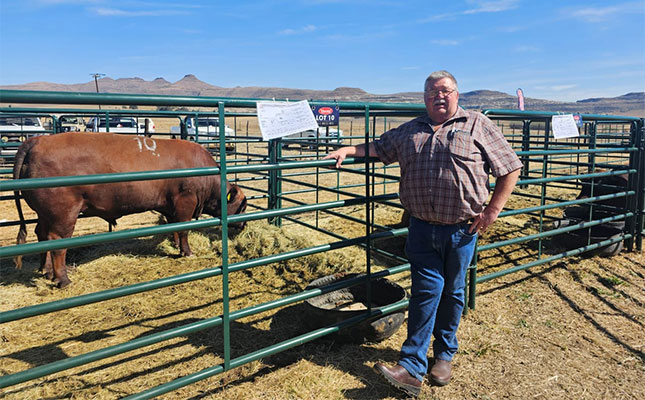
Similarly, Nel has almost 30 years of Bonsmara farming under his belt, and both farmers attribute their success to the breed’s hardiness.
Selecting for the middle ground
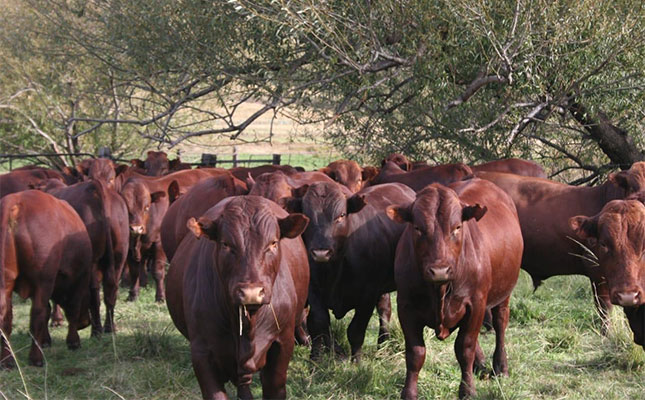
Cock’s herd comprises mostly medium-frame cattle, as he deliberately avoids extremes in his breeding process.
“We are very cautious about selecting animals that are extreme in any trait, as they inevitably take longer to adapt,” he explains.
The operation emphasises calving ease, good weaning weight, cow fertility, and below-average shoulder height. This combination works for their production system and matches what most commercial bull buyers need.
At weaning, each calf is visually assessed and scored for conformation and type. Those scoring highest determine replacement heifers and bull calves for performance testing, while calves with very low or high birth and weaning weights are held back.
“We use breeding values alongside these assessments to maintain balance in the herd,” says Cock.
Temperament and structural soundness are also essential. The region’s often steep terrain means cattle need good legs, hooves, and bone structure to graze effectively.
Balancing fertility and growth
As a breeder who supplies commercial farmers, for Cock, fertility remains a top priority. However, fertility has very low heritability, making it one of the trickiest traits to select for. Thus, his approach centres on selecting the right cow.
“If you select the right type of cow – feminine, wedge-shaped, with good capacity – fertility usually follows,” he explains.
He adds that in breeding herds relying solely on natural veld, cow efficiency is non-negotiable. Cows that grow too quickly, mature late, or produce excessive milk are costly, as high maintenance often undermines fertility first.
Cock’s ideal is a medium-frame cow weighing 480kg to 540kg that weans a calf equal to 45% to 50% of her body weight.
“It’s easy to get 5% of your cows to do this, but it takes many years of breeding and selection to get 80% of them to do it,” he says.
He stresses that new herds should be managed patiently until growth rates stabilise across all animals.
Feed smart and maintain availability
Nel runs a semi-intensive system with five herds of around 100 cows each, supported by three bulls per herd, on his 3 000ha property. His heifers and weaner calves roam together in 50ha camps.
For a commercial herd of this size, constant feed availability is crucial. Nel relies on natural grazing, providing supplemental licks in winter, aligning his programme with Cock’s. This ensures every medium-framed cow produces a live weaner as heavy as the season allows, every year.
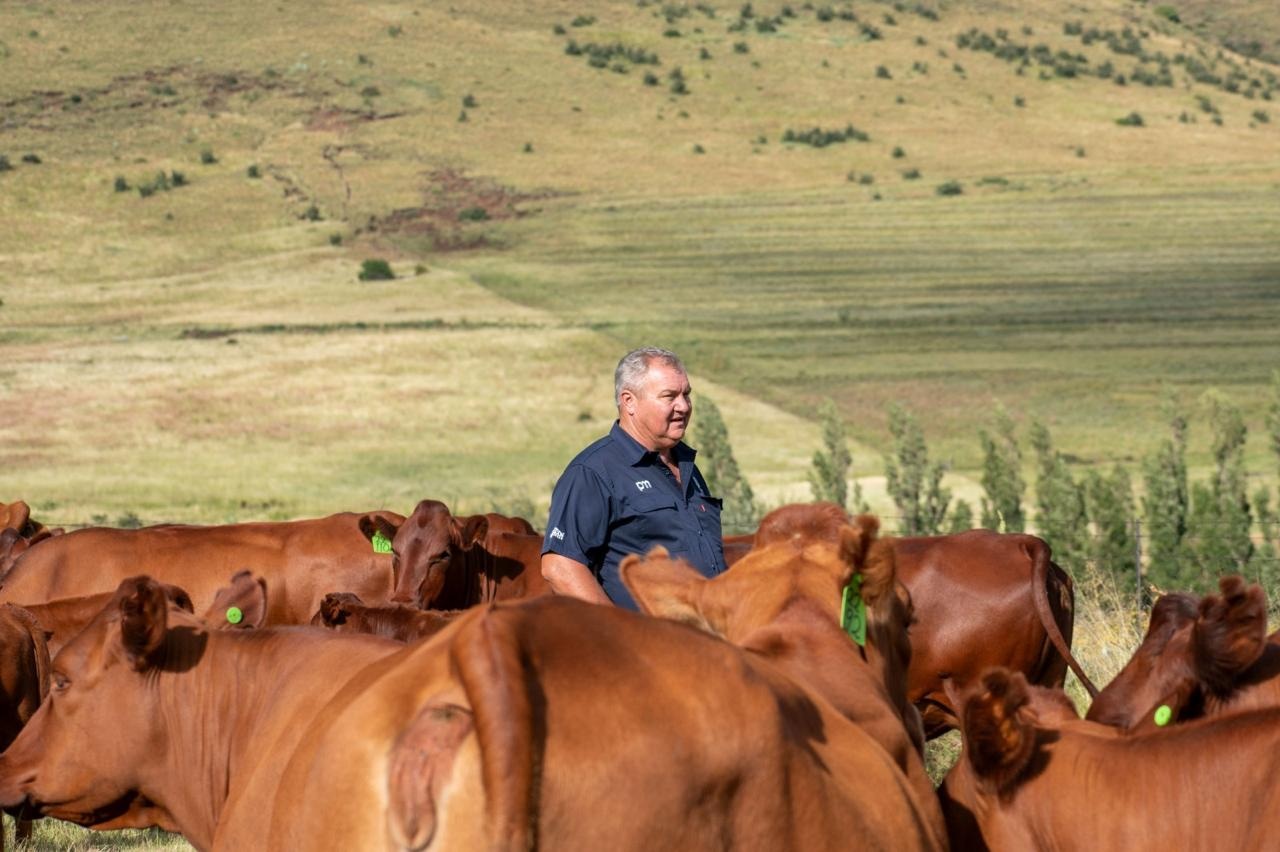
Cock mixes his own lick supplements year-round. His operation starts winter licks later than most breeders but feeds them longer, based on the observation that August to October often bring the harshest conditions and poorest-quality veld.
After the first rainfall, heifers and cows being mated for the first and second time, respectively, receive a production lick until grazing improves enough for a phosphate lick. In drier years, extended production lick programmes help cows maintain condition.
“We adjust licks to what is happening in nature, whether that’s late or early rainfall, frost, low temperatures, or poor veld conditions,” says Cock.
Test bulls on veld, not in feedlots
Cock aims for there to be no gap between stud and commercial conditions at Tempevale.
To ensure his bulls are as adaptable as possible when they transition to commercial farms, the calves are put on winter veld with a lick after weaning.
In spring, they begin an extensive Phase D test on the veld with a production lick. After autumn growth testing and inspections, approved bulls return to the veld with a winter lick before finishing on a fattening ration.
“The common denominator is veld. If we want our bulls to perform for commercial farmers, we must raise them tough. Stud and commercial conditions must be the same,” he adds.
Practical guidance
Nel and Cock agree that breeders and commercial producers must ensure a smooth transition of stud animals into commercial herds. A key part of this is producing Bonsmaras that are adaptable to varying conditions, which underpins Cock’s focus on hardy bulls.
He also explains that many farmers make one critical mistake when buying bulls at auction: “People tend to mark one bull in a sale catalogue, miss it, then buy the wrong bull for their herd.
“Bull buyers must know what genetics they need to improve their herds. Some get overwhelmed at sales and end up taking the wrong bull home.”
He adds that thorough after-sales service, training, and client support distinguish serious breeders from the rest.
For young and emerging Bonsmara producers, Cock and Nel say producers must be mindful that the industry requires a long-term investment.
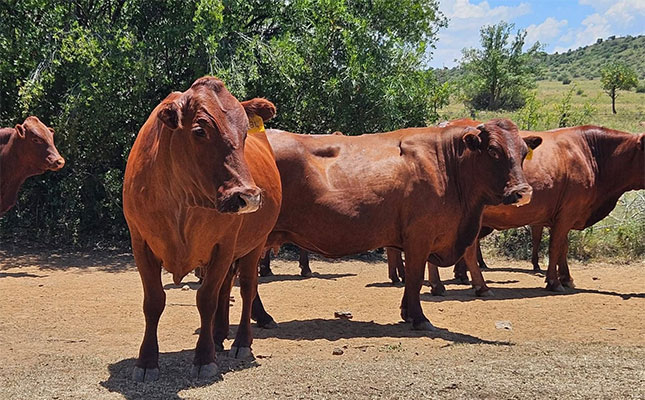
Cock reiterates that by maintaining a balanced cow herd, both in conformation and genetics, a stable production cycle naturally follows.
“Bonsmara farming is incredibly rewarding, and the breed is always in demand at feedlots. It remains one of the top beef breeds, and as long as farmers educate themselves about biosecurity practices and effective feed conversion to avoid production setbacks, Bonsmaras will take good care of them,” adds Nel.
According to Cock, the breed has a strong future, with enthusiastic young breeders joining Bonsmara SA in recent years.
“It is encouraging to see the breeder’s society grow. As long as we continue to improve our quality and maintain our strict breed standards, Bonsmaras will always have a place in the market,” he says.
Although their operations differ, both Cock and Nel aim to produce healthy, adaptable, and efficient cattle.
By selecting for adaptability, raising bulls hardy enough for the veld, and prioritising cow efficiency, Cock has set a standard that commercial producers can readily follow, while Nel focuses on careful feed management and the breed’s ability to gain and maintain optimal weights for feedlot success.