
The Department of Agriculture (DoA) has said that controls are aimed at preventing the spread of foot-and-mouth disease (FMD) between farms, provinces, and production systems, particularly in and around declared disease management areas (DMAs).
Speaking to Farmer’s Weekly, DoA spokesperson Joylene van Wyk said farmers need to understand the difference between moving livestock from disease-free areas and from infected ones.
“All movements are guided by the government gazette. Animal movements from free areas move with a health certificate,” she said.
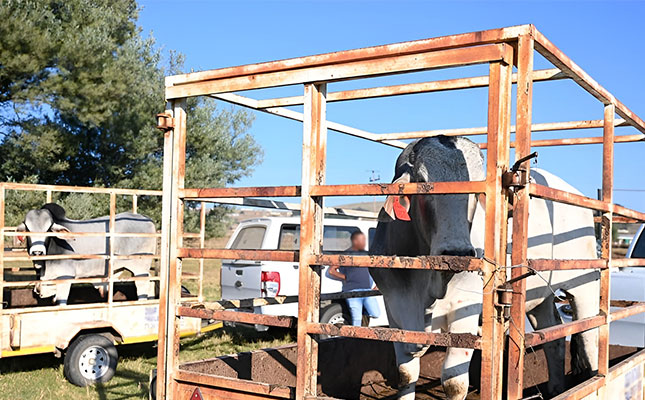
“All animals moved from infected areas or declared DMAs must travel with an official veterinary movement permit, commonly referred to as a Red Cross permit. This written document identifies specific animals by ear tags or registered brands, must physically accompany them during transport, is valid for a single consignment, cannot be transferred, and is issued for each movement. Permits are generally valid for around seven days,” the DoA said in response to questions from Farmer’s Weekly.
“For example, in parts of KwaZulu-Natal, where DMAs have been declared due to active or recent outbreaks, cattle may not move between farms or to auctions without a Red Cross permit, unless they are going directly to a registered abattoir under strict conditions.
“In Limpopo, farmers moving cattle from farms near wildlife interface areas into other districts are required to obtain veterinary permits and may be subject to risk assessments, depending on the FMD status of the origin and destination farms.
“In Gauteng, livestock movements into feedlots or abattoirs from provinces with declared DMAs must be accompanied by the appropriate Red Cross permits, while animals originating from free areas require health certificates.”
Application timelines and requirements
According to the DoA, veterinary movement permits are issued by the local state veterinarian’s office in the respective provinces.
“In some areas, agricultural organisations assist in facilitating permit applications on behalf of the state. Farmers may also obtain assistance through local agricultural extension officers or, in certain cases, the stock theft units of the South African Police Service.
“In DMAs, applications are often submitted electronically, with farmers emailing the required documentation directly to the relevant provincial veterinary permit office,” it said.
Completed applications must be submitted to the local state veterinarian responsible for the area where the animals originate.
“This includes the completed permit application form, an owner’s declaration and, where animals are moved for slaughter, confirmation from the receiving abattoir.
“Each province has designated email addresses for permit submissions, which have been communicated to farmers,” the DoA said.
Permit applications must include:
- Individual animal identification numbers (ear tags or registered brands)
- Stock removal certificates issued under the Stock Theft Act (No. 57 of 1959)
- GPS coordinates for the origin and destination farms
- Vehicle registration details
- A signed health declaration from the animal owner
“Permit applications must be submitted in advance. Standard movements require at least five working days’ notice, while movements from high-risk areas, DMAs, or involving breeding stock require 28 days to allow for risk assessments. Incomplete applications are a common cause of delays,” the DoA said.
Processing times depend on the completeness of documentation, the outcome of the risk assessment, and the FMD status of the origin and destination farms.
All cloven-hoofed animals moved under permit must be quarantined at the destination for a minimum of 28 days before joining the resident herd.
“For example, cattle moved from a DMA in KwaZulu-Natal to a feedlot in Gauteng must be quarantined on arrival, even if the animals show no clinical signs of disease. During active outbreaks, state veterinarians may also require additional testing or extended monitoring. Animals showing any clinical signs of FMD may not be moved under any circumstances,” the DoA explained.
“National FMD movement controls and permit requirements have been in place since June last year, following government gazette notices issued under the Animal Diseases Act [No. 35 of 1984]. Farmers have therefore been legally required to use permits for livestock movements in DMAs since then.”
Movement of meat and milk
The DoA said the movement of animal products is also regulated.
“Raw meat for personal use, limited to 50kg per vehicle, may be moved without a permit if it is commercially packaged, leak-proof, and accompanied by proof of purchase,” adding that quantities exceeding 50kg require a movement permit.
Raw milk from within a DMA may only be moved with a Red Cross permit and must be delivered directly to an approved processing facility for pasteurisation. Such milk may not be used for export. Processed milk in sealed commercial packaging remains unrestricted.
Penalties remain in force
The DoA warned that illegal movement of animals remains a criminal offence under the Animal Diseases Act.
Farmers found moving livestock without the required permits, or in breach of permit conditions, could face fines of up to R8 000 or imprisonment for up to two years.
Van Wyk said the DoA is reviewing some of the current control measures: “There will be changes, which are still under discussion. The public will be informed about them.”
Farmers are encouraged to consult their local state veterinarian before planning any livestock movement, particularly when crossing district or provincial boundaries.