
“Over the past 70 to 80 years, climatic conditions have been fairly evenly divided between El Niño, La Niña, and neutral years, with each occurring roughly one-third of the time,” independent agricultural meteorologist Johan van den Berg told Farmer’s Weekly.
“What makes the current event noteworthy is its early development. Under normal circumstances, El Niño begins to develop during July and August and continues to strengthen until around March.
“This year’s event was expected to start between July and September, but it began much earlier in May, increasing the possibility that it could become a very strong El Niño,” he added.
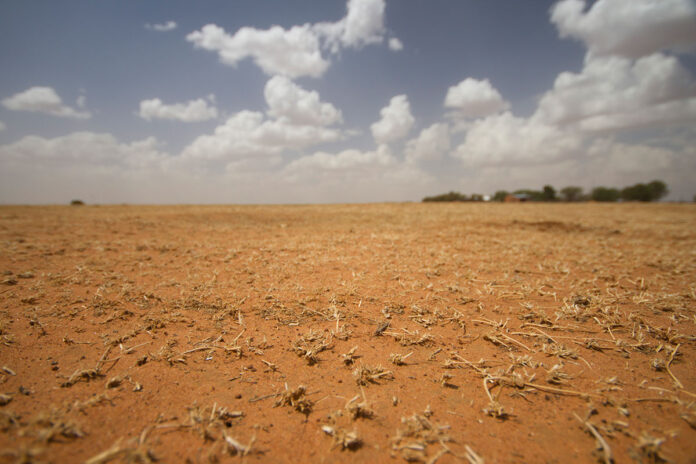
Climate scientists from the National Oceanic and Atmospheric Administration (NOAA) in the US have even suggested that the current event could develop into a ‘Super El Niño’, a classification used when sea surface temperatures in the central Pacific Ocean exceed normal levels by more than 2°C.
Super El Niño events occurred in 1982/83, 1997/98, and 2015/16, affecting weather patterns in South Africa, Australia, Brazil, and Mexico.
According to the NOAA, there is an 81% chance of a Super El Niño developing, which will drive extreme heat, widespread drought, and potential global food price shocks that could last into 2028.
However, Van den Berg said it is still too early to determine when the current El Niño will reach its peak. If it does so around December 2026, it is likely to persist until at least March or April next year. Once the system enters its weakening phase, however, rainfall conditions often improve, and the phenomenon’s effects become less severe.
Anticipated weather conditions
Although the phenomenon is typically associated with drought in South Africa, its effects on the country are not immediate. According to Van den Berg, average to above-average rainfall is still possible during July, August, September, and, in some cases, even October. It is only from November onwards that the likelihood of below-average rainfall increases, with drier conditions often persisting until March or April.
The World Meteorological Organization (WMO) states that each El Niño has a unique evolution, intensity, and geographical pattern. This means South Africa’s rainfall cannot be predicted according to the phenomenon alone.
The WMO emphasises that even neighbouring areas can have very different rainfall outcomes. Some parts of Southern Africa may be much drier than average, while others may receive near-normal rainfall.
Potential impact on agriculture
“The greatest concern lies in January, February, and March, which are the most critical months for summer grain production. Reduced rainfall during this period can significantly affect crop yields,” Van den Berg noted.
“Another hallmark of El Niño is unusually high temperatures, particularly elevated daytime maximum temperatures. The combination of below-average rainfall and intense heat substantially increases the atmosphere’s ability to pull moisture away from the ground, plants, and water bodies, known as atmospheric evaporative demand.
“As a result, crops lose moisture more rapidly and grazing conditions deteriorate, placing additional pressure on livestock producers,” he explained.
According to Grain SA, if a severe El Niño develops with drought conditions similar to 2015/16, maize yields could decline by between 33% and 37%, while soya bean yields could fall by about 33%. Sunflower is expected to be more resilient because it is naturally more drought tolerant.
Wandile Sihlobo, chief economist at Agbiz, echoed these concerns in a press release, saying El Niño poses a particular threat to South Africa’s maize harvest, as the crop is one of the country’s most important staple foods and is particularly vulnerable to adverse weather conditions.
Factors that could limit the impact
Sihlobo added that favourable conditions from the preceding La Niña years could help reduce the impact of a strong El Niño.
“In the irrigation areas, the La Niña rains over the past years have improved dam water levels and the overall water table. This will assist with fruits and vegetables, as all these are planted under irrigation.
“In the case of field crops, roughly 20% of South African crops are under irrigation, with the rest rainfed, which will depend mostly on available soil moisture and the timing of showers going into the 2026/27 season, even if they are below normal levels.
“For the livestock industry, the grazing veld across the country is in fair condition, having benefitted from the longer rainy periods in the 2025/26 season. The country will enter next summer with better grazing veld, and the improved water table will continue to support parts of the country.”
Van den Berg said one factor that could lessen the impact of the present El Niño is the amount of soil moisture currently available across many of South Africa’s agricultural production regions.
“Following favourable rainfall, many areas have accumulated substantial soil moisture reserves, and dam levels remain high. These reserves could help buffer crops against periods of below-average rainfall later in the season.
“For this reason, a Super El Niño does not automatically translate into a disastrous production year. The greatest production risk remains marginal soils with limited water-holding capacity,” he said.
“Ultimately, while it is understandable that many people worry about the expected El Niño, forecasts of higher food price inflation may miss some of the fundamental issues that will shape the season ahead, such as improved soil moisture and available grain supplies.
“Indeed, the drought is not ideal and may impose costs on farmers, but we can’t view it the same way as previous droughts. There are clear factors that may shape this upcoming season more than the previous droughts did,” Sihlobo concluded.