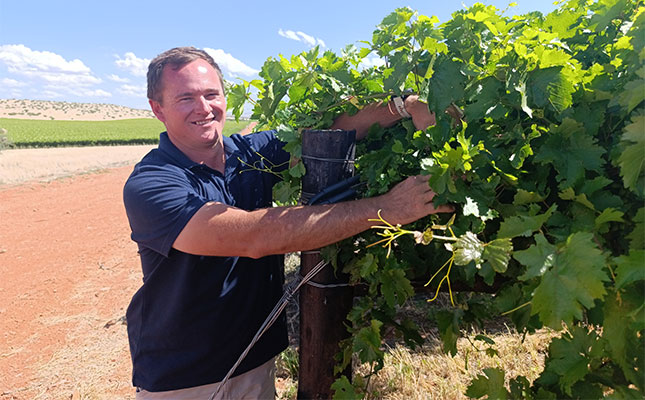

For Jaco Wolfaardt, commercial beekeeper and founder of Ubusi Beekeeping, bees have been a part of his life since he was a student. During his studies at Saasveld Forestry College in George, Western Cape, he was part of a woodworking club where he built his first beehive in 1992.
From hobby to business
He eventually expanded to 12 hives to maintain as a hobby, selling honey for extra income. After a career change in 2010, Wolfaardt decided to turn his hobby into a business, establishing Ubusi Beekeeping in 2012.
Ubusi is based in Swellendam in the Western Cape, which places Wolfaardt’s team within easy reach of some of the country’s largest fruit, nut and vegetable producers, who all require pollination services.
“Pollination season for the various crops that we service is by far our busiest time of the year. We aim to grow every year to keep up with demand,” he says.
Wolfaardt bought out a commercial bee farmer in the area in 2018, growing his
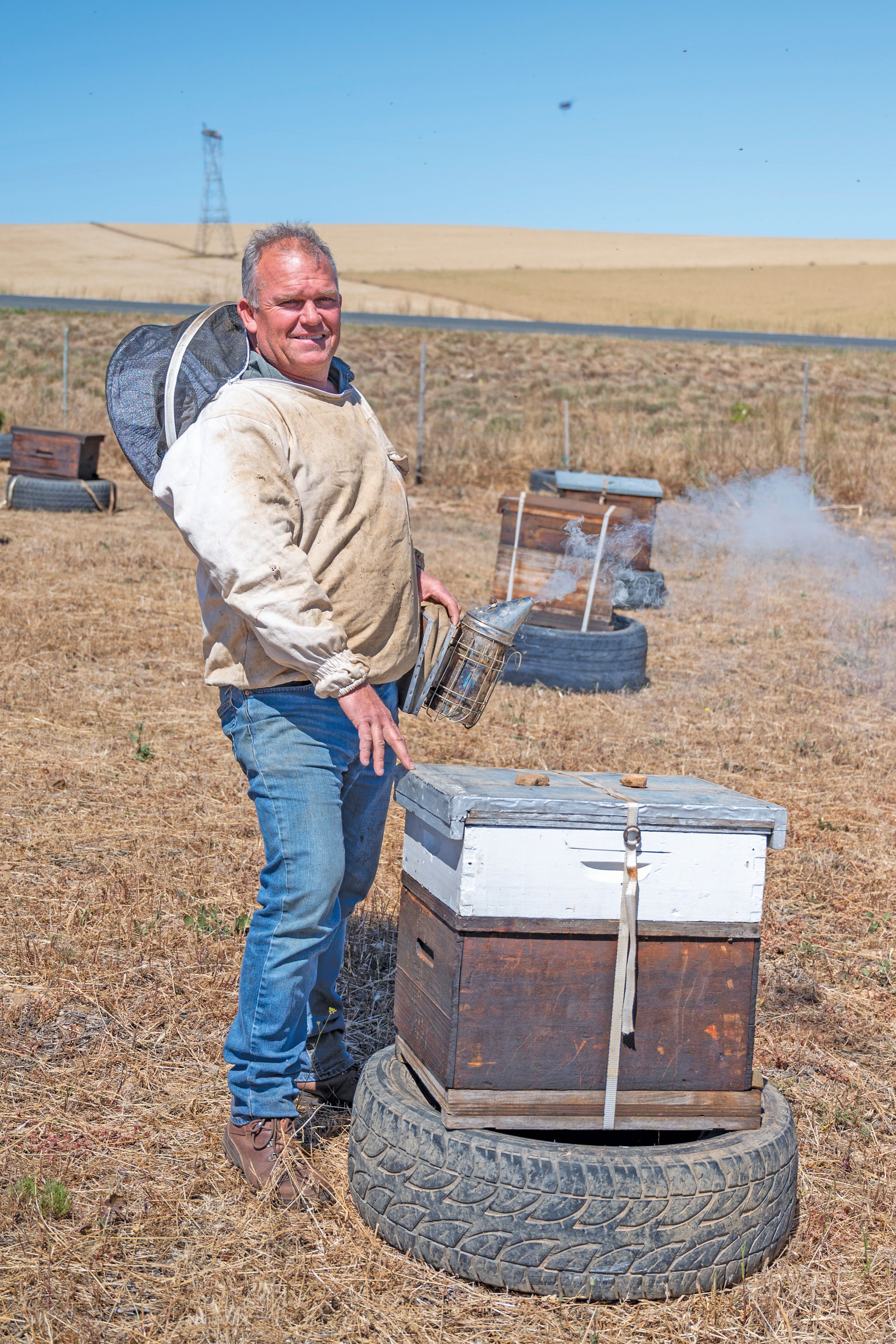
company into a multifaceted operation involved in crop pollination, honey supply, and beekeeping projects focused on the development of pollination and honey production in five African countries.
Wolfaardt opened three retail stores under Ubusi called Bee Things, with branches in Swellendam, George and Mossel Bay.
These stores allow him to sell his own honey and give other beekeepers a place to market their products. They sell bee and honey-related products as well as beekeeping equipment. Ubusi is both a producer and importer of beekeeping equipment.
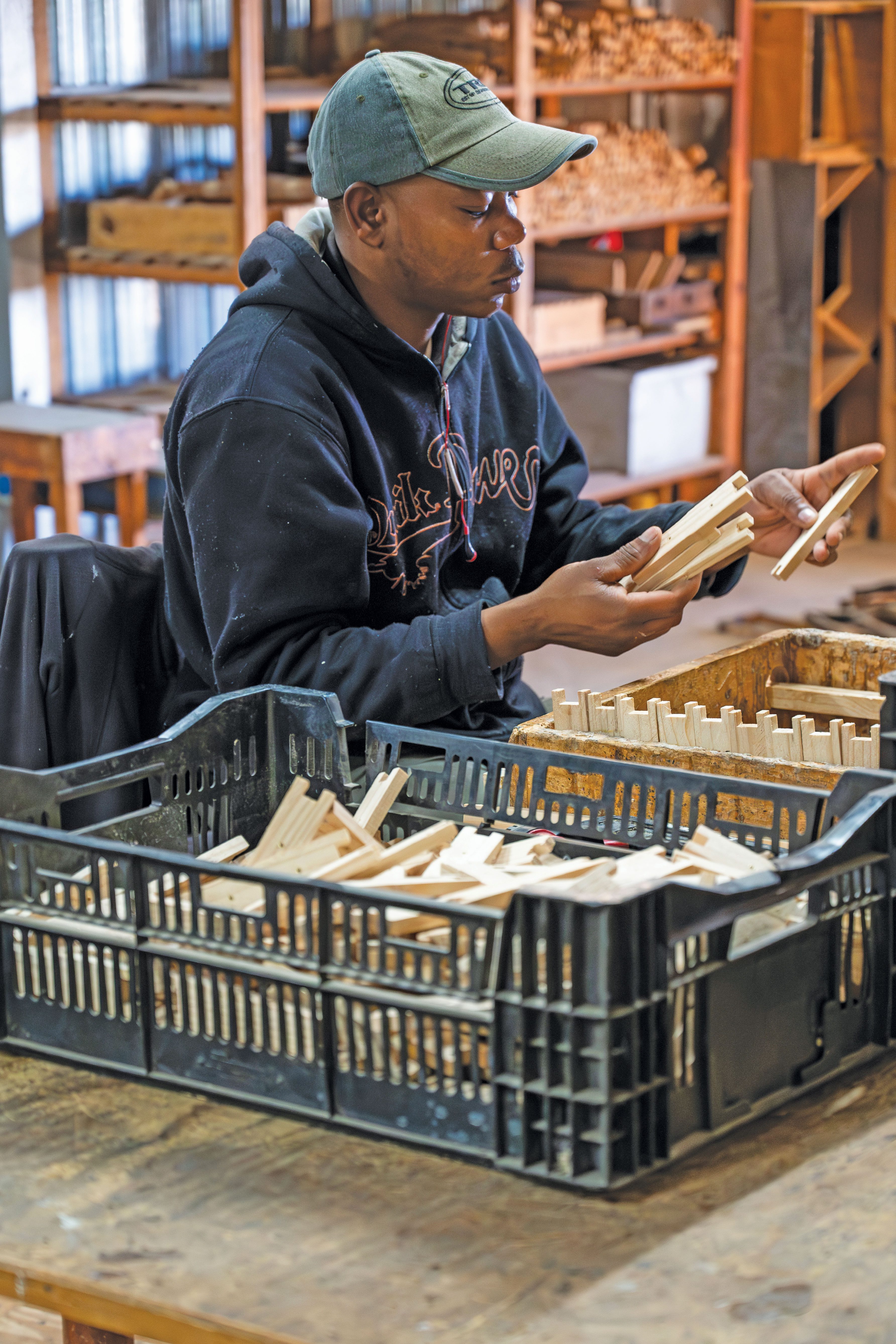
The Ubusi staff build specialised Langstroth beehives, catch boxes, and brood chambers.
Wolfaardt’s African beekeeping projects have allowed local farmers in areas where resources are not available to successfully maintain and grow their own hives for both pollination and honey production.
He has supplied and trained staff in Tanzania, Zambia, Mozambique, Malawi and Kenya. Wolfaardt also builds and ships container units that stock all the necessary beekeeping equipment for these locations and then personally trains staff to practise sustainable beekeeping.
With over 30 years of industry experience and a passion for beekeeping, Wolfaardt has established himself as a seasoned producer. He is also a former board member of the South African National Bee Industry Organisation and has represented South Africa at the International Bee Congress on multiple occasions.
Supply and demand
Wolfaardt currently maintains between 5 000 and 6 000 colonies in Langstroth hives, with each hive containing one colony of between 50 000 and 80 000 Cape honeybees (Apis mellifera capensis).
Cape honeybees are known for their active foraging capabilities and large colonies that contribute to better cross-pollination in food crops. With the species being native to the region, they are well adapted to the flora and the climate.
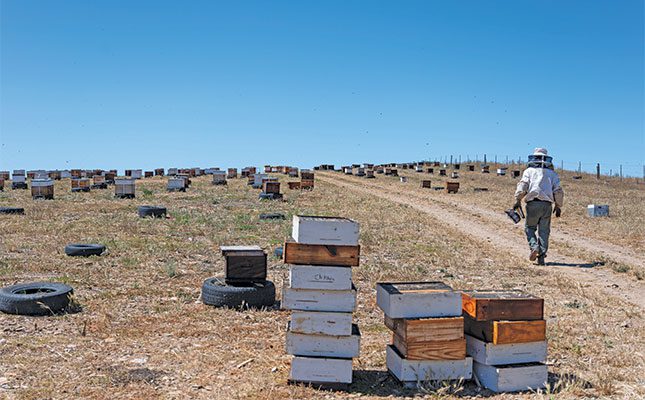
Alongside a staff of seven drivers, Wolfaardt travels throughout the Western Cape to supply farmers with the number of hives they need for effective pollination. Each staff member is responsible for a certain group of hives.
This requires meticulous attention to logistics and hive management to ensure he can supply farmers with the required number of hives when they need it. During peak season, when most of the crops are in bloom in the Western Cape, this becomes particularly challenging.
Some of the crops Wolfaardt provides hives for include apples, blueberries, broccoli, almonds, canola and cherries.
Pollination seasons for fruits, nuts and vegetables all vary and often overlap, so Wolfaardt’s clientele of about 50 individual farmers request hives several months ahead of the start of every season.
In turn, he must plan carefully to ensure his hives are up to standard and are productive. Logistics and planning play a major role in being able to serve all of his clients effectively, especially when seasons overlap. Major producers such as the Du Toit Group, for example, require between 1 500 and 1 600 hives for a single fruit pollination season.
Between pollination seasons, Wolfaardt’s existing hives are placed in canola fields where the colonies are ‘strengthened’. Because canola is one of the few mass- flowering, high-nectar food sources available to bees outside of flowering season, beehives are placed among canola crops to strengthen the colonies and assist the queen to reproduce.
Off-season is also a time for general hive maintenance and inspection to ensure that colonies are up to pollination standards.
Wolfaardt maintains his hives according to the Western Cape Bee Industry Association’s pollination guidelines. Among these guidelines is the requirement to have a healthy hive population, with at least four brood frames covered in brood and at least seven frames covered in bees.
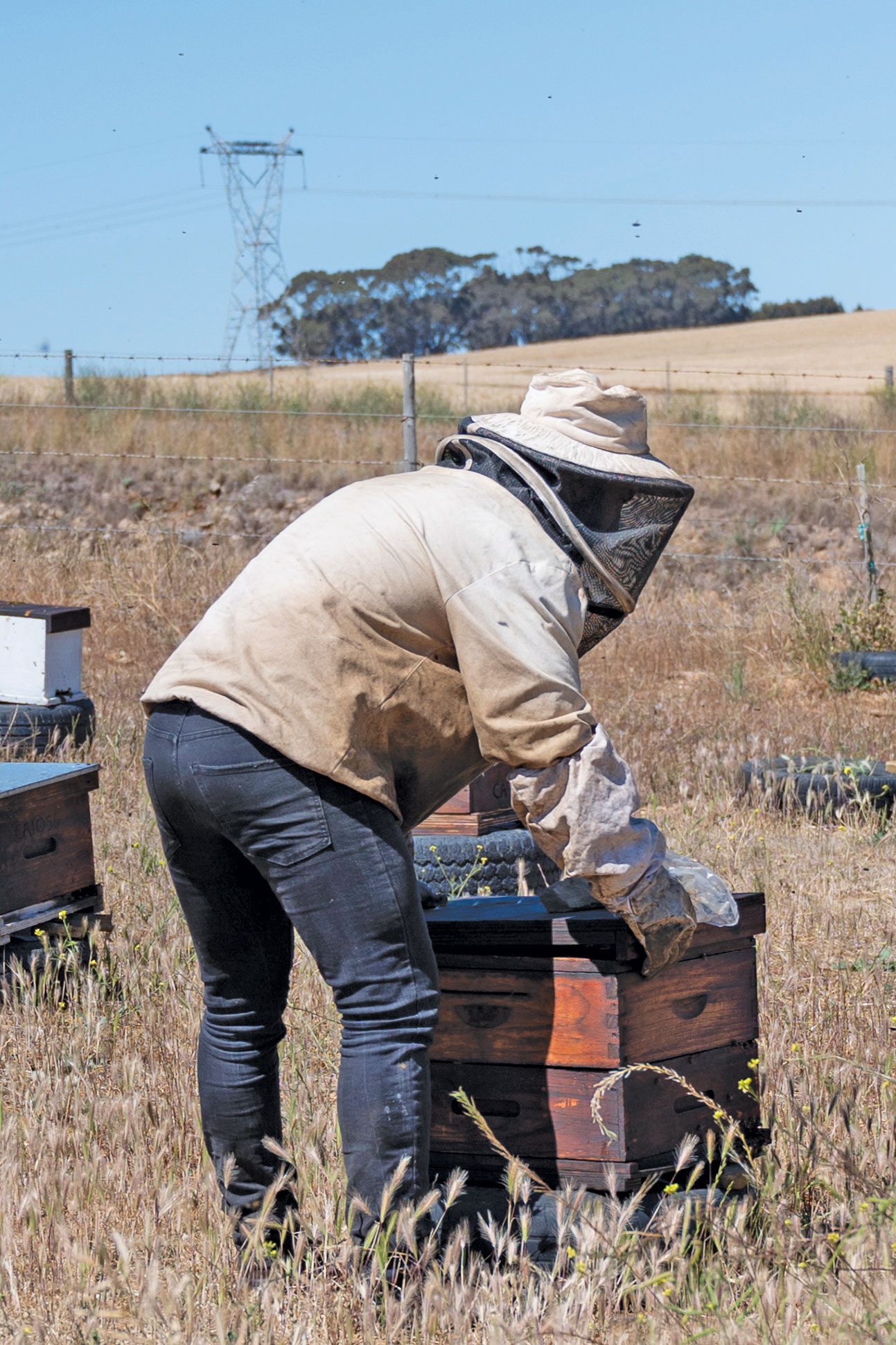
The queen must also be actively laying in a normal brood pattern. Production standards are enforced by seed companies such as Sakata to ensure maximum pollination rate.
Hives are checked for diseases such as American foulbrood.
While the production hives are being strengthened, Wolfaardt also places catch hives among the canola to attract and catch new colonies. Once hive preparation is done, each farm receives its batch for the pollination season.
Colonies are removed once the season is over, and when farmers need to spray pesticides or herbicides on their crops, as the chemicals could be harmful to the bees. Wolfaardt maintains contractual agreements with each farmer to ensure no harm is done to the bees due to the chemicals.
Overcoming challenges
Thorough pollination requires strong colonies. But with declining natural forage, Wolfaardt has had to resort to supplementary feeding, which adds to his costs. The decline in wild forage is predominantly the result of the removal of plants that bees rely on for nectar, such as the eucalyptus tree.
Because eucalyptus trees are an invasive species in South Africa, there have been several initiatives by both state and private entities aimed at removing them.
“Beekeepers in this region have always had an issue with food availability for the bees simply because more plants are being destroyed than what is being replanted,” he says.
Although crops are being planted on more farms, bees need a varied diet of different species of plant nectar to sustain their diet.
Wolfaardt supplements his bees with pollen patties – a mix of natural pollen and sugar. He places feed in the hives when he notices a shift in hive populations and the amount of brood in the frames due to insufficient nectar intake. He also monitors honey production levels, which allows him to determine whether the colonies are getting enough nectar from the crops around the hives.
When the bees are unsatisfied with nectar availability, they often move out of their hives into neighbouring hives on another property, where they will feed on wildflowers or other crops.
Natural forage has helped his colonies survive, but it remains insufficient due to the sheer number of hives that must be maintained. The cost of sugar in South Africa and neighbouring nations is too high for Wolfaardt; therefore, he is planning on importing bulk supplemental white sugar from more affordable markets in South America.
Although providing sugar as feed increases costs, Wolfaardt believes that better survival rates among his colonies will, in turn, increase pollination success rates.
“When you have to maintain colonies at this scale, you have to consider methods to ensure all your hives are cared for,” he explains.
As Wolfaardt optimises his strategy to meet market demands, he faces challenges due to the overpopulation of hives in certain areas. Overpopulation becomes an issue when a large number of hives have to be placed in a single location to have enough bees to pollinate a certain crop. Overpopulation can also occur due to neighbouring beehives being in close proximity to Wolfaardt’s hives.
“Honey production levels decrease dramatically when hives are placed too close together and there is limited feed availability,” he says.
Not only are his own colonies competing for nectar, but neighbouring colonies from competing beekeepers in the area also play a role in food availability. For this reason, honey production is not Wolfaardt’s main focus. Ubusi’s profit made from honey is just over 10% of the total, on average, so he’s had to shift his goals to expansion to remain profitable.
He plans on tackling the issue of feed availability by planting nectar-rich plants that he can use to strengthen colonies and to provide a more intensive feeding programme similar to that used by beekeepers in the US.
Although Wolfaardt faces difficulty maintaining honey production levels while pollinating on a large scale, there are pollination seasons for crops that produce low-volume, but high-quality honey due to their nectar abundance. When these crops are in season, he installs supers and receives, on average, 20kg of honey per hive per year. Normal honey production hives can yield between 20kg and 50kg yearly, depending on conditions.
Supers are frames where bees store surplus honey when production rates are high. They can be removed for harvest without disturbing the colony.
Sustainable future
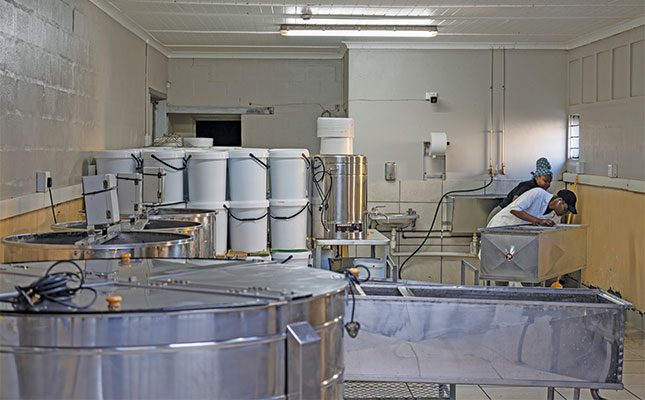
To help solve the problem of decreasing colony strengths, Wolfaardt is in the process of building a queen rearing facility to breed colonies and ensure hive populations and adaptability remain optimal. He is hoping to start using the facility in the coming season.
A queen rearing facility is a system used to breed queen bees with specific desirable traits, such as high productivity levels and good disease resistance. Wolfaardt plans on splitting an existing hive to breed a new queen using starter and finisher bees, also known as nursing bees. These bees are responsible for breeding and nurturing larvae to breed a new queen.
He has had to adapt to conditions that put pressure on commercial beekeepers, but remains optimistic that his future endeavours will prove successful.
“I can rely on the fact that crop pollination will always be necessary. Feasibly managing the scale at which we are now is tough but rewarding, and that is the reality of being a commercial beekeeper,” he says.
Wolfaardt advises hobbyist beekeepers to do thorough research on equipment, nutrition and optimal conditions before committing to a large number of hives.
“When you maintain over 100 hives, the labour and costs will be too overwhelming to handle single-handedly,” he explains.
More than 80% of South Africa’s beekeepers are hobbyists. To ensure safe, sustainable honey production, he urges beekeepers to follow the guidelines set out by regulatory bodies and government entities.
Commercial beekeepers play an essential role in crop production. And while farmers constantly require large-scale pollinating hives, beekeepers such as Wolfaardt remain determined to scale their operations to meet market needs.
For more information email Jaco Wolfaardt at [email protected].