A former textile engineer who took a chance on buckwheat, two brothers continuing their parents’ pumpkin seed business, and a vegetable farmer preserving a traditional cabbage variety illustrate different approaches to developing family farms in northern Croatia.
Farmer’s Weekly visited the three enterprises in Varaždin County, where farmers are combining traditional crops with processing, product development and modern retail markets. Their experiences also highlight the opportunities and challenges facing family businesses in a country that has benefitted from EU agricultural support since joining the bloc in 2013.
Buckwheat finds its way home
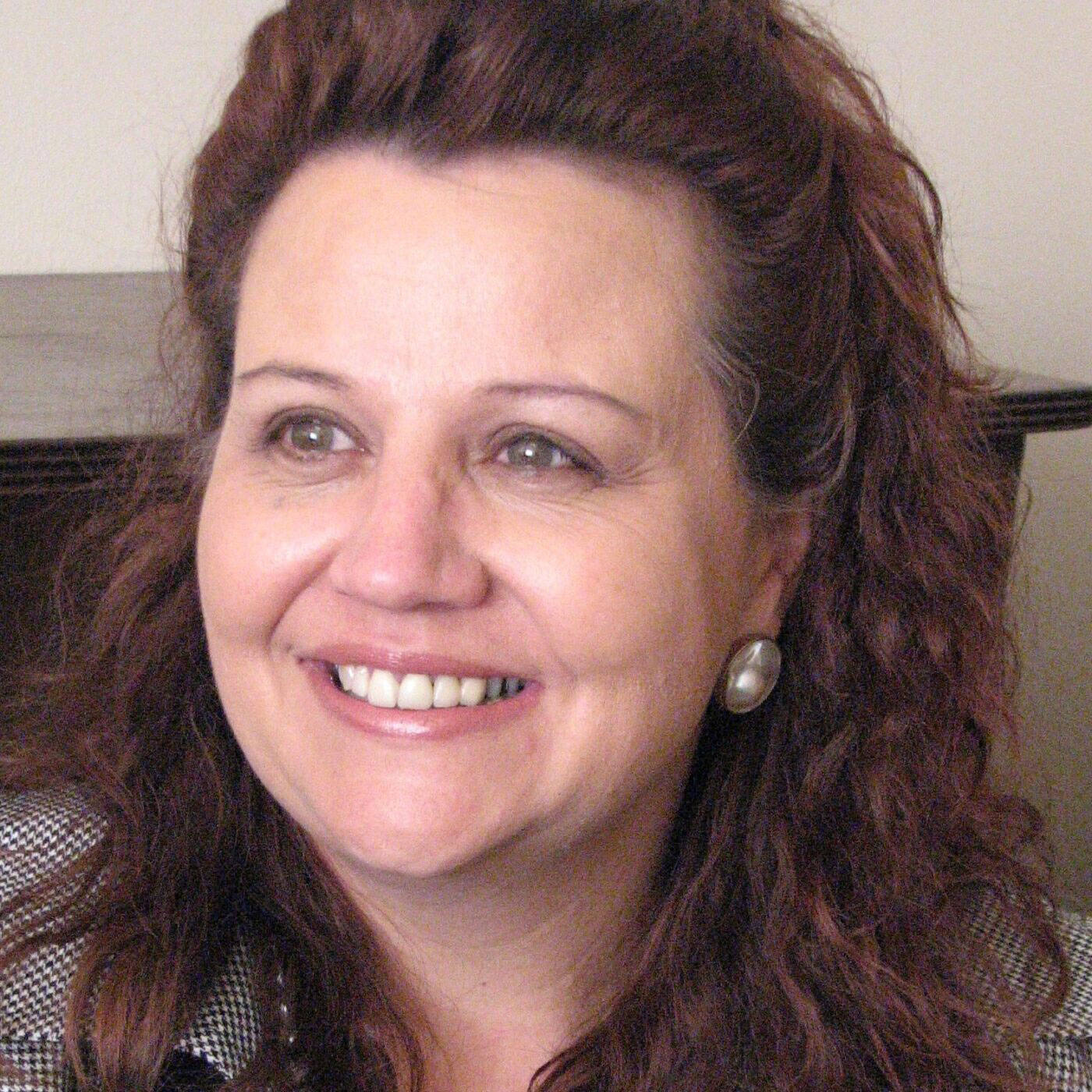
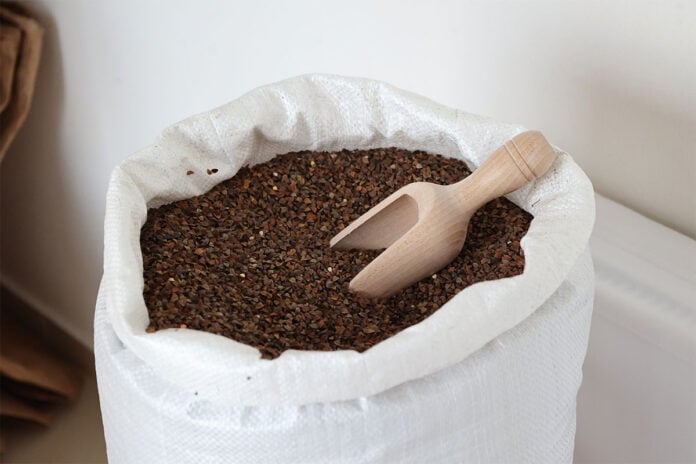
At the House of Varaždin Buckwheat in Gornji Kućan, Tamara Šabić Pocedulić manages a processing business that began with a second-hand mill in the family’s garage. Together with her husband, Dario Pocedulić, she has developed an enterprise producing buckwheat flour, groats, flakes, pasta, crackers, confectionery and pillows filled with buckwheat husks.
The family started farming on approximately 6ha in 2006 and has since expanded to about 105ha, largely through leasing additional land. However, the decision to specialise in buckwheat was not part of their original plan.
“We were not competitive because everybody was producing the same crops,” Tamara recalled, referring to conventional crops such as wheat and maize.
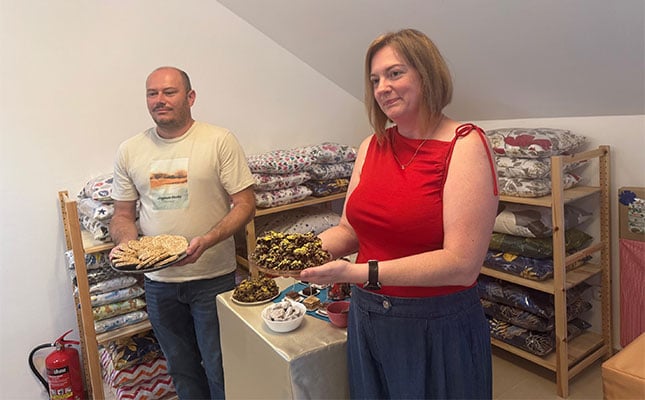
One Sunday evening, her father-in-law showed her a field of buckwheat. She immediately recognised a possible business opportunity.
“Why don’t we produce it? Why don’t we sell it? Why don’t we use it? It would be a profit for us because no one else is doing it,” she recalled asking.
The family subsequently planted approximately 8ha and bought an old mill, which Dario adapted to separate flour from groats.
Although buckwheat had historically been cultivated in Varaždin County, its commercial importance had declined. Tamara believed the crop’s traditional identity and naturally gluten-free characteristics offered an opportunity to reach new consumers.
From textiles to food processing
A qualified textile engineer, Tamara previously worked for international clothing companies Calzedonia and Intimissimi, including assignments in China, Sri Lanka and Italy. Food processing was unfamiliar territory.
“My husband is not a food technician, and I’m not a food technician. I am a textile engineer,” she said. “But I was brave and I wanted to try it.”
She completed training in milling and food production while the family experimented with different products.
A turning point came in 2012 when they exhibited buckwheat flour at an agricultural event and met a Varaždin County agricultural official. The meeting led to cooperation with agricultural advisory services and the University of Zagreb’s Faculty of Agriculture on developing and preserving a Croatian buckwheat variety.
“That meeting was very important for us because it meant a new page in our lives,” Tamara recalled.
The initiative eventually contributed to the formal registration of Varaždin buckwheat as a Croatian variety.
In 2017, the family invested approximately €100 000 (about R1,86 million) in modern milling equipment.
“It was for us a very big amount to spend on something that we weren’t even sure would make a profit,” she said.
The processing operation initially occupied a converted garage at their home. “We started in a garage,” Tamara recalled, joking that companies such as Apple and Harley-Davidson had similar beginnings.
The family subsequently established the House of Varaždin Buckwheat, combining processing, retail sales and educational activities.
Building consumer confidence
The family decided to specialise in gluten-free buckwheat products rather than process conventional grains on shared equipment, which could create a risk of gluten contamination.
Winning consumer confidence was initially difficult. Tamara recalled that some visitors to agricultural fairs accused them of importing buckwheat from Russia or Ukraine and repackaging it as a Croatian product.
“But the truth was that it was not like that. It was all our buckwheat. It was our fields, our production,” she said. Over time, the business established a customer base and expanded its product range.
Its buckwheat crackers received recognition at the Superior Taste Awards in 2023, while its Heljdorado confectionery range subsequently attracted further attention.
In 2025, the enterprise also secured a retail opportunity through German drugstore chain dm. However, increasing demand has placed pressure on raw material supplies.
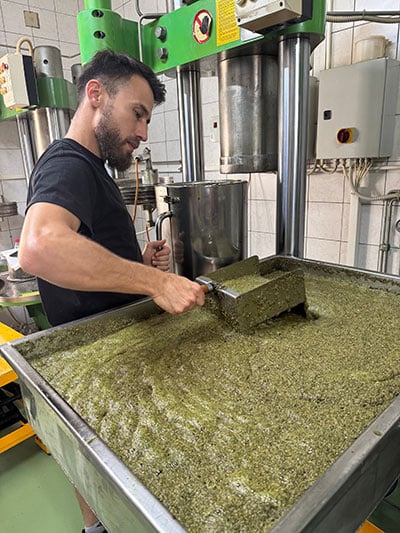
Tamara said buckwheat yields of approximately 1t/ha to 1,5t/ha were typical under their conditions, while harvested seed required careful cleaning and drying. Drought reduced the previous season’s harvest by approximately 70%.
By the end of July 2026, the family had exhausted its buckwheat supplies and temporarily suspended production.
“We needed to inform our buyers that until the end of September, we wouldn’t have any more products,” she explained. The shortage interrupted plans to expand sales through new retail outlets.
“We had started to earn money that we could have begun to invest to expand again our product list,” she said.
A small harvest of approximately 2t allowed processing to resume around September, although unpredictable weather remained a concern.
Investment and family commitment
The family’s expansion has benefitted from EU rural development funding.
According to the EU Common Agricultural Policy (CAP) Network, the project implemented between 2019 and 2023 involved a total investment of approximately €205 540 (R3,82 million).
Of this, about R790 000 came from the European Agricultural Fund for Rural Development, R139 000 from national or regional public funding, and R2,89 million from private contributions.
The investment supported improvements to processing facilities, equipment and product development. The EU’s project assessment recorded increased customer numbers and revenue, reduced energy costs and the creation of one job.
The family nevertheless experienced delays caused by the COVID-19 pandemic, and disruptions to equipment deliveries following Russia’s invasion of Ukraine.
While Dario manages most of the fieldwork, Tamara concentrates on processing, marketing and product development. She joked that her husband’s preference for working alone had become increasingly impractical as the farm expanded.
“I’m saying to him, please find somebody so you can have at least 10 minutes for me,” she said.
The family continues to develop products, including plans for buckwheat tea and baking mixes. It also hosts school groups to demonstrate how the crop is grown and processed.
Brothers build on 30 years of pumpkin seed production
In Strmec Podravski, brothers Matija and Danijel Patrčević have expanded the enterprise established by their parents, Ivan and Anica, in 1996.
The Agroprom Patrčević business initially provided a drying service for pumpkin seeds before expanding into oil processing in 2002. Today, the family combines pumpkin cultivation, seed drying, oil production and processing services for other growers.
For Matija, continuing the enterprise was a natural decision.
“We decided to continue with this business because too much effort had been invested in it for us to look for other occupations,” he said.
The family cultivates approximately 80ha of its own land, while cooperation with contract growers brings the total pumpkin production area to about 220ha. This arrangement enables the business to increase processing volumes without owning all the land used to produce its raw material.
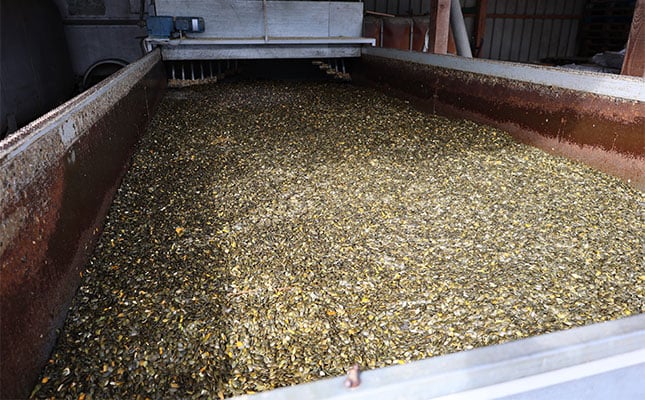
Sharing the workload
The brothers divide responsibilities between fieldwork and the oil-processing facility, supported by their parents, wives and three employees.
“We divide the work every day. One of us is in the oil mill and the other is in the field. That breaks the monotony and makes everything work better,” Danijel explained.
Their dryers can handle approximately 16t to 17t of fresh pumpkin seeds daily. Fresh seed yields generally range from 1 600kg/ha to 2 400kg/ha, depending on growing conditions. Approximately 2,5kg to 2,7kg of pumpkin seeds are needed to produce one litre of virgin pumpkin seed oil.
The remaining seed cake is used in livestock feed, creating an outlet for a processing by-product.
The business also processes seeds for other farmers, while oil production is adjusted according to customer demand rather than maintaining large volumes in storage.
A protected regional product
Pumpkin seed oil has been part of Varaždin’s food traditions for more than a century. Known for its roasted, nutty flavour and dark green to reddish-brown appearance, the oil received EU Protected Geographical Indication (PGI) recognition in 2023. The designation recognises its connection to the region and the production characteristics defined in its registered specification.
The Patrčević family’s oil has also received gold medals at the international Monde Selection quality awards. Matija attributed the family’s achievements to its commitment to maintaining quality.
“Our ‘secret’ ingredient is complete dedication to our work,” he said.
Despite its growth, the enterprise faces challenges associated with fragmented farmland.
The brothers cultivate approximately 40 separate plots, some smaller than 05,ha. Moving machinery between fields increases fuel consumption, working time and operating costs.
Crop rotation also limits the land available for pumpkins in any given year, with the crop generally returning to the same field after three to four years.
Nevertheless, the family has continued developing the enterprise through processing, cooperation with other growers and investment in product quality.
Preserving Varaždin’s cabbage heritage
At OPG Jurica Cafuk in Domitrovec, Marija Cafuk’s commitment to farming is closely linked to preserving one of the region’s best-known agricultural products. Varaždin cabbage, locally known as Varaždinsko zelje, has been cultivated in the area for generations.
Marija welcomed international journalists to a demonstration of traditional cabbage preparation, including an opportunity to compare the regional variety with conventional cabbage and taste local dishes.
Speaking through an interpreter, she expressed her pride in sharing this part of the region’s agricultural heritage.
“When I speak about Varaždin cabbage, my heart is full,” she said.
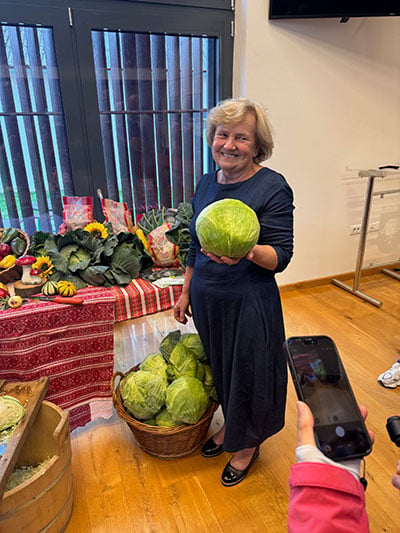
“I hope that when you return home, you will carry a little piece of our local traditions and cultural heritage with you.”
The demonstration also highlighted efforts to pass traditional knowledge to younger generations, with children participating in activities involving traditional dancing and preparation of the cabbage.
Traditional crop, modern enterprise
The Cafuk family has expanded its farming operation from approximately 110ha in 2017 to about 200ha in 2026. Potatoes account for between 80ha and 100ha, while approximately 50ha is allocated to brassica crops. Maize, wheat and oilseed pumpkins form part of the broader rotation.
The family’s potatoes are supplied to established Croatian retail chains.
The enterprise has maintained GlobalG.A.P. certification for approximately a decade, helping it meet the production and food safety requirements of larger buyers.
Varaždin cabbage nevertheless remains an important part of the business. The variety is distinguished by its relatively flat, compact heads, thin leaves and pronounced veins, making it particularly suitable for traditional dishes and fermentation.
The family is involved in the production chain from seed preservation and seedling production to the finished product.
Like the Patrčević brothers, the Cafuk family faces difficulties associated with fragmented farmland. Moving machinery between numerous smaller parcels increases costs, while irrigation has become increasingly important as changing weather patterns affect vegetable production.
Varaždin cabbage has EU Protected Designation of Origin (PDO) status, recognising its geographical origin and distinctive characteristics. The protection helps distinguish qualifying products from cabbage grown elsewhere, although maintaining production standards and supplying reliable markets remain essential.
For the Cafuk family, preserving the traditional variety forms part of a modern commercial farming operation rather than an alternative to it.
EU recognition and agricultural support
Two of the products encountered during the international journalists’ visit benefit from the EU’s geographical indication system. Varaždin cabbage has PDO status, while Varaždin pumpkin seed oil has PGI recognition.
PDO generally requires all relevant production, processing and preparation stages to take place within a defined geographical area, according to the registered specification.
PGI also recognises a product’s connection to a particular region but generally requires at least one relevant production stage to take place there. Individual specifications may impose additional requirements.
These designations do not grant exclusive ownership to individual farmers. Other qualifying producers within the designated region may use the protected name if they comply with the registered requirements.
The registration of Varaždin buckwheat as a Croatian crop variety is different from geographical indication protection.
Croatia’s EU membership has also given farmers access to CAP programmes supporting agricultural investment, modernisation and rural development.
The Pocedulić family’s processing project provides a documented example of such assistance. However, its substantial private contribution demonstrates that public funding was only part of the investment required. Comparable funding information was not established for the Patrčević and Cafuk enterprises, and their expansion cannot therefore be attributed directly to EU grants.
Lessons for South African farmers
The experiences of the three Croatian families offer lessons for South African producers seeking to increase the value of their agricultural products.
The Pocedulić family revived a traditional crop and developed specialised processed foods. The Patrčević brothers expanded their parents’ seed drying operation into an oil-processing enterprise supported by other growers. The Cafuk family increased its cultivated area while maintaining a traditional cabbage variety and supplying modern retail markets.
South Africa already has agricultural products with strong regional identities, including rooibos, which has secured geographical indication recognition in the EU.
However, the Croatian examples demonstrate that regional identity alone is insufficient to sustain a business. Reliable production, investment, processing capacity, quality standards and market access remain essential.
The challenges are also familiar to South African farmers: drought, fragmented farmland, rising operating costs and the need to finance expansion.
Despite these pressures, the three families have continued developing their businesses without abandoning the crops and traditions on which they were built. Their experiences show how agricultural heritage can provide a foundation for commercial growth when combined with investment, innovation and access to markets.