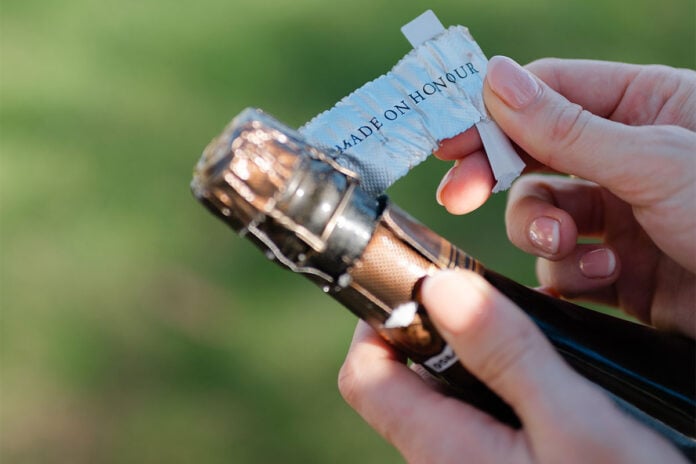
In 1971, Simonsig, a stalwart Stellenbosch wine estate, produced the first bottle-fermented sparkling wine in South Africa, utilising the same processes that have been used in Champagne, France, since the early 18th century.
Over the next five decades, the focus on these wines expanded dramatically, and Cap Classique, as the local version came to be called, has emerged as the country’s fastest-growing wine category in recent times, driven by rising local demand, premiumisation, and surging export demand.
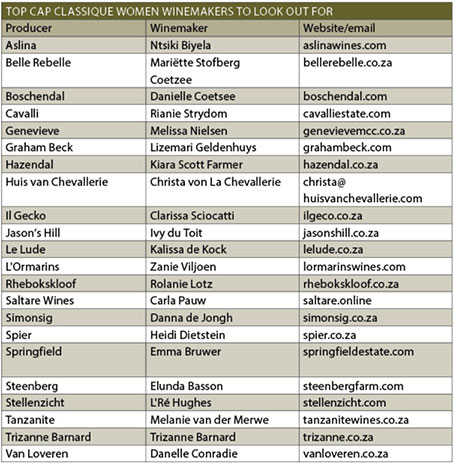
Pieter de Waal argues that sparkling wine made by some of South Africa’s leading female winemakers are contending for a top spot in the affections of consumers globally.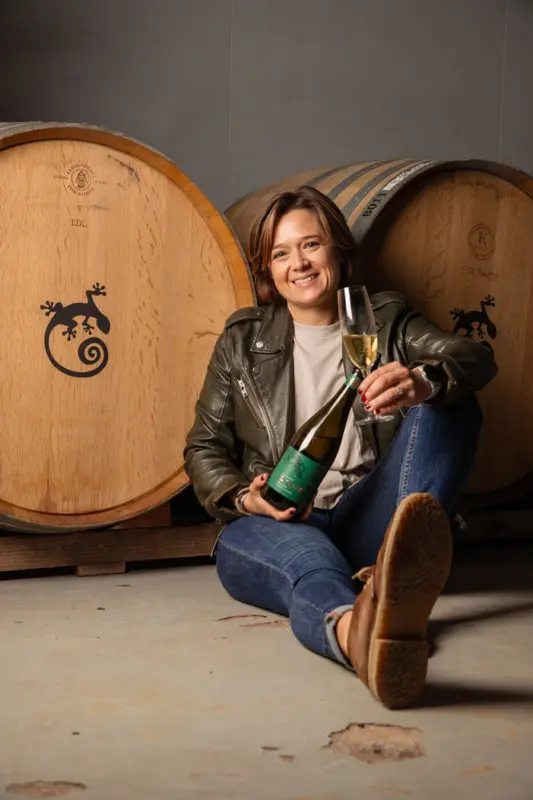
Although Marilyn Monroe proclaimed in the 1953 hit musical, Gentlemen Prefer Blondes, that “diamonds are a girl’s best friend”, in real life, she actually had a far greater fondness for Champagne than for expensive jewellery or diamonds. She had a firm favourite when it came to champagne, and once famously quipped to a reporter: “I go to bed with a few drops of Chanel No. 5, and I wake up each morning to a glass of Piper-Heidsieck; it warms me up.”
While the creation of Champagne is apocryphally credited to the 17th-century French monk Dom Pérignon, it was Barbe-Nicole Ponsardin, famously known as the Veuve Clicquot, who engineered the actual production and commercial framework of modern Champagne when, in 1810, she broke away from the traditional practice of blending wines from multiple years and established the concept of the vintage (millésime).
In 1816, she invented the riddling table that led to Champagne having far more clarity in the glass, and it was also ‘the widow’ who pioneered rosé blending. (For a vivid account of how she revolutionised the industry, read Tilar J Mazzeo’s 2008 non-fiction bestseller The Widow Clicquot: The Story of a Champagne Empire and the Woman Who Ruled It, or watch the 2023 biographical drama Widow Clicquot, which chronicles the true story of how the Veuve Clicquot Champagne empire was built in 19th-century France.)
Though South Africa has a winemaking history dating back to February 1659, when Jan van Riebeeck proclaimed, “Today, praise be to God, wine was made for the first time from Cape grapes”, it took more than three centuries before the first Cap Classique saw the light, made from South Africa’s workhorse white grape variety, Chenin Blanc, as opposed to Chardonnay, Pinot Noir, and Pinot Meunier used for the making of Champagne.
When South Africa transitioned to democracy in the 1990s, traditional still-wine estates were largely dominated by established, multigenerational male lineages. However, Cap Classique production began to boom independently, and with this rapid growth, opportunities were created for specialised talent, allowing a new wave of highly educated women to step directly into head winemaking roles.
A toast to elegance
One of the early pioneers was Melanie van der Merwe, who was appointed as the senior sparkling winemaker at Distiller’s Corporation in 1995. She took ultimate responsibility for producing one million litres of Cap Classique wines annually for such famous brands as JC le Roux and Pongrácz.
Asked why she thinks women are well-suited to being Cap Classique producers, she ventures a number of reasons: “In my own experience, I just fell in love with the product; it’s versatile, tests your patience, and is very elegant. Ladies do have a very good sensory perception and possess a higher taste bud average, which is much needed when tasting for elegance paired with the complexity needed in Cap Classique production.
“On the other hand, I think ladies have a natural affinity for the wine style of Cap Classique!”
When Van der Merwe left Distell in 2006 to pursue her own brand, Tanzanite, her winemaking boots were filled by Elunda Basson, who today is in charge of winemaking at the Steenberg property in Constantia.
Basson is known for her unwavering support for developing the talent of female winemakers.
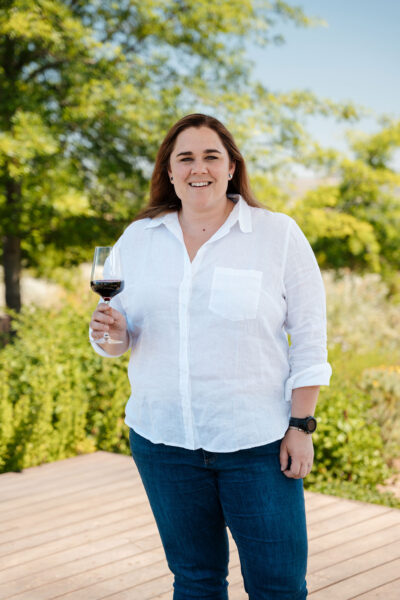
“At Steenberg, we embrace the opportunity to bring in young winemakers and protégés during harvest. It’s a powerful mentorship space where we can share knowledge, exchange ideas, and help develop future industry leaders,” she says.
Recently, Steenberg appointed one such protégé, Thabile Cele, as assistant winemaker, thereby increasing the growing pool of black female winemakers in the industry.
This year also marks a decade since Ntsiki Biyela, the first black winemaker to graduate from Stellenbosch University (SU), made her first Cap Classique in honour of her mother, who was fondly referred to as “Ms MC”.
Institutions like SU and Elsenburg Agricultural Training Institute have been critical entry points for female winemakers. Over the last two decades, the demographic make-up of these viticulture and oenology programmes has shifted dramatically, with women frequently graduating at the top of their classes.
Academic mentorships have funnelled top-tier female graduates into specialised sparkling wine cellars.
Innovation and creativity
Unlike Champagne, Cap Classique regulations don’t restrict winemakers to a specific list of grape varieties, allowing complete flexibility under the Wine of Origin scheme. And while Chardonnay and Pinot Noir are still the most prevalent varieties, together with Chenin Blanc and Pinotage, these four varieties represent more than 95% of Cap Classique production.
While female winemakers historically faced high barriers to entry into traditional winemaking opportunities, the rapid growth and unique demands of the Cap Classique category have created a perfect environment for female talent to lead.
After working internationally, as well as a harvest at the bubbly specialist producer Le Lude, Emma Bruwer returned to her Robertson-based Springfield family estate in 2021 and decided to add a Cap Classique to the range of wines.
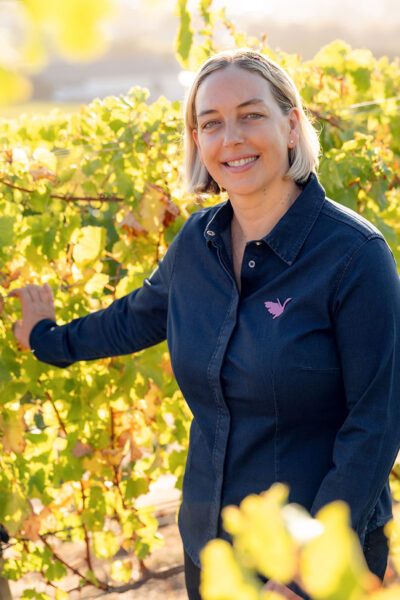
She explains her reasoning behind this: “In South Africa, we have a lot of advantages in being ‘New World’, as we are bound by far fewer traditional rules. Yes, our climate is much different from that of Champagne, but our viticultural practices and ability to irrigate allow us to still create a uniquely favourable microclimate for the grapes.
“We have far more ripeness from the skins, balanced with the minerality from our calcareous soils, so we can create something completely different yet still retain the quality associated with Champagne.”
Heidi Dietstein, senior winemaker at Spier Wines, says: “I believe the proof is in the glass. When you taste today’s top Cap Classiques alongside many Champagnes, the quality speaks for itself.
“We have exceptional vineyards, diverse climates, and access to outstanding grapes, but equally important are the passion and curiosity of South African winemakers. We are constantly learning, challenging ourselves, and raising the bar.”
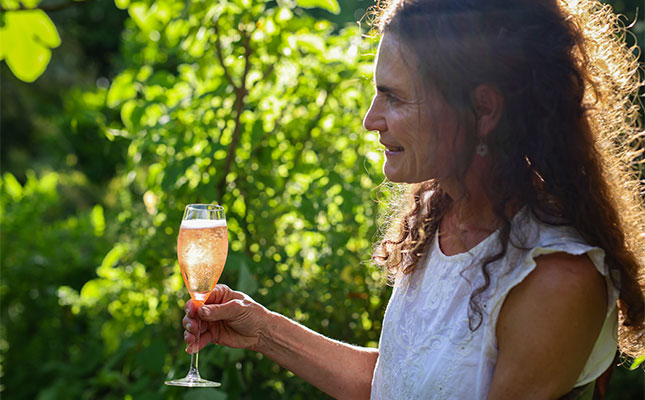
Carla Pauw of Saltare Wines remarks: “In such a gendered sector as agriculture, women often lack recognition and visibility, but this also affords them an uncanny power to move somewhat under the radar, test norms, and go against convention, over time learning to craft new ways. Innovation only happens when you push against the boundaries.”
Proudly South African
Due to the fact that Cap Classique undergoes secondary fermentation in the bottle and is therefore already packaged and just waiting to be disgorged and labelled on demand, it also creates an opportunity for easy BOB (‘buyer own brand’) production. This allows for an entrepreneur to procure as much unlabelled stock as is needed of a preferred style and put on an own label and story behind the wine suited to the market it aims to target.
It has become quite popular in Gauteng in particular, where the brand owners are based and therefore able to access the market directly and on a regular basis.
At the recent well-attended Proudly South Africa Local Wine Expo, held at the Prison Break Market, a number of these brands were presented, including the Cap Classique-focused House of Azari, founded by Pretoria-based industrial psychologist Siphiwe Katjene, and Bombas Wines, led by founder Sanet Bombas from Namibia.
Useful terminology
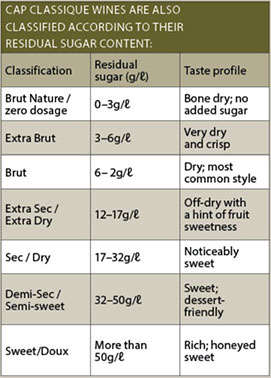
South African Cap Classique wines are divided into three distinct categories based on ageing classification, style and blend classifications, and levels of sweetness (see capclassique.co.za).
1. Ageing Classifications
The Cap Classique Producers Association defines quality tiers based on the minimum number of months the wine spends maturing on its yeast sediment (lees):
- Cap Classique (Standard): Minimum of 12 months on the lees. Light, fresh, and accessible.
- Vintage Cap Classique: minimum of 36 months (three years) on the lees. Features richer, more complex autolytic notes like toasted brioche.
- Prestige Cap Classique: minimum of 60 months (five years) on the lees. Exceptional depth, ultra-fine mousse, and intense longevity.
2. Style and Blend Classifications
Beyond ageing, Cap Classiques are classified by their grape composition and colour:
- Blanc de Blancs: made exclusively from white grapes (traditionally 100% Chardonnay).
- Blanc de Noirs: made exclusively from black grapes (such as Pinot Noir), but vinified as white or very pale sparkling wines.
- Rosé: crafted by blending white and red base wines or via short skin contact with black grapes to achieve a pink hue.
3. Sweetness Scale (Residual sugar)
Meticulous technical demands
Traditional-method sparkling wine requires an exceptional level of patience, extreme laboratory precision, and microscopic attention to detail. Winemakers must manage whole-bunch pressing metrics, high-acid chemistry, blending base wines that taste completely different from the final product, and monitoring years of lees ageing.
Dietstein gives a comprehensive argument for why she feels female winemakers excel in this category: “Cap Classique is a wine that rewards patience, precision, and attention to detail. Every decision, from the vineyards to the final disgorgement, influences the finished wine. It undergoes two fermentations, with the second taking place in the bottle, making it one of the most technically demanding and delicate styles of winemaking.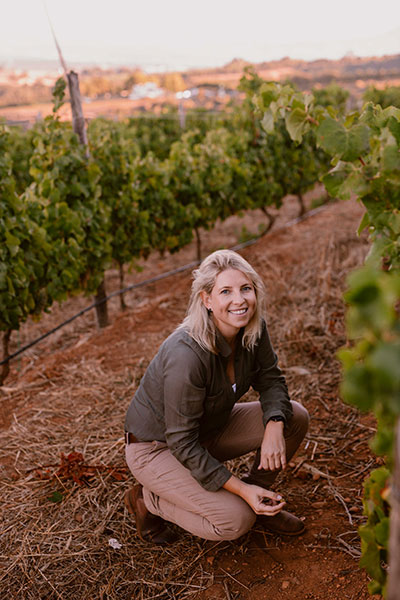
“I believe female winemakers naturally thrive in this environment because we often bring an incredible level of care, focus, and attention to detail. Small adjustments can have a significant impact on the fine wine.
“That said, great Cap Classiques are made by winemakers who have a deep understanding of the style, a passion for precision, and a genuine appreciation for the joy they bring.”
Pauw adds: “South Africa is a country that promotes creativity. As winemakers, we have the freedom to experiment. We like to travel and work abroad and bring back knowledge. Our Cap Classique association strives to improve quality with our yearly base wine tastings and enriching seminars.
Regarding terroir, we have limestone pockets in the Robertson area towards Swellendam, which give beautiful minerality and finesse to the Chardonnay and Pinot Noir grapes there.
It reminds us of the chalky soils of Champagne – my inspiration!”
Luxury redefined
Cap Classique is a premium product, given the complex nature of its production, specialised packaging due to the high pressure generated in the bottle, lengthy ageing on the lees, and an excise duty level 3,2 times that of still wines.
As such, expect to pay between R200 and R400 for a quality example, and upwards of R400 for a bottle to celebrate that special occasion. Compared with examples from abroad, that still offers great value for money.
The pinnacle of South African Cap Classique is the Graham Beck Cuvée Clive, with Tim Atkin MW, a notable authority on South African wines, awarding the 2019 vintage his Sparkling Wine of the Year award.
This was the seventh time this iconic bubbly captured the title, and in the 2025 international ‘Battle of the Bubbles’, it was the only Southern Hemisphere sparkling wine that break into the Top 10. At R1 340 a bottle, it isn’t for everyday drinking, but it still costs less than a third of a bottle of Dom Pérignon, the top-scoring Champagne at the competition.