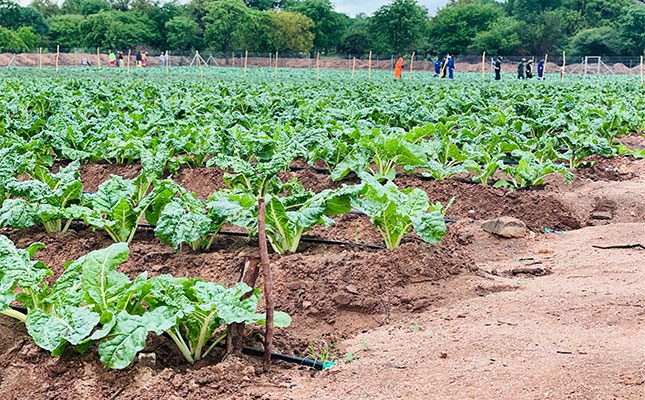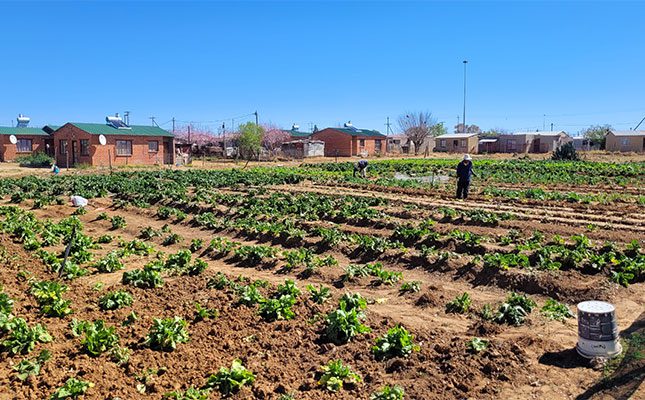

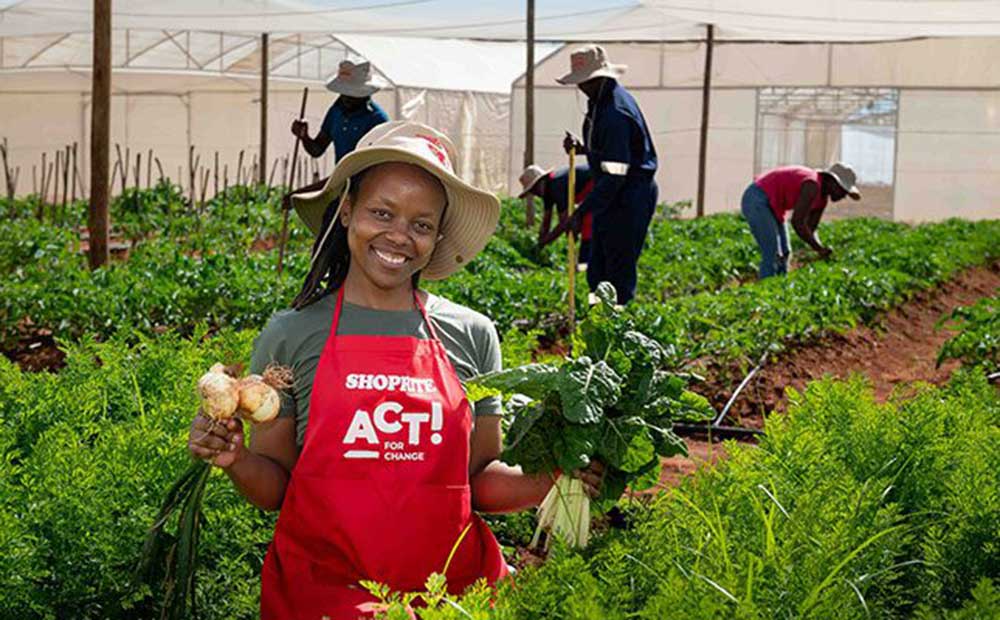
From backyard vegetable patches and school plots to large community gardens, small-scale food production is transforming lives across South Africa by enabling communities to grow their own food.
Supported by the Shoprite Group, in partnership with local farming specialists such as Urban Harvest and Food & Trees for Africa, these initiatives help families put healthy food on the table, create jobs and rebuild food-insecure communities.
Speaking to Farmer’s Weekly, Shoprite’s chief sustainability officer Sanjeev Raghubir said food gardens play a vital role to this end.
According to Raghubir, they have supported close to 300 community gardens together with their implementation partners as well as thousands of household food gardens, providing tools, training and infrastructure that enable communities to grow their own food.
“Many of these gardens use sustainable, climate-resilient methods that make it possible to farm even in difficult conditions such as the drought currently affecting parts of the Northern Cape,” he said.
Valuable agricultural skills
“Together, these gardens produced more than 106 000kg of fresh produce last year. But their impact goes far beyond putting affordable food on the table, they also equip people with valuable agricultural skills and create opportunities to earn an income from selling surplus harvests,” he added.
He said that these gardens do more than produce fresh vegetables, they help people build long-term self-reliance, and in doing so build food security for entire communities.
“Community gardens are essential in our fight against hunger. By supporting them, we help people grow their own food, learn new skills and generate income,” he said.
Raghubir added that their annual Market Days – where the gardens sell their produce at their local Shoprite and Checkers branches – and the ‘Act for Change’ programme helps small growers develop confidence, build networks and create lasting impact, expanding their reach beyond just their communities.
‘Act for Change’ Food Garden Competition
The ‘Act for Change’ Food Garden Competition is open to all community gardens in South Africa, whether they operate independently or receive support from organisations such as Shoprite and other partners.
“Each winning garden will receive customised assistance based on its specific needs, which may include irrigation upgrades, shade netting, fencing, or training for garden members,” Raghubir said.
He added that prizes include support worth R225 000 for first place, R200 000 for second place, and R170 000 for third place. The gardens placing fourth, fifth and sixth will receive R150 000, R130 000 and R120 000 respectively. Winners will be announced by 30 April 2026.
“Every seed we plant is an investment in people and in a sustainable future. We ensure that these community organisations are mentored and equipped to create and maintain their gardens,” he said.
Success stories of communities feeding themselves
In Botleng, Mpumalanga, Nomxoliswa Makhabane turned a small COVID-19 lockdown garden into the thriving Ekuqaleni Genesis Farm, which now feeds more than 150 people.
After leaving her job in construction, she pursued agricultural studies and committed herself to improving food security in her community. “Seeing how the vegetables help my community and introduce people to foods they never knew before is incredibly fulfilling,” she told Farmer’s Weekly.
She said her farm received essential support in 2023 through Shoprite’s ‘Act for Change’ programme, including shade netting, a tunnel, a water-harvesting system and 18 months of permaculture training.
The garden is run by six community members, and Makhabane said she hopes to introduce a profit-sharing model to help each of them benefit directly from the farm’s success in the near future.
Circle of support for local women
On the KwaZulu-Natal South Coast, the Siyaphambili Women’s Club has become more than just a farming group. It is a circle of support for 11 women aged between 40 and over 70. Each woman manages her own plot on the 2,5ha site, growing vegetables to feed her family and sell to neighbours.
Founder Nonhlanhla Mkhize said Shoprite supplied tools, compost, seedlings, and installed a water-harvesting system to help the garden thrive. The group also received 18 months of permaculture training, which Mkhize said boosted their confidence.
Gardening as a means of healing
In Randfontein, the Carroll Shaw Memorial Centre, South Africa’s only shelter for abused and trafficked men, uses gardening as part of its healing programme.
Moses Mlotywa, 62, tends the centre’s vegetable garden, a role that helped him rebuild his life after a period in which he became abusive toward his family.
According to the centre’s director Oupa Bila, the garden was meant to provide fresh vegetables to the 150 people living on the 67ha farm.
When Shoprite joined the project in 2018, in collaboration with Food and Trees for Africa, they repaired essential infrastructure, including the garden’s borehole and irrigation system, and installed a new diesel pump.
The 13 garden workers also benefit from ongoing mentorship and training in permaculture techniques through a series of workshops facilitated by Food & Trees for Africa. They were also provided with seedlings, compost and gardening tools.
Youth-led co-operative
In KwaMashu outside Durban, seven unemployed matriculants started the Iqabungelihle Garden Project to feed their community and create jobs.
The project moved from a small backyard plot to 2.5 hectares at Zeph Dhlomo High School, where learners now practise agricultural skills.
With help from Food & Trees for Africa, the group received training, water drums, bird netting, and tools.
“We wanted to help our community and protect our environment,” said founding member Sabelo Mdlalosi. “Growing food has helped us do all of that.”
Creating youth employment
In Qholaqhwe Village in the Free State, a team of 15 community members run a productive garden for the Qholaqhwe Creche, which cares for more than 200 young children. The garden was started to create youth employment and reduce the costs of buying food for the creche.
Manager Malebane Moloi said now they have no need to buy vegetables because they are able to produce their own. Gardeners have received 18 months of training, helping them keep accurate records and plan their harvests better, she said.
Across South Africa, many other gardens are feeding families and building resilience. In Orange Farm, Gauteng, Zama Ndlovu’s Co-operative feeds over 200 people and supplies hospitals after installing new irrigation systems supported by Shoprite.
In Khayelitsha, Western Cape, the Noah Garden supports elderly residents with fresh produce and a place to socialise while in Mangaung, Free State the Dikonyana Community Centre, revived in 2012, now feeds over 130 people through its garden.
At Victory Christian School in Tsolo, Eastern Cape, a once-unused plot now supplies the school’s nutrition programme with organic vegetables.
At Victory Christian School in Tsolo, Eastern Cape, a once-unused plot now supplies the school’s nutrition programme with organic vegetables.
As food prices skyrocket and access remains difficult for millions of South Africans, the simple act of planting a seed has become a powerful solution to empower communities to feed themselves.