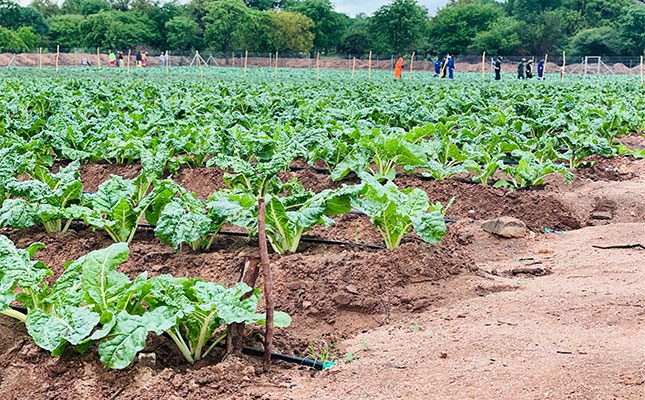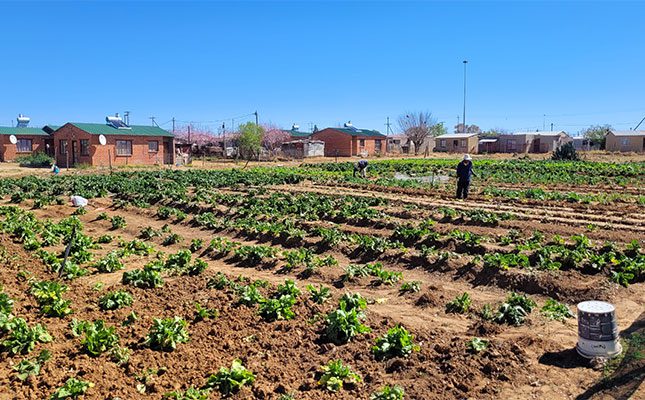
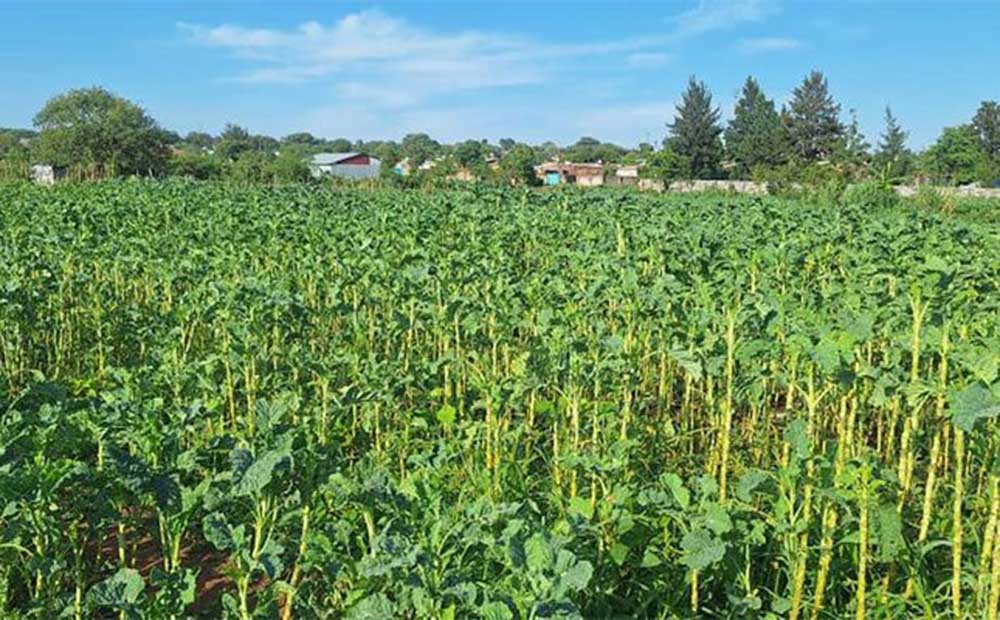
Speaking to Farmer’s Weekly, Tjibenda said he has been involved in the Simunye Garden for the past nine years and grows fresh produce such as tomatoes and onions, among others, some of which he sells.
Simunye Garden is one of many community gardens dotted around the city after the Bulawayo City Council set aside land for such projects.
“I started in 2016; the push was the love for farming and the need to get nutritious food. It’s best to grow your own food, as you determine what you eat and its [quality]. You can avoid the heavy use of pesticides by commercial farmers,” Tjibenda explained.
“You also save money. I haven’t bought vegetables since I started farming.”
Tjibenda explained that community garden members do not pay to use the land. He added that each of the 50 members has about 12 beds. Irrigation water comes from a borehole that was drilled by the council, and local MP Prince Dube equipped it with a solar power system through the Constituency Development Fund.
Gardeners pool resources
Each member contributed US$10 (about R73) to upgrade the solar power system.
“Each person tends to their own beds, but we come together for work that requires everyone, such as fixing fences. When we started, we used two wells that hardly dried up. Then we installed a hand-pump borehole, and recently we solarised the boreholes to make watering easier,” Tjibenda added.
He said the garden has a team that provides night security, and each member contributes $1 (R17) per month for this.
The garden also has several rules, including a ban on children under 10 years old and a schedule assigning different watering days to members to avoid congestion.
When asked about the ban on children, Tjibenda said: “They trample on the ridges, and if they come alone, they could risk falling into the wells that existed before the borehole was drilled.”
City’s agriculture policy drives urban farming
Nesisa Mpofu, corporate communications manager at the Bulawayo City Council, said the local authority plans and reserves land for community gardens as part of urban agriculture initiatives under the city’s Urban Agriculture Policy.
She explained there are different types of community gardens: those directly managed by the city, where participants don’t pay fees, as part of efforts to assist the underprivileged; and those where organisations or stakeholders lease land from the council to set up gardens, paying prescribed lease fees according to council policy.
Farming experts assist residents
Mpofu said key council staff members who specialise in agriculture, environmental conservation, and social work play crucial roles in community gardens.
“Environmental conservationists and agricultural demonstrators assist participants with environmental protection and farming techniques, respectively.
“Social workers, in liaison with community garden committees, select and manage beneficiaries, mostly based on vulnerability, and oversee the process to ensure deserving people are considered,” she explained.
“The city also works with development partners and other philanthropic organisations in community gardens. These partnerships have resulted in some gardens being equipped with fences, boreholes, inputs, and training of beneficiaries.
“As an example, DanChurchAid equipped gardens in Makokoba, Mamkhwananzi Garden in Lobengula, and Vulindlela Garden in Tshabalala. These gardens were fenced and equipped with solar-powered boreholes.”
She added that community gardens play a key role in food security in the city, especially for vulnerable groups, as they ensure the availability, accessibility, and affordability of agricultural produce on a local scale.
They also play a key role in supporting livelihoods for the less privileged, she added.
“Designating land for community gardens ensures council technical teams exercise oversight over those gardens. This ensures that agricultural activities take into consideration public health issues, gender, and social inclusion criteria, as well as preservation of the environment,” Mpofu concluded.